

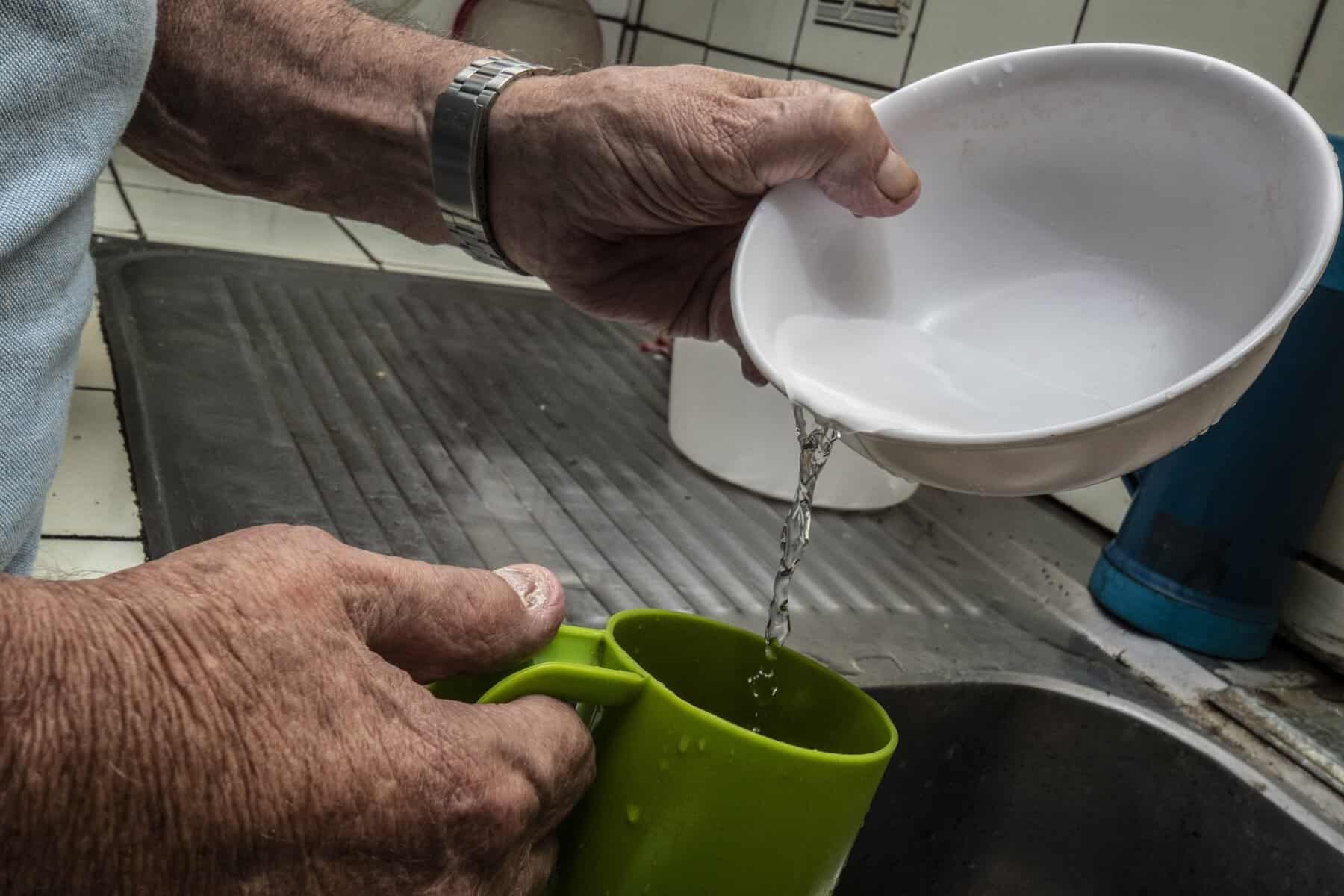
If you live on Costa Rica’s northern Pacific side, your tap may already be running on a schedule. Community water systems in 74 communities are rationing water because their springs and wells are losing flow, and some have dried up completely. The cuts are concentrated in five areas.
These are the Nicoya Peninsula and the coastal plains just north of it, the dry lowlands of central Guanacaste, the hills around Lake Arenal, the Gulf of Nicoya coast around Puntarenas, and the foothills where the western Central Valley drops toward the Pacific. Thirty-two community water boards have reported rationing, affecting about 6,525 connections, according to the national confederation that represents the country’s community water systems.
Emel Rodríguez Paniagua, the confederation’s vice president, separately put the number of systems rationing in Guanacaste at 23, with some communities now relying on tanker trucks and donated water. The cause is El Niño and rainfall on the Pacific slope and in the Central Valley is running as much as 37% below normal, and the National Meteorological Institute has declared a meteorological drought across the entire Pacific slope, the Central Valley and the western part of the northern zone.
This is not the usual dry-season squeeze. September is normally one of the wettest months in Guanacaste, when rivers rise, wells refill and pastures turn green ahead of the dry months. This year, streams are dry and some wells are running low in the middle of the rainy season. Ranchers are already feeling it. The Guanacaste ranchers’ federation reports cattle deaths from lack of feed in several parts of the province, and its executive director, José Chaves Ballestero, said midyear hay production has fallen between 50% and 70%.
The bigger worry is what comes next. The current El Niño is exceptionally strong, with August ocean temperatures in the equatorial Pacific exceeding those recorded in August 1997 and 2015, and the institute says the conditions could last at least until January 2027. That means much of the Pacific side may head into the dry season with its water sources already depleted.
If your water is being rationed, you will probably store some at home. Do it carefully, because stored water can make you sick. Use only clean containers with lids that are made for drinking water. Buckets, drums or tanks that once held other liquids, or that sit open, let bacteria and other contaminants into the water, according to the Costa Rican Association of Chemists. Keep your storage covered and clean.
Be sure of where your water comes from. Water from a source that hasn’t been checked, such as an untested well or a neighbor’s hose, can carry germs even when it looks clear. Watch for changes. If your water changes color, smell or taste, stop drinking it and report it to your local water board.
Find out your rationing schedule. Community water systems set their own hours, so ask your local board when service will be cut and plan your storage around it. Use less wherever you can. Heat drives consumption up, as people shower more often and run fans and air conditioning longer, and that also shows up on your electricity bill.
The larger utilities are watching closely as the national water utility, AyA, says some of its sources are already below normal for this time of year. In Heredia, the public utility company ESPH has issued a green alert but says the effects remain manageable for now, because it can switch to wells when surface sources drop.
The opposite problem is hitting the Caribbean. Rainfall there and across much of the northern zone is running up to 42% above normal, and in Sarapiquí, Guápiles and parts of Limón, saturated soils have flooded pastures and damaged some bridges and rural roads.
The two sides of the country face very different recoveries. Water systems damaged by flooding usually bounce back once rivers drop and repairs are made, Rodríguez said. A community that depends on a spring or well that is losing flow has no such fix, which is why the coming dry season is the main concern for the Pacific side.





