

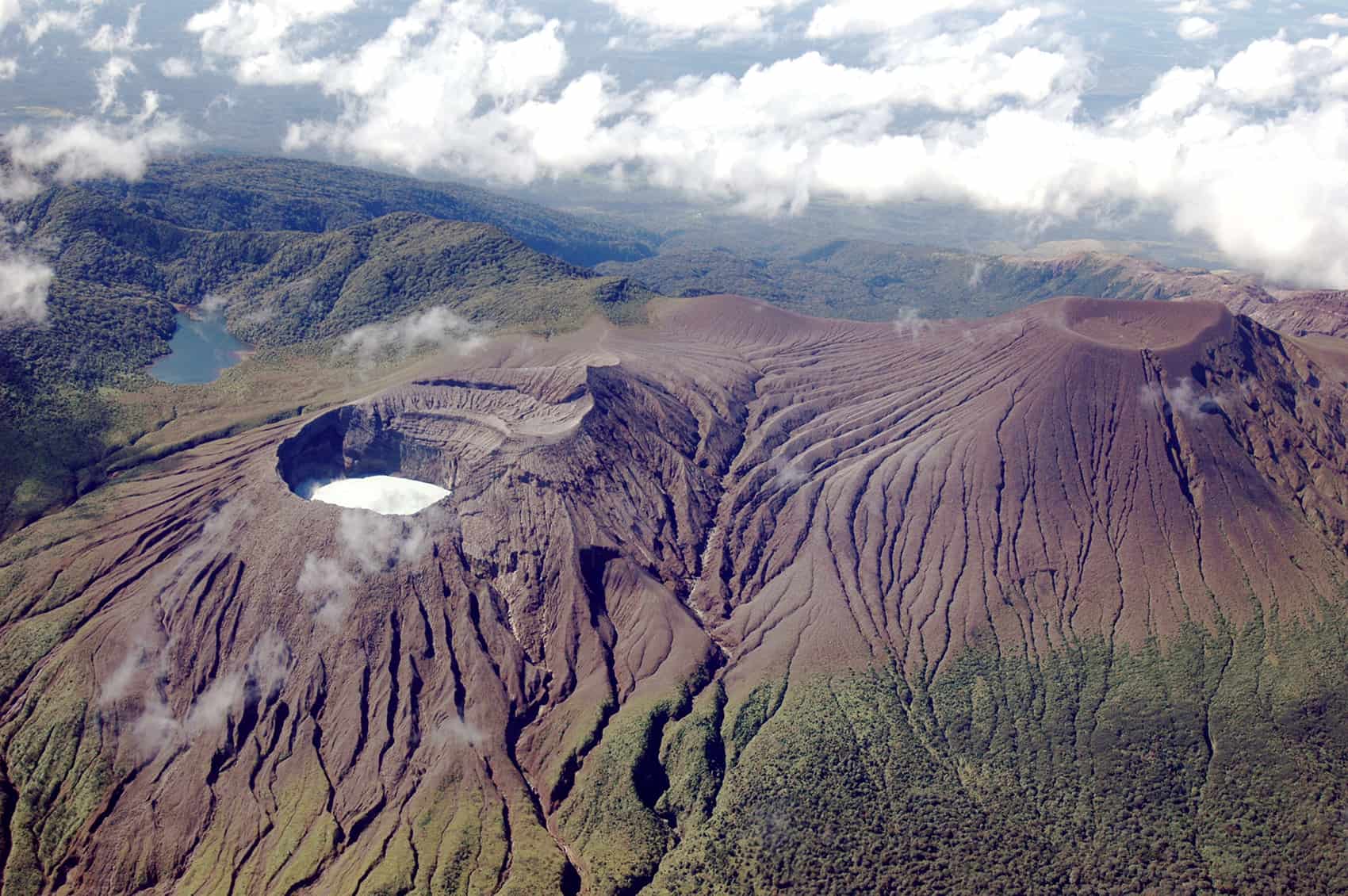
Costa Rica’s Rincón de la Vieja Volcano is showing several changes at the same time, prompting scientists to warn that eruptions could continue and may become stronger in the coming days or weeks. The volcano in Guanacaste has already been highly active for several months, but a new report released last night found changes in earthquakes, ground movement, volcanic gases and the continuous shaking known as volcanic tremor.
It’s important to note that none of those signs means a major eruption is about to happen. However, when several of them change together, scientists pay closer attention because they can indicate that conditions inside the volcano are changing. Rincón de la Vieja remains at Activity Level 3, or Precaution.
One of the clearest changes involves earthquakes beneath and around the volcano. Between September 26 and 28, monitoring equipment recorded 123 small earthquakes south of the crater in the Las Pailas area. These earthquakes were caused by rocks breaking underground. Another six small earthquakes occurred closer to the crater.
Most of the earthquakes were not strong enough to be felt by people living around the volcano. Their importance is what they can tell scientists about changes taking place below the surface. OVSICORI also detected changes in volcanic tremor. Unlike a regular earthquake, which starts and stops relatively quickly, tremor is a more continuous vibration that can be caused by the movement of gases and fluids inside a volcano.
The tremor weakened on September 25 and 26 before increasing again on September 27. Scientists then detected a series of unusual tremor patterns on September 28 and 29 following the increase in small earthquakes. The ground around the summit is also showing movement.
Measurements indicate that the top of the volcano rose by roughly 13 millimeters, or about half an inch, between September 1 and September 28. The measurement has a relatively large margin of uncertainty, so scientists are treating it cautiously. Still, it represents a change from the behavior observed during previous months and is another sign being watched closely.
Changes are also occurring in the gases coming out of Rincón de la Vieja. Since July, monitoring equipment has detected a gradual increase in sulfur dioxide compared with some of the other volcanic gases being released. In simple terms, volcanic gases appear to be reaching the surface more easily than before.
Sulfur dioxide emissions have remained above the volcano’s normal background level since mid-June. This week, the average was around 200 metric tons per day, although emissions reached as high as 2,000 metric tons in a day. Wind conditions can make those measurements difficult, meaning daily readings can vary considerably.
A European satellite also detected a cloud containing about 22 metric tons of sulfur dioxide moving west from Rincón de la Vieja on September 29. The latest changes come during an eruptive period that began in July. Since September 25 alone, six eruptions have been recorded. Most were small releases of steam and volcanic gases.
Scientists also recorded 172 very small pressure pulses associated with similar releases. Only one of the six recent eruptions reached what OVSICORI classifies as moderate strength. The strongest occurred on the night of September 26 and did not produce a lahar. Lahars are fast-moving mixtures of water, mud, volcanic material and rocks that can travel down rivers and streams on the slopes of the volcano.
They are one of the main dangers associated with Rincón de la Vieja because people can be far from the crater and still find volcanic material moving downstream. Several eruptions earlier this year produced lahars on the volcano’s northern side. The National Emergency Commission placed Dos Ríos and Aguas Claras in Upala, along with Mayorga, Cañas Dulces and Curubandé in Liberia, under a green alert in early September because of the increased volcanic activity.
Residents have been warned not to get into rivers that could carry volcanic material, particularly following eruptions or during periods of heavy rain. Rincón de la Vieja has been particularly active since July, producing hundreds of mostly steam-driven eruptions during the current period of unrest.
These eruptions occur when underground water is rapidly heated and turns into steam, building pressure until it is released. They can happen suddenly and do not necessarily require fresh magma to reach the surface. The latest report does not say that Rincón de la Vieja is heading toward a large eruption.
Instead, scientists say the combination of increased earthquakes, changes in tremor, movement around the summit and changes in volcanic gases suggests the volcano is behaving differently enough to warrant close attention. OVSICORI warned that eruptions could continue and that some could be stronger than those recorded so far.
Scientists will continue monitoring Rincón de la Vieja using earthquake and acoustic sensors, ground-movement instruments, gas measurements, cameras and field observations. For residents and visitors in the area, the main recommendation remains to follow official information and avoid rivers and restricted areas around the volcano, where conditions can change quickly.





