

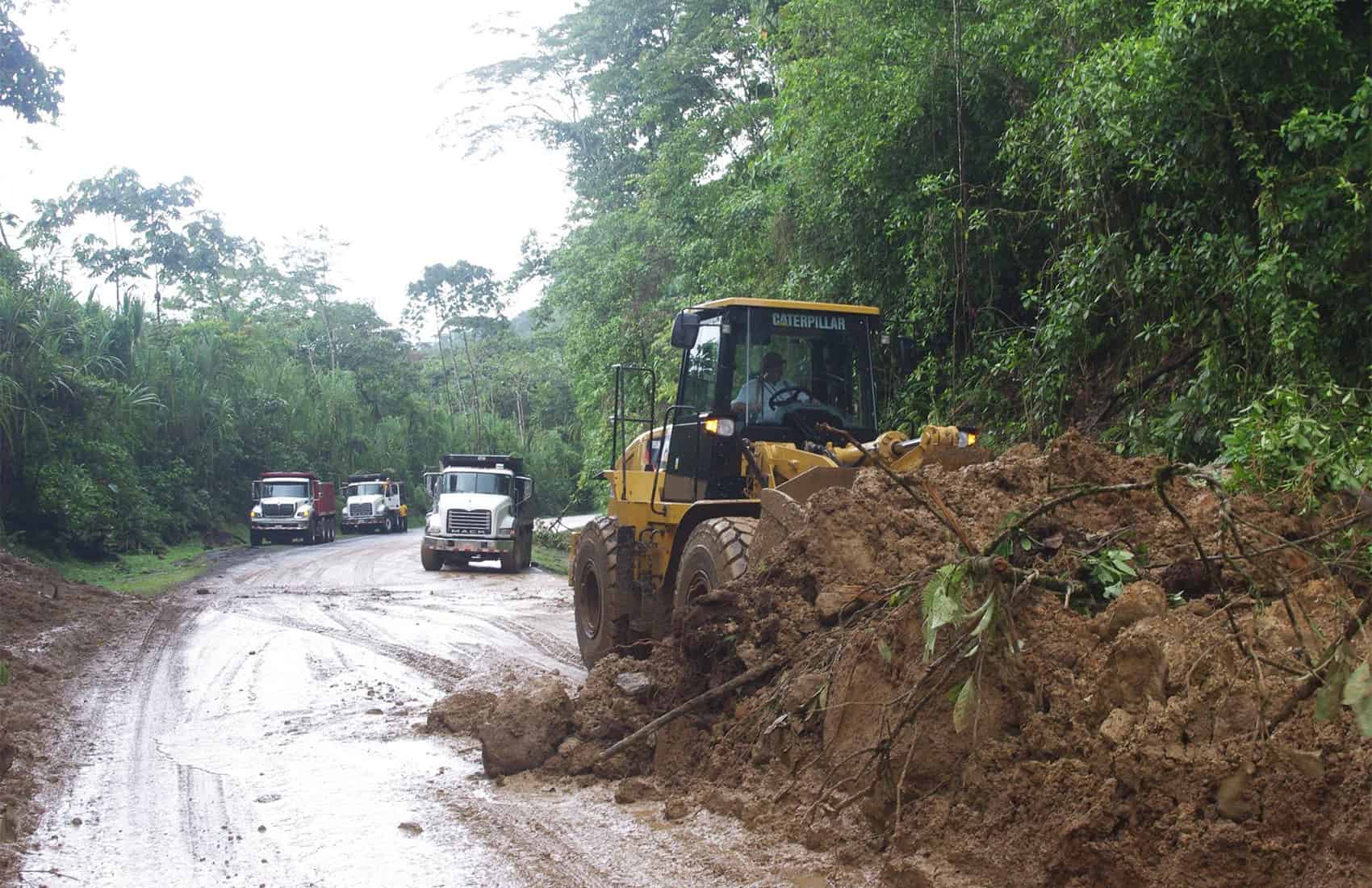
The University of Costa Rica has formally recommended that the Legislative Assembly reject a bill that would loosen restrictions on earth-moving and construction inside national parks during natural disasters or situations of imminent danger. The university’s governing council adopted the position drawing on technical analysis from the National Laboratory of Materials and Structural Models (LanammeUCR) and from the university’s Protected Areas Network. Under the Constitution, the Assembly must consult the university on bills that touch its areas of expertise.
The measure is a law to make the National Parks Service Law of 1977 more flexible in cases of natural disaster and imminent danger. It would create exceptions to current prohibitions to permit the removal of soil, rock, sand, gravel and other materials, along with the construction or stabilization of slopes, drainage systems, retaining works and preventive infrastructure.
Its stated purpose is to speed up work that protects road safety and human life along highway stretches that cross protected areas. The council said the problem behind the bill is real. Landslides and slope failures on Route 32, the highway that links the Central Valley to the Caribbean coast through Braulio Carrillo National Park, have repeatedly disrupted the road and complicated both emergency response and preventive engineering.
Its objection is to how the text is drafted. According to the university’s analysis, the wording does not confine those exceptions to Route 32, nor to infrastructure that already exists. The council found that the bill would permit works in national parks and other protected areas without sufficiently defining their scope or scale, the technical criteria that would justify carrying them out, or any mechanism for environmental compensation.
Among the principal objections is the use of terms the university considers too broad, including “imminent danger,” “retaining works” and “preventive infrastructure.” The analysis warned that this imprecision could open space for larger interventions, including the removal of soil or vegetation outside the road right of way, without the bill setting out which environmental controls would apply in each case.
The council also said the bill should distinguish between actions strictly necessary to address an immediate emergency and permanent works such as slope stabilization, drainage systems, catchment areas and retaining infrastructure. For that second category, it recommended keeping the environmental evaluation instruments required under current law.
The proposed article 10 bis, the analysis noted, does not expressly require prior environmental assessments, restoration plans, physical delimitation of the areas to be worked on, execution deadlines or follow-up controls. The university considers those omissions capable of generating expansive interpretations and of undermining the principle of environmental non-regression.
The council acknowledged the need for faster mechanisms to respond to landslides, slope failures and other risks that could compromise the safety of people using roads such as Route 32. It maintained, however, that any reform should strictly confine interventions to the legally established right of way, or else define with precision which sectors of protected areas could host such works.
It further recommended a clause barring the use of these exceptions to widen a right of way or to alter the protection governing national parks. The university’s criterion is advisory and does not bind the Assembly. The bill remains in the legislative pipeline, and any decision on whether to advance the base text, redraft it or shelve it now rests with lawmakers.





