
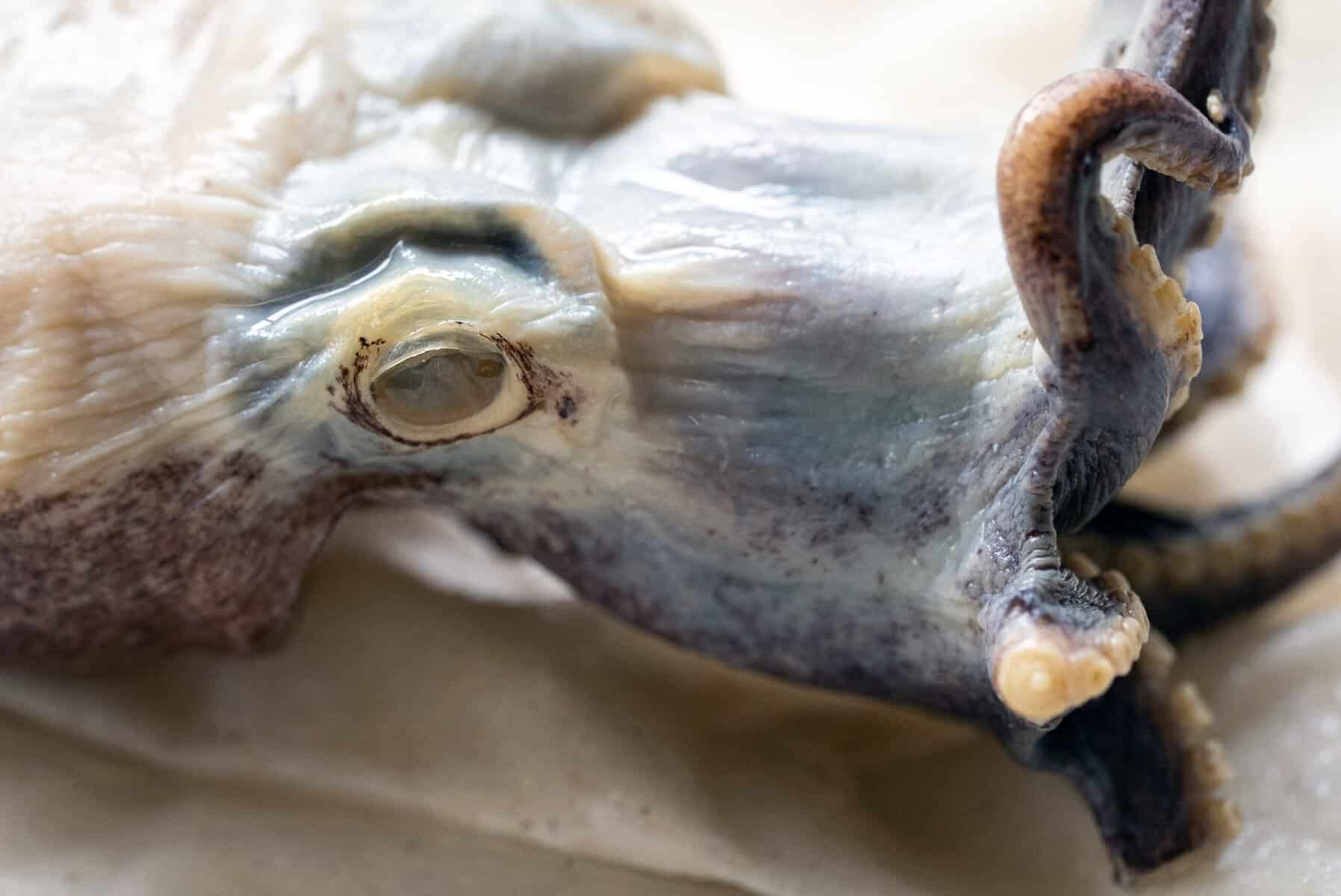
The rare blue octopus that surprised scientists has returned to the Galápagos Islands. The specimen, about the size of a golf ball, will be preserved at the Charles Darwin Research Station, which houses an extensive collection representing the archipelago’s extraordinary biodiversity.
An expedition collected the first specimen of this species, distinguished by its small tentacles, in 2015 at a depth of more than 1,700 meters (5,600 feet) in the northern part of the Ecuadorian archipelago, known for its endemic flora and fauna. Only three specimens have been observed to date, but the other two were recorded only on video.
The octopus, which was already dead, was taken in 2022 to the Field Museum of Natural History in Chicago, United States. There, it was given the scientific name Microeledone galapagensis, classified and introduced to the world. On Monday, it returned to the Galápagos, although its tentacles had lost their intense blue color, its body had turned opaque and its head was completely pale.
Researchers at the Charles Darwin Research Station handled the specimen with extreme care after it arrived on the islands, located 1,000 kilometers (620 miles) off Ecuador’s coast, wrapped in alcohol-soaked gauze. The octopus has returned “with a name, and we have good news: it is an endemic species,” Miguel Pinto, the station’s senior curator of natural history collections, told AFP.
Since this week, the specimen has been preserved in a collection gallery, bearing a red label identifying it as the holotype, meaning the animal used as the reference specimen for the description of the new species. It will now be housed alongside another 140,000 specimens of marine organisms, vertebrates, terrestrial invertebrates and plants preserved by the research station.
For Paulina Sepa, who oversees the marine collections, the octopus’s return will help advance research into the vast biodiversity of the Galápagos, a UNESCO biosphere reserve and World Heritage Site. There is “so much more to discover, so many more questions,” even “a million questions,” Sepa said.
“We need to study it further,” Pinto said of the species. “More deep-sea exploration is also needed in the Galápagos to search for them and understand them a little better,” he added.