

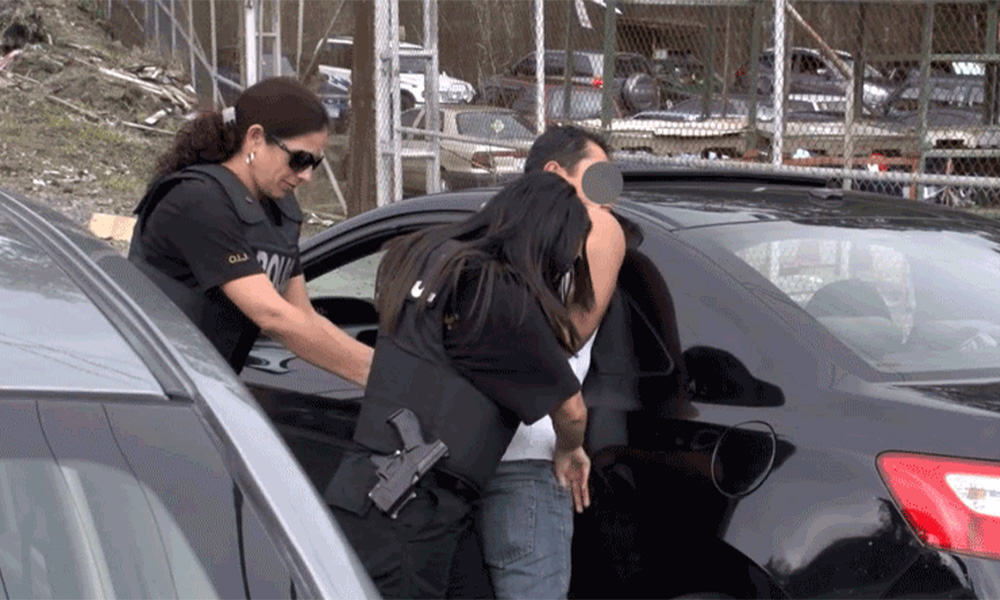
If you own a car here, it is more likely to be stolen now than at any point in the past ten years. Costa Rica recorded 5,146 vehicle thefts in 2025, according to open statistics from the Organismo de Investigación Judicial (OIJ). That is the highest annual figure of the decade, up from 4,289 in 2016 — a 20% increase.
What makes the number worth paying attention to is what happened around it. Over the same ten years, almost every other property crime went the other way. Muggings, larcenies, break-ins at homes and businesses, and thefts of items from inside parked cars all trended downward.
Vehicle theft did not follow and after bottoming out at 3,217 cases in 2020, it climbed every single year from 2021 through 2025. Part of that is simple arithmetic as there are far more cars to steal than there used to be. Costa Rica finished 2025 with 2,087,356 vehicles covered by mandatory SOA insurance, 9.1% more than the 1,913,266 registered a year earlier.
But more cars on the road does not really explain why this one category rose while everything else fell. Something changed about the crime itself and the answer, according to specialists whose analysis accompanied the OIJ data, is that stealing a car stopped being a job for one or two opportunists and became a supply chain.
Organized networks now handle it in stages — one person takes the vehicle, another strips it, and intermediaries move the parts to workshops, to businesses, or directly to buyers who want a cheap replacement bumper or gearbox. That matters in order to show you how you protect yourself.
A car is no longer stolen because someone wants to drive it. It is stolen because its parts are worth more disassembled than the whole vehicle is worth intact, and because those parts are easy to sell without anyone asking where they came from. Which means the thing that keeps your car safe is not just making it hard to break into. It is making it slow to move and slow to take apart.
A steering lock, a tracker, a car that gets parked somewhere visible rather than somewhere convenient — these work because they add minutes, and the whole model depends on the vehicle disappearing fast. The OIJ statistics do not show how many of the 5,146 thefts were committed by organized structures rather than by individuals acting alone, so treat that as a pattern the investigators describe rather than a number you can verify.
Where you live changes the picture considerably. Eight of the country’s cantons finished 2025 with fewer vehicle thefts than they recorded in 2016, bucking the national trend entirely. Santa Ana posted the largest drop in raw numbers, falling from 76 cases in 2016 to 31 in 2025 — 45 fewer thefts. It also slid from 14th place to 44th out of 84 cantons ranked from most to fewest.
That decline was not a straight line. Santa Ana dipped to 29 cases in 2021, then rose again to 44 in 2022, 45 in 2023 and 66 in 2024 before dropping sharply last year. Escazú, San Rafael, Heredia, Sarapiquí and Aserrí also closed below their 2016 figures, though their paths were similarly uneven and several saw rebounds in the intervening years.
Heredia is the useful cautionary case. It went from 207 thefts in 2016 to 178 in 2025, a 14% reduction — and still finished fifth in the country, having been fourth a decade earlier. Falling numbers do not automatically mean a low-risk canton. They can just mean a slightly less bad one.
One technical note on the rankings. In 2016 Costa Rica had 81 areas; it now has 84. Position changes between the two years reflect that shift as well as actual movement in theft numbers, so a area that dropped a few places has not necessarily improved.
If your vehicle is stolen, report it to the OIJ immediately rather than waiting to see if it turns up. The parts chain moves within hours, and a report filed the same day is the only realistic window in which a vehicle gets recovered whole. Have your plate number, chassis number (VIN) and your cédula or passport ready before you call, because you will be asked for all three.





