

Growth in Costa Rica’s free-zone economy slowed sharply in June, falling to its weakest pace since 2020 and extending a year-long deceleration in one of the country’s most important economic sectors. Economic activity among companies operating under Costa Rica’s special regimes, which include most free-zone companies, grew 2.9% in June compared with the same month a year earlier, according to the latest Monthly Economic Activity Index, or IMAE, from the Central Bank of Costa Rica.
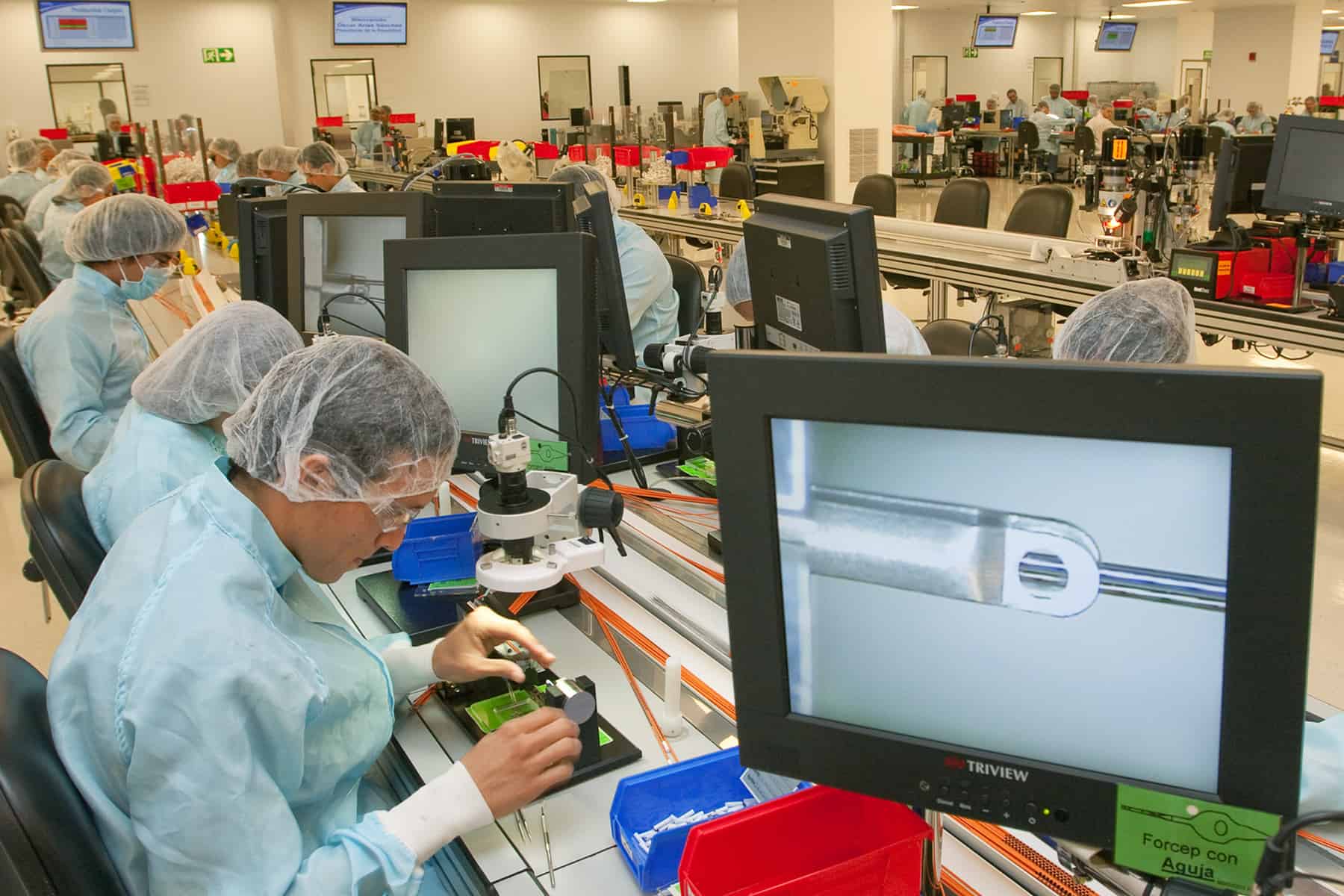
That was down from 17.2% annual growth in June 2025 and marked the 12th consecutive month in which the sector’s growth rate slowed. The Central Bank attributed much of the slowdown to weaker growth among manufacturers, particularly medical-device producers, as well as lower output of metal products such as electronic components and circuit boards. Professional and administrative services, including advertising, also lost momentum.
Free-zone manufacturing grew just 1.2% year over year in June. Manufacturing outside the special regime performed even worse, contracting 0.9%. The numbers matter because Costa Rica has built much of its recent export and foreign-investment success around free-zone companies, particularly medical-device manufacturers, technology firms and business-service operations.
The latest data do not show that Costa Rica’s free-zone model is collapsing or that companies are leaving the country in large numbers. Much of the slowdown follows an unusually strong period of expansion in 2025. Earlier this year, the Central Bank warned that the pace of growth in the special regime could continue moderating because it was being compared with exceptionally strong results from the previous year.
Still, the speed of the slowdown is notable. Overall economic activity in Costa Rica grew 3% in June, 2.2 percentage points less than in June 2025. Businesses operating outside the special regimes grew 3.1%, meaning the domestic economy slightly outperformed the free-zone sector during the month.
That represents a significant reversal from much of the past several years, when free-zone companies were among the main engines pulling national growth higher. The softer free-zone performance has already affected the broader economic outlook. In April, the Central Bank projected that Costa Rica’s economy would grow 3.5% in 2026, down from an earlier forecast of 3.8%.
At the time, it projected 5.5% growth for the special-regime economy, compared with preliminary growth of 12.7% in 2025. Researchers at the University of Costa Rica were somewhat more cautious in June, forecasting overall economic growth of 3.4% this year and growth of about 4% in the special regime.
They identified slower free-zone activity as one of the main reasons for the weaker national outlook.Not every part of Costa Rica’s economy slowed in June. Construction expanded 9.5%, helped by private projects and a 12.2% increase in public works. The Central Bank pointed to road and bridge projects, emergency reconstruction work and improvements at Juan Santamaría International Airport as contributors to the increase.
Services grew 3.9%, while commerce expanded 2.7%. Hotels and restaurants were among the service activities that grew faster than a year earlier. Agriculture barely grew, at 0.1%, as stronger banana, root-crop, beef and egg production was offset by declines in pineapple and coffee.
For Costa Rica, the question over the coming months will be whether the slowdown in free zones settles at a more normal growth rate after the exceptional gains of 2025 or develops into a broader competitiveness problem. The June numbers alone do not answer that question. They do, however, show that the part of Costa Rica’s economy that has delivered some of its strongest growth in recent years is no longer expanding at anything close to the pace seen a year ago.





