

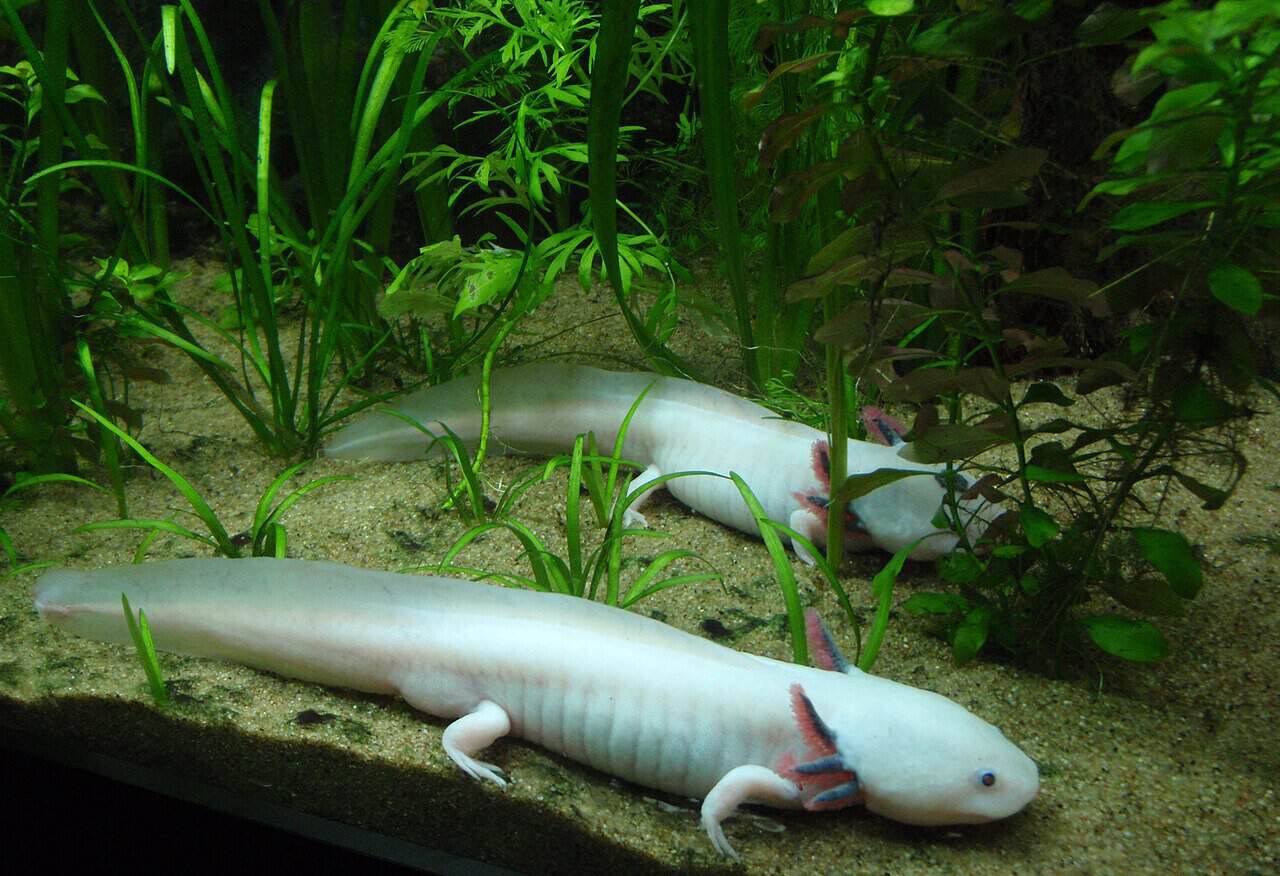
Costa Rican judicial agents arrested a 32-year-old man in Paso Ancho this week after raiding a home where investigators found several axolotls, turtles and equipment associated with keeping the animals. The operation was carried out by the Organismo de Investigación Judicial (OIJ) as part of an investigation into the suspected trafficking and commercial sale of wildlife. The suspect, identified by the surname Rosales, was taken into custody and transferred to the Prosecutor’s Office in Hatillo.
The investigation began in July after authorities received confidential information that wild animals were being offered for sale. Investigators suspect the animals were being sold or exchanged through electronic platforms. During the search of the Paso Ancho residence, agents seized several axolotls, turtles, chemical products and equipment used for keeping animals.
The axolotls immediately made the case unusual. The aquatic salamanders are native to Mexico and have become one of the world’s most recognizable exotic animals, helped by their unusual appearance, external feathery gills and growing presence in social media, toys and video games. Their popularity as pets stands in sharp contrast to their condition in nature.
The Mexican axolotl, Ambystoma mexicanum, is considered critically endangered in the wild. Its remaining natural habitat is centered around the canals and wetlands of Xochimilco in Mexico City, where pollution, urban growth, habitat degradation and invasive species have pushed the wild population toward extinction.
Axolotls are also listed under Appendix II of the Convention on International Trade in Endangered Species of Wild Fauna and Flora, or CITES, meaning international trade in the species is regulated. Large numbers of axolotls are bred in captivity around the world, however, making their presence in the pet trade much more common than their conservation status might suggest.
Authorities have not said whether the animals confiscated in Paso Ancho were captive-bred, how they entered Costa Rica or whether they were imported with any documentation. Those unanswered questions could become an important part of the investigation. Costa Rican wildlife rules cover more than animals native to Costa Rica. Exotic animals that are considered wildlife in their country of origin can also fall under Costa Rica’s wildlife regulations.
The rules place particularly tight restrictions on selling those animals as pets. Authorized facilities breeding exotic wildlife must meet registration and permit requirements, while the commercial sale of exotic wildlife as household pets is restricted. The Paso Ancho raid is also not the first time authorities have encountered axolotls in Costa Rica.
In July of last year, investigators seized two Mexican axolotls and 11 turtles during a raid on a business in Coronado. Because the axolotls could not be released in Costa Rica, the animals were eventually placed under the care of a wildlife sanctuary. The recurrence of axolotls in wildlife investigations highlights a less visible side of Costa Rica’s animal trade.
Costa Rica is internationally associated with protecting its own monkeys, sloths, macaws, sea turtles and other native wildlife, but authorities must also deal with foreign species arriving through an international exotic-pet market increasingly conducted online. Electronic marketplaces and social networks can make animals available far beyond their natural ranges while making it harder for buyers to determine where an animal came from, whether its importation was legal and whether the seller has authorization to trade it.
As of now, investigators have described Rosales as a suspect. No conviction has been entered, and prosecutors will determine what charges, if any, proceed. Authorities have also not disclosed the exact number of axolotls and turtles seized or announced where the confiscated animals will ultimately be housed.





