

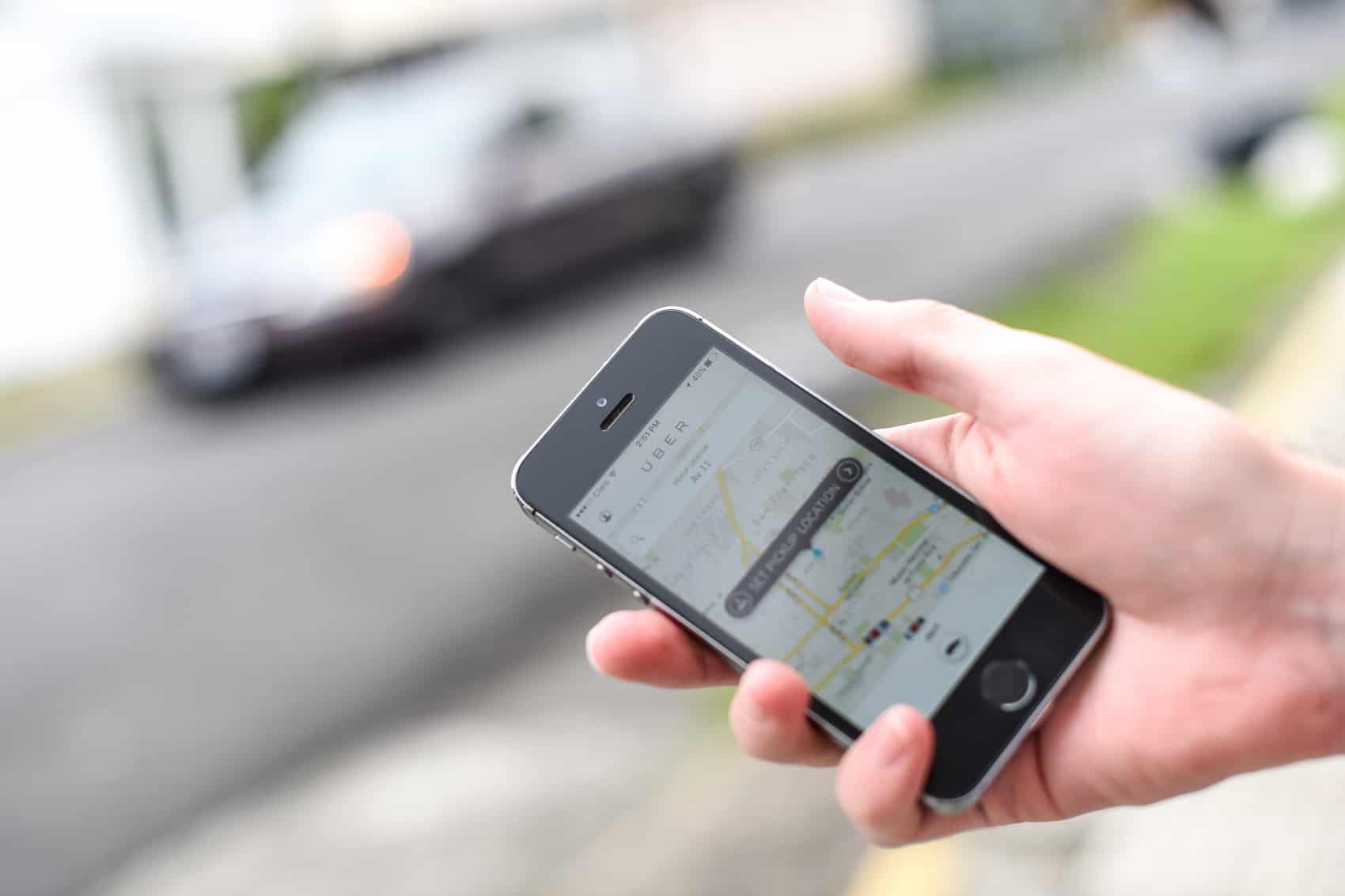
Land at Juan Santamaría, open your ride app, and under a bill moving through Costa Rica’s Congress there would be no legal ride waiting for you. Lawmakers filed 282 changes to that bill. A legislative committee finished working through them on Tuesday and approved nine of them.
The bill now goes back to the full Assembly for a first vote. Legislators can still try to revive changes the committee threw out, so what sits in the text today is not necessarily what gets voted on. One approved change shuts platform drivers out of airports, ports, docks and international maritime terminals. They could not pick you up or drop you off at any of them unless whoever runs the place gives express permission.
The reason is that those terminals operate under concessions, and at airports the orange taxis hold that concession — there are roughly 100 of them. So if the provision survives, an orange taxi would be your legal option at Juan Santamaría. There is one possible way around it. Uber said in June that it is testing putting orange airport taxis inside its own app. If that works, you could still book an airport ride through the app. It would just arrive as an orange taxi.
The pricing part of the bill is the piece most often described wrong, so it is worth being exact. The bill does not set your fare. It sets a floor on what the driver has to earn per kilometer. You would still pay one of two ways: the app quotes you the whole trip up front, or you and the driver agree a price before you set off.
Nothing in the text caps or fixes what you end up paying. The Public Works and Transport Ministry would work out the driver’s minimum using fuel costs, repairs, typical mileage, a minimum profit per trip, insurance and Caja contributions, then update the number twice a year, in February and August.
Whether that pushes your fare up is a prediction, not a fact. The Chamber of Commerce argues the floor amounts to price control and would make trips cost more, and that locking apps out of airports and ports cuts competition and leaves travelers fewer options. It counts around 35,000 people who make their main living through platforms, has separately cited close to 40,000 people earning some income that way, and puts users at roughly two million.
Aprimotec, an association representing platform drivers, asked lawmakers this month to stop the bill, saying it would turn a private service into a taxi service and damage the income of 35,000 families. Uber has said nothing publicly about the version the committee just approved.
Taxi drivers want the bill passed, and their argument is straightforward. The apps have run for eleven years with no rules while taxis carry costs the apps do not. Taxi groups say concessions have fallen from 13,500 to about 9,000. The squeeze is current: more than 2,000 taxis came off the road in July when their concession deadlines passed, and the taxi drivers’ union has asked for six more months so more of them can get their paperwork in order. The transport ministry says the text came out of talks involving taxi drivers, the platforms themselves and the national transport chamber.
For anyone driving, the bill trades a grey zone for a checklist. Right now the work is not clearly legal, and fines start at ₡122,597 (about $270) and can end with your plates pulled or your car impounded. Under the new rules you would need a license you have held for at least a year, an approved course, registration as a taxpayer, registration with the Caja as an independent worker where it applies, a criminal record certificate filed every year, insurance, no unpaid traffic fines, and an identification sticker on your windshield.
In the law’s first year you would pay ₡25,000 (about $55). Your car would need to pass inspection annually, keep the marchamo current, stay under an age limit set later, and carry both mandatory insurance and a liability policy. Seven seats is the maximum. You could drive someone else’s car with the registered owner’s permission.
Sharing a ride with a stranger would end. Combining separate passengers’ requests into one trip becomes one of the most serious offenses in the bill, alongside waiting at bus stops for passengers, cutting in front of buses and cruising the streets looking for riders.
As a passenger you would get some things in writing. You would have the right to know the price, the driver and the car before you get in, to pay in cash or electronically, and to get a receipt at the end. Anyone under 15 would have to travel with an adult, and riders aged 15 to 17 would come with extra rules set later.
The companies would have obligations of their own. Each would have to register a legal entity in Costa Rica, pay its taxes, collect and hand over sales tax, and report its drivers, cars and trip numbers every three months. Each would need a system for handling complaints and for dealing with harassment and discrimination. Permits would last ten years and could be renewed. A company caught running without one would get a month to fix it, and possibly a second month if the delay was not its fault.
Cutting off a platform’s payments would require a judge. Fines would run from one to ten base salaries, the reference figure Costa Rican law uses to scale penalties. In the worst cases a platform could be shut out entirely, or a driver blocked from signing up again for one to five years. The fees and fines would go into a Mobility Fund for roads, transport upgrades and enforcement.
Taxis get changes too. Inspection moves to once a year, temporary permits become possible where service is short, and a concession holder can name who takes over the concession if they die. None of this is settled because lawmakers can still reopen rejected changes on the floor, both the airport ban and the per-kilometer floor could look different by the time anyone votes. Eleven years after the apps arrived, Costa Rica still has not decided what they legally are.





