

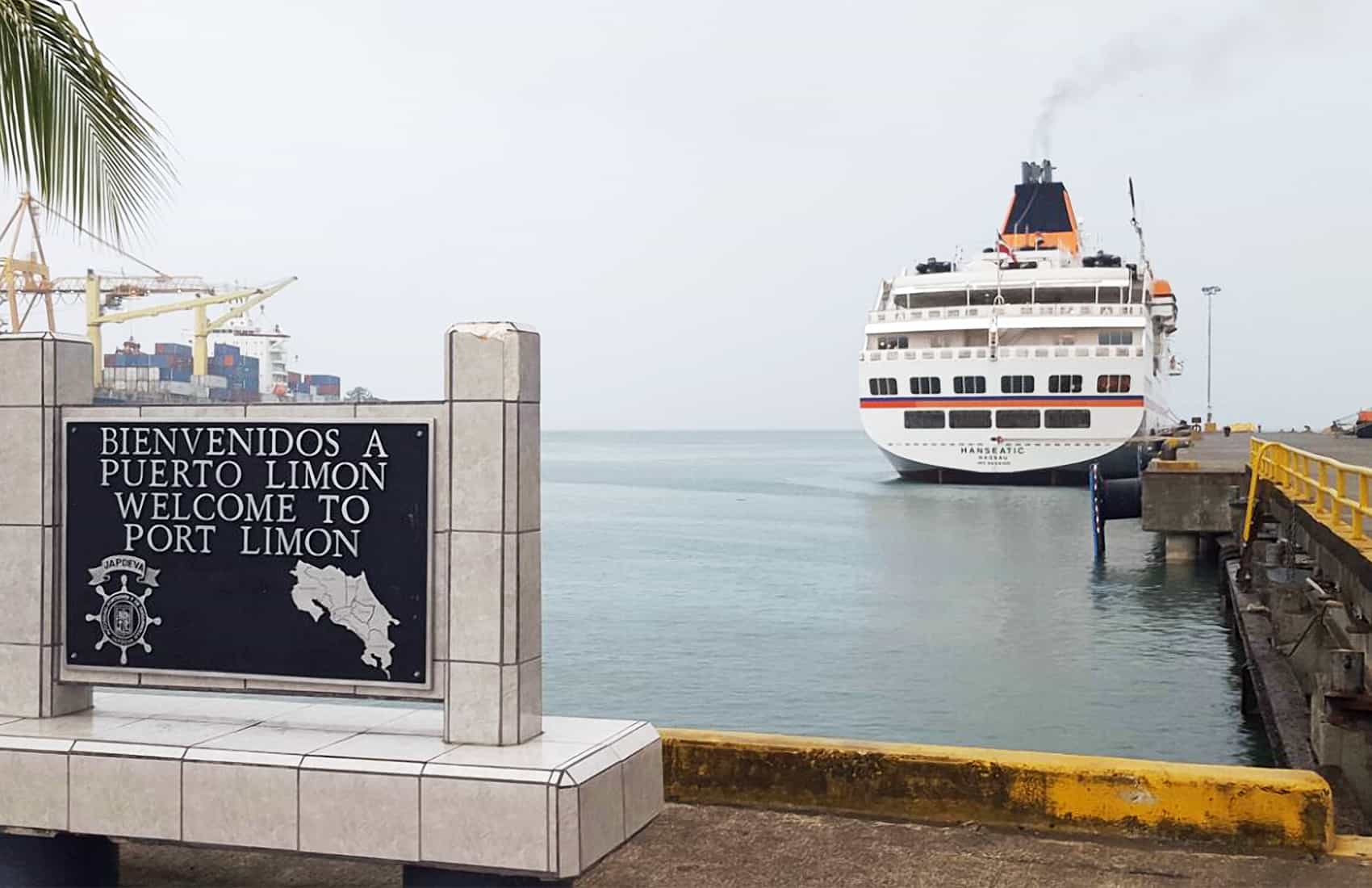
Costa Rica’s Legislative Assembly gave final approval Thursday to a reform that clears the way for JAPDEVA to seek strategic partners for major infrastructure projects in Limón, including the long-discussed marina and cruise terminal on the Caribbean coast. The bill passed in second and final debate with unanimous support from 50 lawmakers. It now goes to President Laura Fernández for signature before becoming law.
The reform changes JAPDEVA’s organic law to allow the state port authority, formally the Junta de Administración Portuaria y de Desarrollo Económico de la Vertiente Atlántica, to enter into strategic alliances with public or private partners, including national or foreign entities. The aim is to give the agency a legal path to develop large projects tied to infrastructure, tourism, commerce, technology and services.
For Limón, the most visible project is the proposed marina and cruise terminal in Puerto Limón, a plan that officials and local leaders have discussed for years as a way to strengthen the Caribbean province’s tourism economy. The approval does not mean construction will begin immediately. It gives JAPDEVA broader authority to structure partnerships and pursue projects under rules that still require technical studies, economic justification and oversight.
Under the approved text, each alliance must be authorized by JAPDEVA’s board of directors. Agreements may last up to 50 years, depending on the size of the project and its financial model. Contracts connected to those alliances will also remain subject to oversight from the Comptroller General’s Office, Costa Rica’s main public spending watchdog.
Lawmakers added a 1.5% fee on gross income from each alliance to help finance supervision, oversight and follow-up. That change was included after observations from the Comptroller’s Office, which had previously raised concerns about how strategic alliances could be used in public infrastructure projects.
The final version also states that projects built on JAPDEVA-administered public land cannot be removed from public ownership, sold, leased or used as collateral. Any private partner would be allowed to operate under the terms set in the regulations, but the underlying public assets would remain protected.
The bill’s path through Congress was unusually broad for a major infrastructure reform. Earlier versions had drawn opposition because lawmakers said they weakened controls over public-private partnerships. After weeks of negotiation, the governing party and opposition blocs agreed on substitute texts that added transparency, accountability and public finance controls.
The proposal is also politically significant because parts of the same idea had appeared in the failed “Ley Jaguar,” a Rodrigo Chaves-era initiative that ran into constitutional problems. This version was rewritten to address concerns about public contracting, oversight and the role of the Comptroller’s Office.
Supporters say the reform is a major step for Limón, where tourism development has often lagged behind Costa Rica’s Pacific coast despite the Caribbean’s strong cultural identity, beaches, wildlife areas and cruise potential. A modern marina and cruise terminal could bring more visitors into Puerto Limón and create business for restaurants, tour operators, transport providers, hotels and local artisans.
No opening date, construction schedule or final operator has been confirmed through this vote. The next steps depend on the president’s signature, publication of the law, JAPDEVA regulations, project structuring and any future contracts. Still, the vote gives Costa Rica’s Caribbean coast one of its clearest legal paths yet toward a major tourism infrastructure project.





