

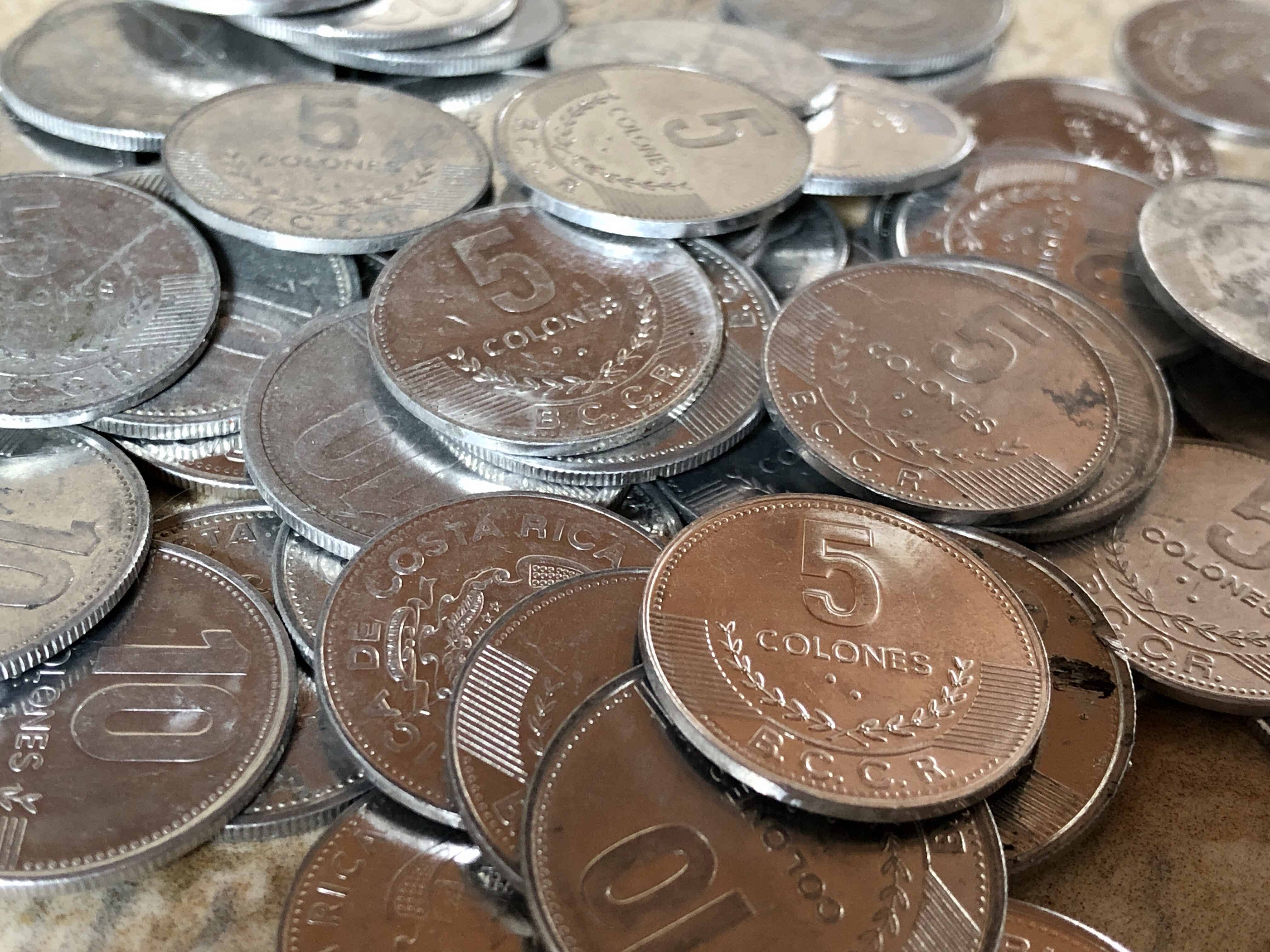
Costa Rica’s old-design ₡5, ₡10 and ₡25 coins will stop working as money on July 1, leaving anyone who deals in cash about a week and a half to spend or swap them.
The Central Bank of Costa Rica (BCCR) confirmed that, as of that date, the previous-design versions of those three coins lose their value as a means of payment and will no longer be valid in commercial transactions. Until June 30, they remain legal tender for everyday purchases, from bus fares to street food.
The change does not wipe out the coins’ worth. People holding them can still exchange or deposit them at financial intermediaries across the country, including commercial banks, cooperatives, mutuals and other authorized entities. After July 1, though, shops, markets and other businesses are no longer obligated to accept them.
The ₡5 coin is leaving for good. The Central Bank stopped minting it on January 1, 2020, after determining that its production cost exceeded its face value, and the July cutoff makes that retirement permanent. Once it is gone, the new ₡10 becomes the smallest denomination in circulation.
The old ₡10 and ₡25 coins are being phased out as part of Costa Rica’s “new monetary cone,” an ongoing redesign that has rolled out smaller, easier-to-handle coins. The updated ₡10 is silver-toned and the new ₡25 is gold-toned, both smaller than the versions they replace. To smooth the transition, the BCCR says it has already put 28 million new ₡10 coins and 10 million new ₡25 coins into circulation, with another 115 million ₡10 and 127 million ₡25 held in reserve for release as needed.
What you should do before the deadline is check your change. Anyone handling cash — whether you’re a tourist paying at a market, soda or taxi, or a resident going about daily errands — should look at what they are handed, especially as we get closer to the end of June, to avoid getting stuck with old pieces after the deadline. Sticking to newer coins, bills, cards or the widely used SINPE Móvil mobile-payment system sidesteps the issue entirely. The impact falls hardest on cash-heavy transactions, while card and digital payments are unaffected.
Those with jars of accumulated change — a common sight here in Tico households — can act now by sorting out the old designs and taking them to a bank before the cutoff to avoid last-minute lines. The shift may also prompt minor rounding on some bus fares and retail prices as the smallest coins disappear, though those adjustments are modest.
Figuring out what the coins are worth in dollars is almost beside the point — even ₡25 is a fraction of a U.S. cent at current rates. The BCCR’s reference exchange rate sat near ₡456 to the dollar over the weekend, but anyone relying on a conversion should verify the day’s rate against the Central Bank, as the colón has been volatile in 2026.





