

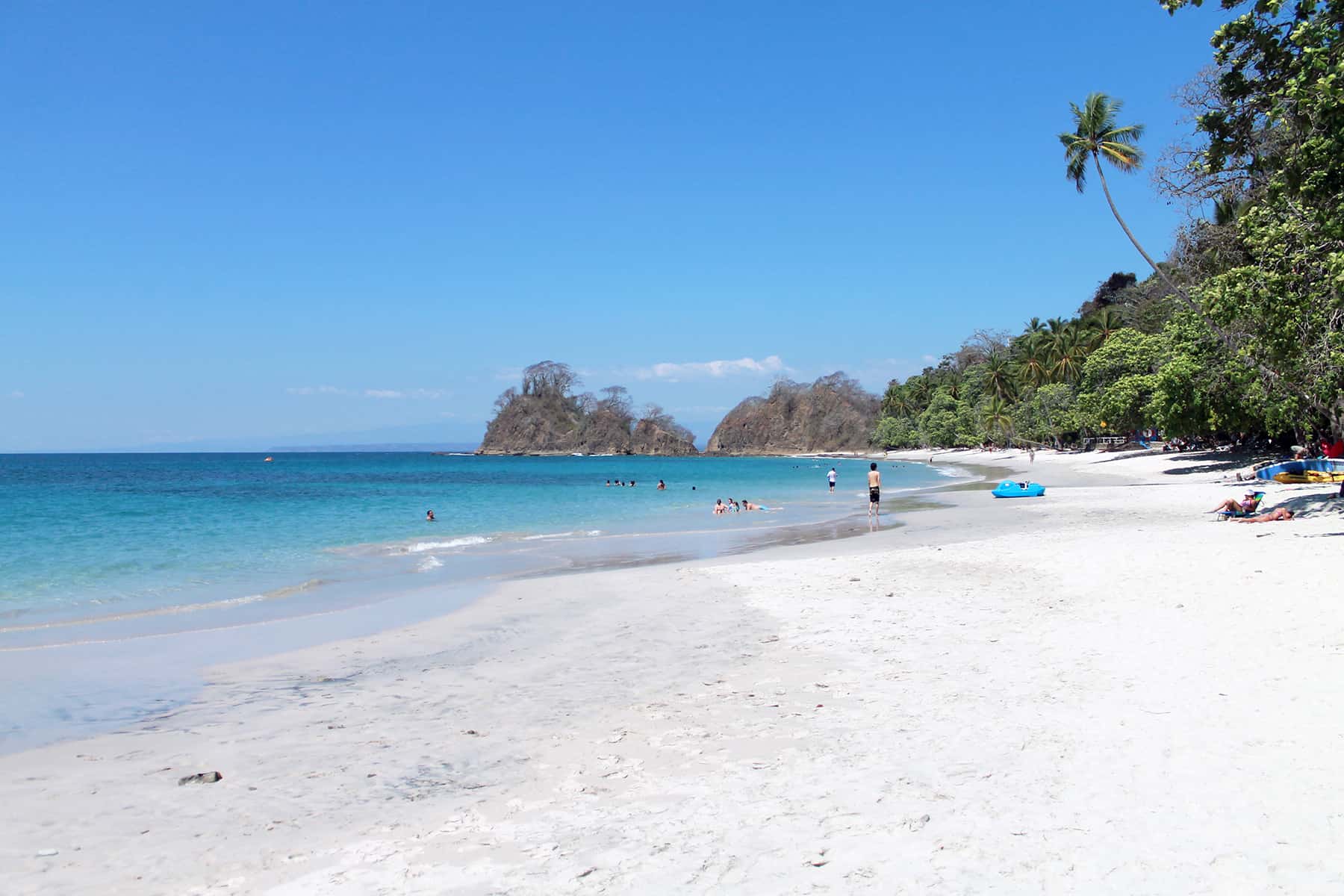
Garabito’s long-running fight with Punta Leona over public access to Playa Blanca turned into a physical confrontation Thursday, when municipal crews removed an access barrier at the resort entrance and police clashed with people linked to Punta Leona Beach Club & Nature Resort.
The Municipality of Garabito removed the barrier that controlled entry toward the Punta Leona area, saying the action was needed to reopen what local officials consider a public road leading toward Playa Blanca. Mayor Francisco González defended the operation, saying the municipality was enforcing a court-backed obligation to keep public roads open and had previously asked those responsible to remove the obstacles voluntarily.
The operation quickly escalated. Videos circulating in Costa Rican media showed a confrontation involving the Fuerza Pública, Garabito Municipal Police and people tied to the resort. Officers were injured and that the Fuerza Pública said two people were detained for allegedly attacking police during the intervention. Authorities also said three people had been detained, leaving an unresolved discrepancy in the public accounts.
The dispute centers on Playa Blanca, one of the best-known beaches on Costa Rica’s Central Pacific coast, near Jacó. Under Costa Rica’s Maritime Zone Law, the maritime terrestrial zone extends 200 meters from the ordinary high tide line, with the first 50 meters classified as public zone. Municipalities are responsible for enforcing the rules governing that coastal zone, especially in tourist areas.
That legal framework does not resolve the central argument in Punta Leona. Garabito says the contested access should be open to the public. Punta Leona says the intervened route runs through private property and that Playa Blanca already has an official public access route separate from the road inside the resort area. The company said the matter remains under review before the Administrative Court and accused municipal authorities of damaging security barriers, entrance structures, gates and other infrastructure inside registered private property.
Punta Leona also accused police and municipal officials of using excessive force, saying employees responsible for access control and security were struck during the intervention. The resort said it would pursue administrative and judicial actions over the operation.
The legal history is messy. González has argued that older court rulings support the municipality’s position. But former Garabito mayor Marvin Elizondo has publicly argued that the 2012 Sala IV ruling often cited in the dispute dealt with a concrete wall blocking pedestrian passage between Playa Mantas and Playa Blanca within the public maritime zone, not with opening a private internal road through Punta Leona.
A 2018 Sala Constitucional decision referenced the 2012 ruling and said it concerned the removal of obstacles preventing free passage between Playa Mantas and Playa Blanca. That decision also noted that Garabito had reported compliance, while mentioning a newer barrier that required further municipal investigation to determine whether it sat on public access.
The case has become a flashpoint over a larger Costa Rican issue as beaches are public, but the routes used to reach them can run through disputed land, concession areas or private property. That tension is now playing out at one of the country’s most popular white-sand beaches, with tourism, property rights and public access all colliding in the same fight.
For now, Playa Blanca remains at the center of a dispute that is likely to continue in court. Garabito says it is restoring public access. Punta Leona says the municipality crossed onto private land and acted unlawfully. Yesterday’s confrontation made clear that the legal fight over Punta Leona is no longer limited to paperwork.





