

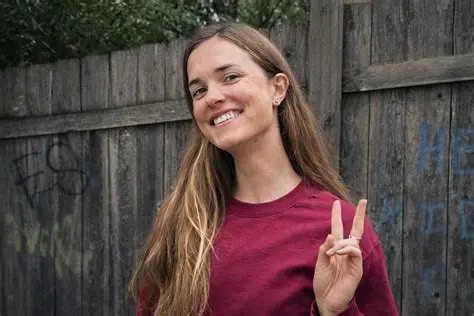
A Netflix true-crime documentary is bringing renewed attention to the case of an American murder suspect who hid in Costa Rica before investigators used a fake yoga job advertisement to track her to a beachfront hostel in Santa Teresa. The Truth and Tragedy of Moriah Wilson examines the 2022 killing of Anna Moriah “Mo” Wilson, a 25-year-old professional cyclist considered one of the rising stars of American gravel racing.
Wilson was shot and killed on May 11, 2022, at a friend’s home in Austin, Texas, where she was staying while preparing for a race. Kaitlin Armstrong, a yoga instructor who was 34 at the time of the killing, was convicted of murder in November 2023. She is serving a 90-year prison sentence.
Prosecutors argued that Armstrong killed Wilson out of jealousy over her connection to professional cyclist Colin Strickland. Armstrong and Strickland had been in an on-again, off-again relationship, while Wilson and Strickland briefly dated during one of the couple’s separations.
Evidence presented during the trial showed that Armstrong monitored Wilson through the fitness-tracking app Strava. GPS information from Armstrong’s vehicle also placed it near the home where Wilson was killed. Armstrong was questioned shortly after the shooting but released because of a problem with an unrelated warrant. She later left Texas and boarded a flight from Newark, New Jersey, to Costa Rica on May 18 using another person’s passport.
After arriving in Costa Rica, Armstrong changed her appearance and disappeared into the country’s network of tourist towns and hostels. She cut and darkened her hair, underwent cosmetic surgery and used several names while presenting herself as a yoga instructor. Investigators initially followed a lead to Jacó after learning that a woman matching Armstrong’s changed appearance had visited a yoga studio there. The search later shifted to Santa Teresa, the internationally known surf community on the Nicoya Peninsula.
Finding her proved difficult. Santa Teresa has a large population of foreign visitors, yoga practitioners and temporary workers, allowing Armstrong to blend into the community while living under a false name. With the search approaching a dead end, investigators placed an advertisement on a local Facebook page seeking a yoga instructor. Armstrong responded to the posting and arranged to meet at Don Jon’s, the Santa Teresa hostel where she was staying.
U.S. investigators returned to the area and worked with Costa Rica’s Tourism Police to place the hostel under surveillance. A deputy marshal entered the property posing as a tourist and approached Armstrong in Spanish. Although her appearance had changed, the investigator recognized her eyes and noticed a bandage on her nose from the cosmetic procedure. Costa Rican officers arrested Armstrong at the hostel on June 29, ending a 43-day search.
Armstrong was deported from Costa Rica and returned to the United States to face trial. Her capture became one of the most widely reported international fugitive cases connected to the country in recent years. The case attracted particular attention because Armstrong had managed to disappear into the daily rhythm of Santa Teresa, a community known for its steady flow of surfers, yoga instructors, backpackers and short-term residents.
The Netflix documentary shifts much of the attention back to Wilson’s life, family and promising cycling career. For Costa Rica, however, the Santa Teresa chapter remains one of the case’s most striking elements: a wanted fugitive blended into a busy beach community until a fake job advertisement exposed her.





