

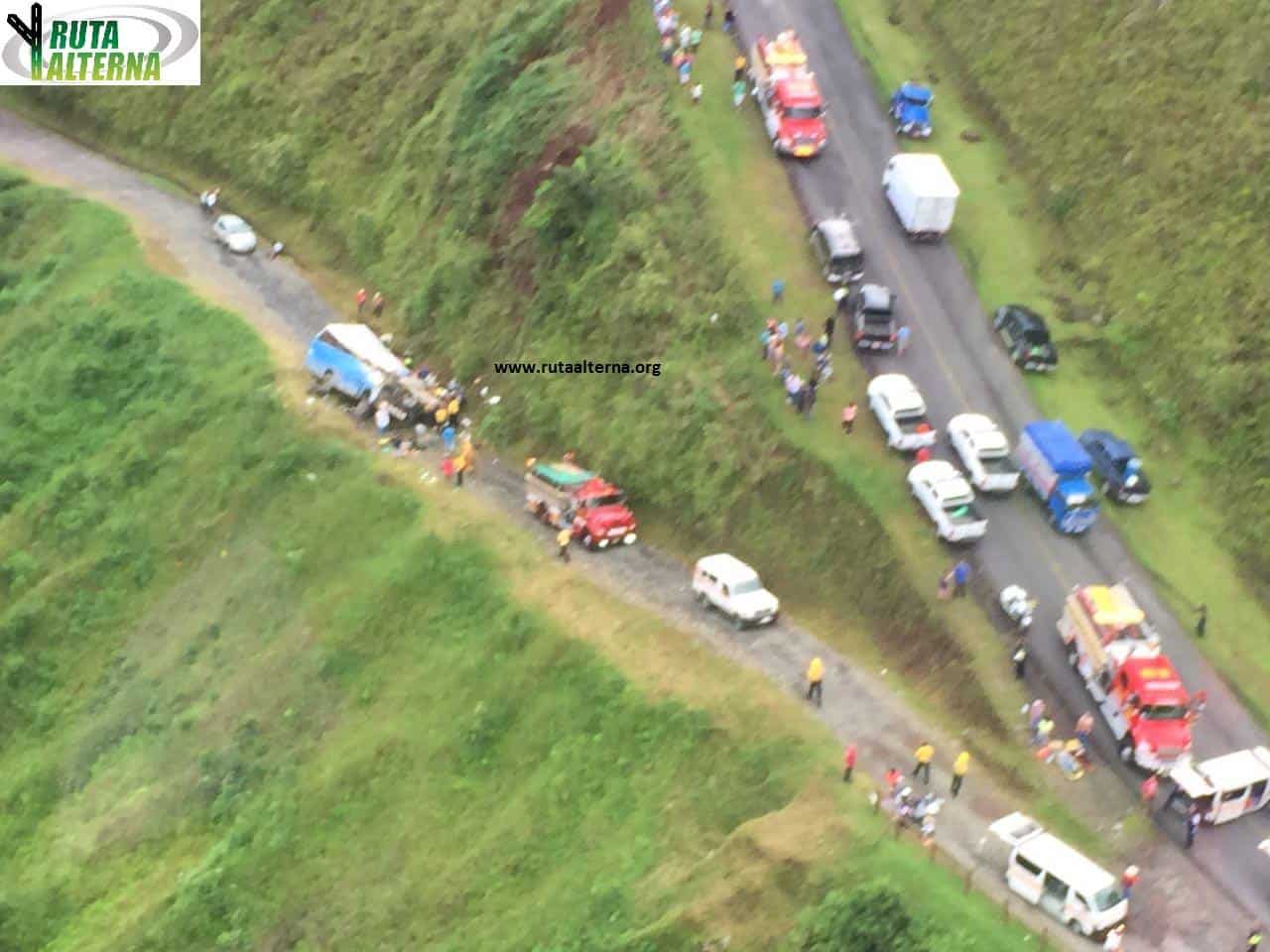
Costa Rica recorded 903 traffic deaths in 2025, going beyond the 873 homicide victims and exposing a public safety crisis that receives far less attention than organized crime and violent crime. The road toll was the highest recorded in at least 12 years. It surpassed the 887 traffic deaths reported in 2023 and amounted to an average of nearly 2.5 deaths a day, or roughly one person killed every 10 hours.
The 903 total includes people who died at the scene of a crash and those who later died from their injuries. That makes it broader than the figures commonly released by the Traffic Police and the Road Safety Council, which generally count only deaths at the scene. The comparison with homicides is especially striking because violent crime has dominated Costa Rica’s security debate. Costa Rica ended 2025 with its third-highest homicide total on record, yet another 30 people died in traffic crashes.
Unlike many homicides connected to organized criminal groups, most road deaths result from familiar and preventable dangers: excessive speed, unsafe passing, drunk driving, distracted driving, poorly maintained vehicles and failure to obey road signs. Speeding remains the leading identified cause of fatal crashes. By November 2025, excessive speed had been linked to 196 of the 497 deaths recorded at crash scenes, accounting for close to 40% of those fatalities.
Motorcycles have become the clearest symbol of the crisis. They are cheaper than cars, easier to move through congestion and widely used for work, deliveries and transportation outside the Central Valley. But riders have little protection when a collision occurs.
More than half of the people who died at crash scenes in 2025 were traveling on motorcycles. The Road Safety Council recorded 263 motorcycle deaths among the 572 people who died at the scene during the year. Motorcyclists also accounted for the largest share of crashes and injuries.
Many riders involved in serious crashes do not have a valid motorcycle license. Others ride without proper helmets, carry passengers on motorcycles not designed for them or attempt dangerous passing maneuvers on narrow roads. The risks are especially high outside the Greater Metropolitan Area, where motorcycles are often the most practical form of transportation but roads may lack lighting, shoulders, barriers or clear markings.
Alajuela recorded the largest number of road deaths in 2025, with 209, followed by San José with 166, Puntarenas with 155, Guanacaste with 135 and Limón with 131. San Carlos and the canton of San José each recorded 63 deaths, followed by Alajuela with 52 and Pococí with 38.
Alcohol remains another persistent problem. By the end of October, 19 people had died at crash scenes in cases linked to drunk driving, six more than during the same period in 2024. Those figures only include incidents in which alcohol was formally identified as a factor. Costa Rica already has laws against speeding, reckless driving and driving under the influence. The larger problem is enforcing them consistently across thousands of kilometers of national and local roads.
The Traffic Police force has fallen from more than 1,000 officers to around 600, according to road safety specialists. Limited personnel, aging patrol vehicles and budget restrictions make continuous enforcement difficult, particularly at night and in rural areas.
Experts have also warned that Costa Rica has reduced spending on road safety education and does not routinely conduct the technical road audits needed to identify dangerous intersections, poor designs and recurring crash locations. The decline in enforcement is occurring as the number of vehicles continues to increase. Costa Rica now has more than 3 million registered vehicles, while many of its main roads were designed for a smaller population and far less traffic.
Congestion itself does not always lead to fatal crashes, since vehicles move more slowly in heavy traffic. But it encourages drivers to take risks once roads open up, including speeding, unsafe passing and using shoulders to move around slower vehicles. Proposals to reduce deaths include automated speed cameras, more roadside alcohol testing, stronger motorcycle licensing requirements, improved road lighting and markings, and the restoration of regular safety campaigns.
Automatic cameras remain one of the most debated measures. Costa Rica previously used cameras to issue speeding tickets, but the system was suspended following legal and administrative disputes. Road safety specialists argue that technology could provide enforcement around the clock without requiring an officer at every dangerous stretch of road.
Reducing road deaths will also require treating crashes as more than isolated accidents. Each fatality reflects decisions involving road design, enforcement, vehicle standards and driver behavior. Costa Rica’s homicide crisis remains a serious national problem. The 2025 figures show that the danger on the roads is just as deadly and, in raw numbers, even worse.





