

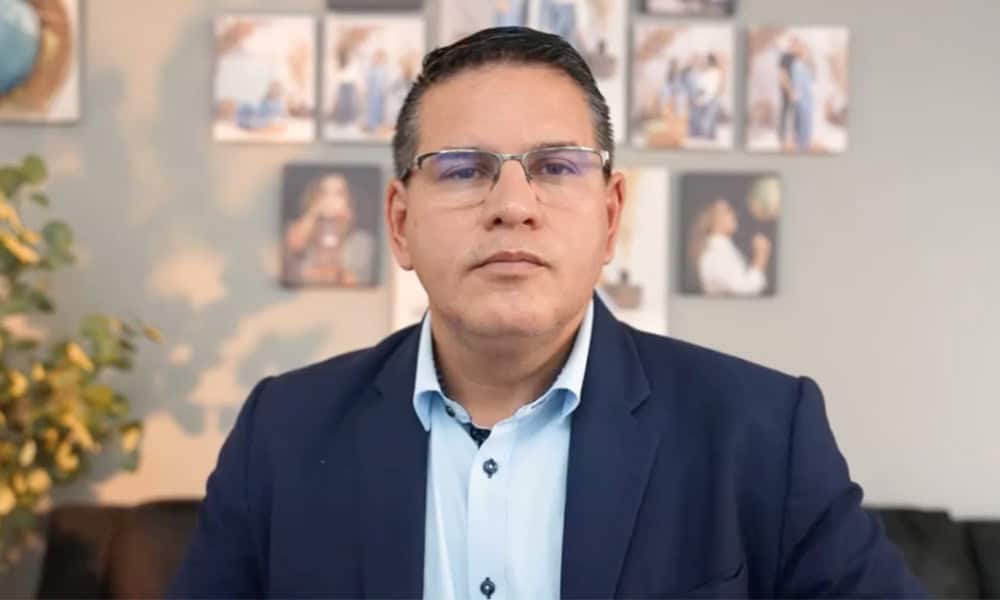
Former Partido Nueva República legislator and three-time presidential candidate Fabricio Alvarado appeared Tuesday morning at Costa Rica’s Prosecutor General’s Office in San José for a formal indagatoria, or preliminary questioning, tied to three criminal complaints alleging sexual abuse.
Alvarado, an evangelical pastor, singer and former lawmaker, entered the Fiscalía General at 7:30 a.m. and left at 9:04 a.m. without answering questions from reporters. He was accompanied by his attorney, Eric Ramos, who said the case is now moving into ordinary jurisdiction because Alvarado is no longer a legislator and no longer has congressional immunity.
Ramos did not say whether Alvarado gave a statement or answered questions during the proceeding. He said the indagatoria process includes informing the accused of the open cases, the evidence gathered, pending procedures and the right to testify or remain silent.
The complaints were filed by former lawmaker Marulin Azofeifa, Alicia Castillo and a third woman. Local reports say the Fiscalía informed Alvarado of the cases and evidence against him during Tuesday’s hearing. At this stage, the complaints remain under investigation and no conviction has been issued.
The case has both a judicial and political track. Since Alvarado’s term ended April 30, the criminal investigation no longer depends on the special procedures tied to legislative immunity. Ramos said the file now proceeds under ordinary legal rules, though he did not confirm which prosecutorial office will handle the next phase.
Alvarado has rejected the allegations publicly and previously said he would defend himself in court, not in what he described as a political spectacle. His defense has also questioned requests for precautionary measures, arguing that he has appeared voluntarily before authorities.
In the Legislative Assembly, the matter remains unresolved. A special legislative commission previously produced three reports: two recommended a public ethical sanction against Alvarado, while one recommended no sanction. The proposed sanction would be an ethical written reprimand published through official Assembly channels.
A vote on the reports was attempted near the end of the previous legislative period, but it failed after lawmakers broke quorum. The absences included members of Nueva República, the governing-aligned PPSD bloc and other legislators, preventing the Assembly from debating or voting on the proposed sanction before Alvarado left office.
The new Legislative Assembly is expected to take up the procedural issue this week. Assembly President Yara Jiménez said she would issue a resolution Thursday, May 14, on how the legislature should handle the pending reports. A later date would then have to be set for any final plenary vote.
The case places one of Costa Rica’s best-known conservative political figures under continued legal and legislative scrutiny. For now, the criminal file moves forward in the courts, while lawmakers must decide whether the Assembly can still issue an ethical sanction against a former legislator





