

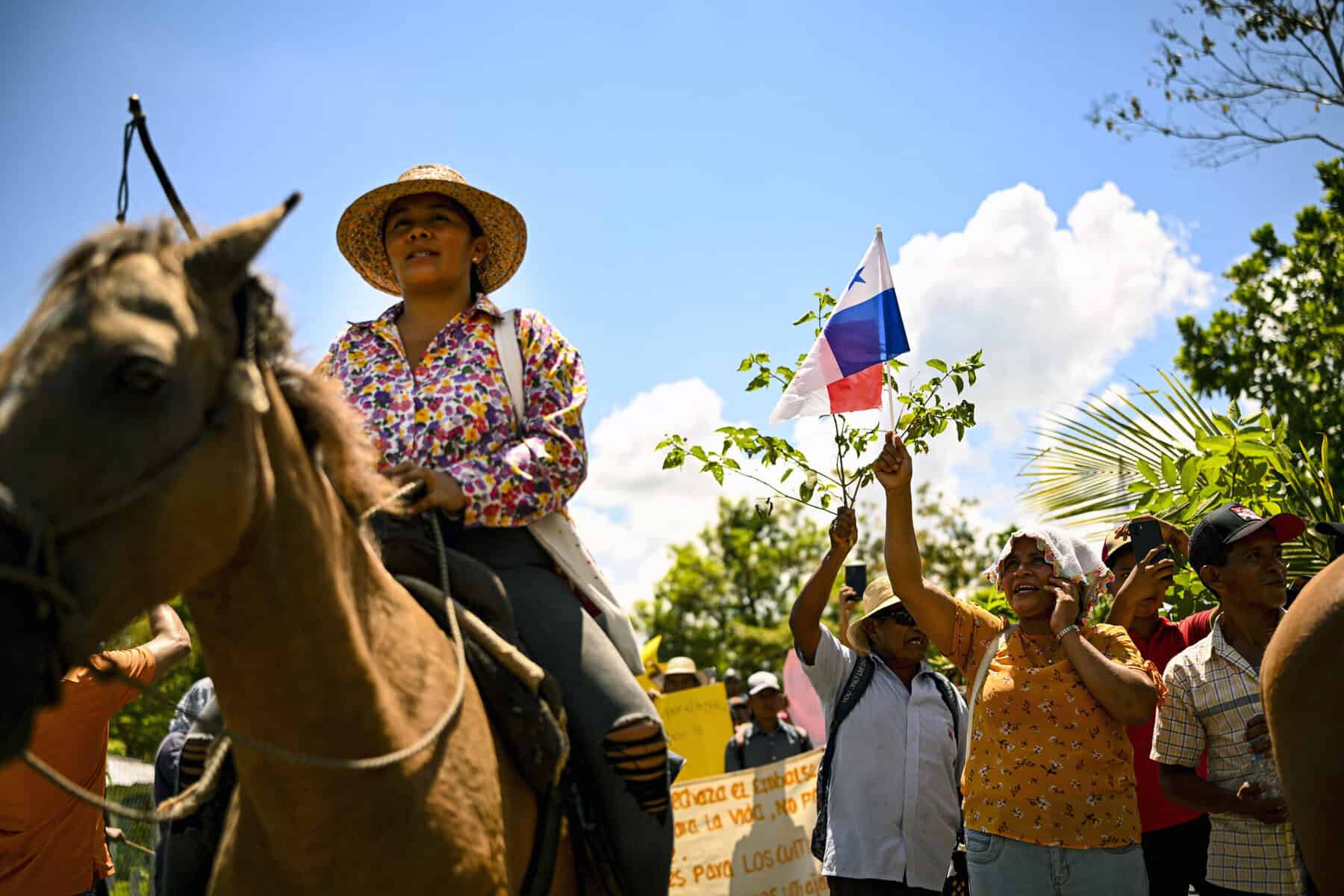
Hundreds of farmers marched on horseback and on foot through the rural community of Limón in Panama’s Chagres district Saturday to reject plans for a new reservoir on the Indio River. The demonstration ended at the banks of the Indio River, where the Panama Canal Authority plans to build a dam that would create a large artificial lake. The project aims to guarantee water supplies for the Panama Canal during future droughts.
The reservoir stands as a strategic initiative for the canal’s long-term operations. The Autoridad del Canal de Panamá, known as the ACP, has identified the Indio River basin as key to securing water resources for the interoceanic waterway over the next 50 years. Officials say it will also provide drinking water for more than half of Panama’s population.
The $1.6 billion project would flood 4,600 hectares. Water from the reservoir would flow through a nine-kilometer gravity tunnel to Gatún Lake in the canal watershed. Construction is slated to begin in early 2027 following bidding, with completion targeted for around 2032.
Farmers in the area say the reservoir would displace them from productive land they have farmed for generations. Claudino Domínguez, a 65-year-old farmer who has lived on the banks of the Indio River for 44 years, joined the protest. “That option, building the reservoir, is the hard one because where are we going to find the land we have now to farm?” Domínguez said.
Residents fear relocation to arid areas unsuitable for agriculture. “We reject being moved to arid land where not even cassava grows with fertilizer,” Domínguez explained. The protest comes as the ACP advances the project. The agency is conducting a census of affected communities and operating community relations offices in places including El Limón. Officials say they are developing a resettlement and livelihood restoration plan in consultation with residents.
The ACP describes the reservoir as essential after severe droughts, such as the one in 2023 that led to sharp reductions in ship traffic through the canal. The additional storage capacity would help maintain transit levels and support national water needs.
Elías Serrano, 75, another longtime resident, also participated in the demonstration. “I am fighting for our lands, our rivers and our farmers,” Serrano said. He argued that the reservoir is not necessary and pointed to alternatives such as Lake Bayano, the country’s second-largest body of water, east of Panama City.
The project would require relocating around 2,500 people from communities in the Indio River basin. Farmers question whether compensation and new lands will allow them to maintain their way of life. ACP representatives have stated they maintain open dialogue with local communities and authorities. The agency emphasizes that the project includes complementary initiatives for water supply, sanitation, sustainable agriculture, and land titling in the basin.
Protesters say negotiations have not produced viable solutions that protect their current lands and livelihoods. They call for other options to address the canal’s water challenges without flooding the Indio River valley.
The board of directors of the Panama Canal Authority prioritized the project in early 2025. Soil studies and environmental assessments continue alongside community engagement efforts. What happens next depends on the outcome of consultations and the bidding process. The ACP plans to issue tenders for design and construction in 2027.





