

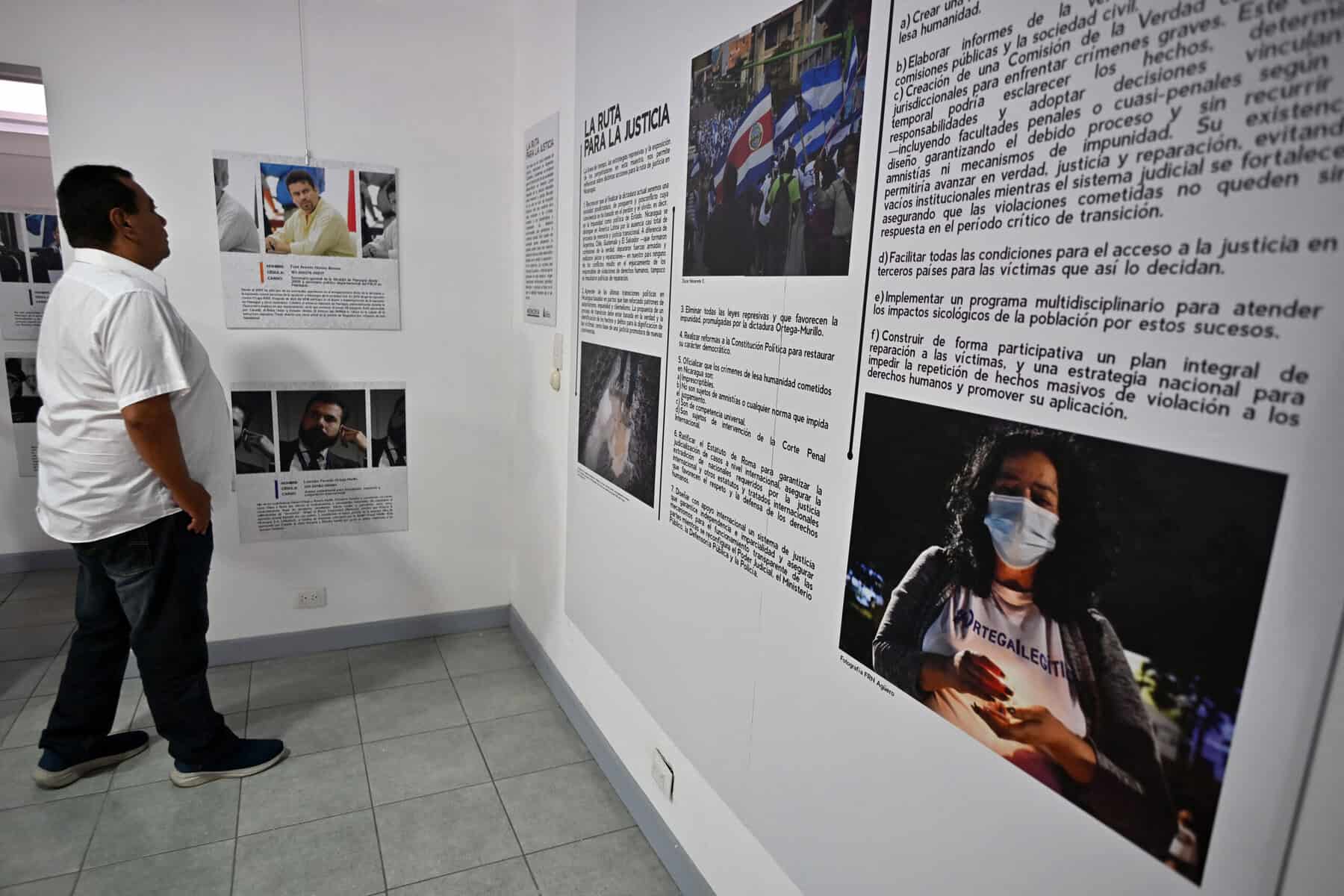
A new Museum of Memory has opened in San José, Costa Rica, giving Nicaraguan exiles and victims’ families a public space to document the repression that followed the 2018 protests against Daniel Ortega and Rosario Murillo.
The museum, titled Lo que no debemos olvidar — What Should Not Be Forgotten — was created by the Nicaragua Never Again Collective, a human rights group founded in Costa Rica in 2019 by Nicaraguan defenders forced into exile. The group has spent years documenting abuses, supporting victims, and preserving testimony from people affected by state violence in Nicaragua.
The space opened on April 20 in San José, the same date Ortega reappeared publicly in Managua on the anniversary of the 2018 uprising. The timing gave the opening a clear political and historical weight: while Nicaragua’s government continues to reject accusations of repression, the museum presents another account, centered on victims, survivors, and the exiled community.
The exhibit brings together photographs, videos, audio recordings, personal objects, testimonies, and a timeline of the crisis that began in April 2018. Earlier presentations of the project described four main areas: the events that unfolded after the protests, the impact on the Nicaraguan population, the phases of repression under the Ortega-Murillo government, and possible paths toward justice.
For many Nicaraguans in Costa Rica, the museum is also a place of mourning. The 2018 crackdown left more than 300 people dead, with international human rights bodies documenting widespread abuses, arbitrary arrests, torture, exile, and the closing of civic space. The Inter-American Commission on Human Rights later updated its death toll from the crisis to at least 355 people.
The museum also names alleged perpetrators and presents the repression as part of a broader structure of state violence. A recent report on the exhibit described a section dedicated to a wall of names and faces, along with materials that trace the chain of command and institutions involved in repression and judicial persecution.
Costa Rica has become one of the main centers of Nicaraguan exile since 2018. That gives the museum a local importance beyond the Nicaraguan community itself. San José is not only hosting an exhibit; it is hosting part of Nicaragua’s political memory, preserved outside the country because many of the people who lived through the repression can no longer safely tell those stories at home.
The Nicaragua Never Again Collective has framed the museum as a response to what it describes as an effort by the Ortega-Murillo government to erase or rewrite the history of the protests. The group says memory is a first step toward truth, justice, reparations, and guarantees that the abuses are not repeated.
The opening also comes as international scrutiny of Nicaragua continues. The United Nations Group of Human Rights Experts on Nicaragua warned in March that the government has targeted opponents through repression, forced exile, and a transnational surveillance network.
For visitors, the museum asks a simple question with a heavy answer: what should not be forgotten? For Nicaragua’s victims, exiles, and families still searching for justice, the answer begins with the names, faces, objects, and testimonies now preserved in San José.





