

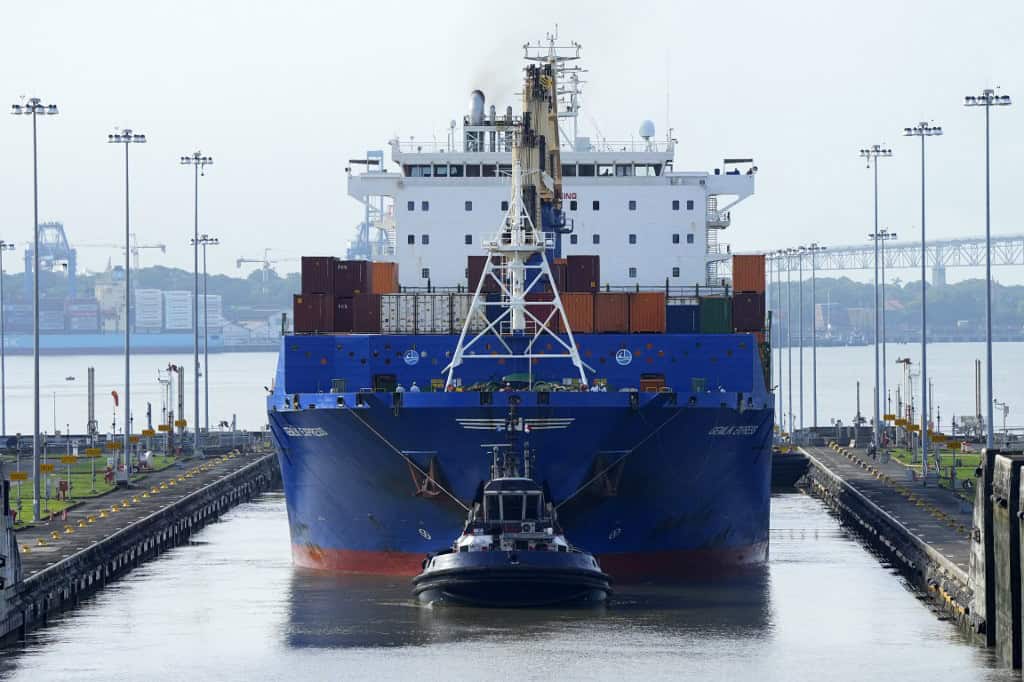
Shipping companies have paid as much as $4 million in last-minute auction fees to send vessels through the Panama Canal, the Panama Canal Authority confirmed this week, as the effective closure of the Strait of Hormuz amid the U.S.-Iran conflict forces global trade to shift routes.
The surge comes on top of standard transit fees that typically range from $300,000 to $400,000, depending on vessel size. Auction premiums, which allow ships without reservations to skip multi-day queues off Panama’s coast, have jumped from an average of roughly $135,000 to $250,000–$300,000 earlier this year to about $385,000–$425,000 in recent weeks. One fuel vessel reportedly paid an extra $4 million to redirect its route from Europe to Singapore after the Hormuz disruption.
Panama Canal Administrator Ricaurte Vásquez described the payments as responses to urgent last-minute changes rather than any backlog at the waterway itself. “Ships have not piled up at the canal,” he said. “The costs reflect greater urgency by vessels needing to move faster amid the larger trade chaos.”
The authority has added slots to handle demand, with daily transits rising in recent months. Figures show the canal moved more than 6,200 vessels in the first half of its current fiscal year, with some days exceeding 40 transits. Auction slots go to the highest bidder, giving companies a way to avoid waiting off the Pacific or Atlantic entrances.
The Hormuz developments have pushed more traffic toward the Panama Canal as an alternative path between the Atlantic and Pacific. Industry reports note that some crude and product tankers now favor the longer but safer Panama route over the riskier Gulf passage. Vásquez said the pattern reflects temporary market shifts tied directly to the geopolitical tensions.
Separately, Panama’s Foreign Ministry on Wednesday condemned Iran’s seizure of the Panama-flagged container ship MSC Francesca in the Strait of Hormuz. The ministry called the action by Iran’s Islamic Revolutionary Guard Corps illegal and a violation of international law that raises tensions in the Gulf and threatens maritime security.
The Panama Maritime Authority reported that the Italian-owned vessel was intercepted while transiting near the strait and taken toward Iranian waters. Panama, which maintains the world’s largest merchant fleet under its flag, said it remains in contact with regional governments and continues to monitor the situation. The ministry demanded respect for free navigation in international waters.
The incidents show Panama’s central role in global shipping at a moment of heightened risks. Canal officials say operations continue without major delays, and the authority continues to adjust slot availability based on real-time demand.





