

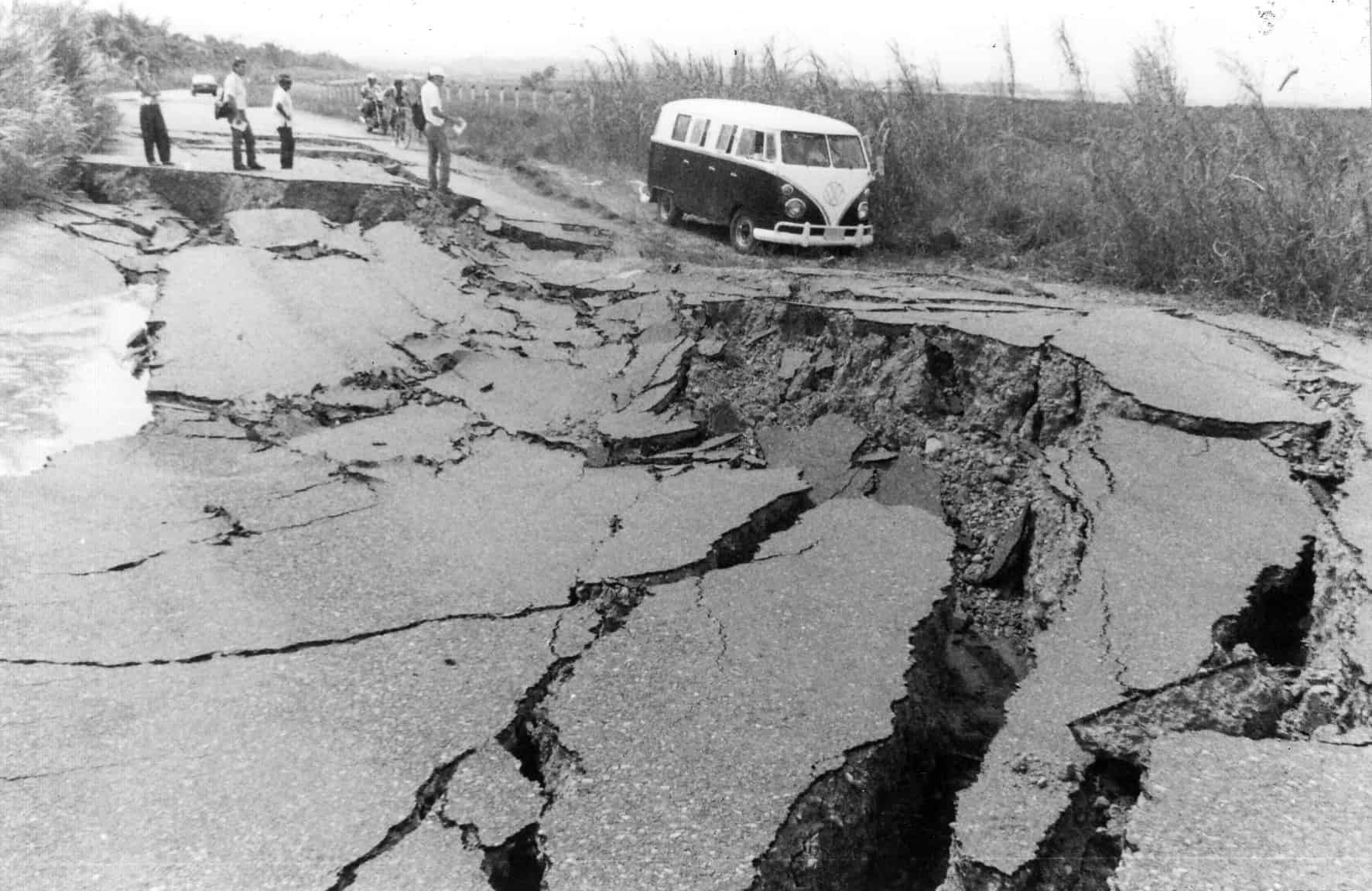
On April 22, 1991, the province of Limón lived through one of the most terrifying days in its history: the Limón earthquake shook the ground with an intensity never before recorded in Costa Rica. At 3:57 p.m., a 7.7-magnitude quake struck with its epicenter in Valle de la Estrella, 36 kilometers from the city of Limón. The shaking lasted roughly 10 seconds — brief by the clock, long enough to level buildings and reshape the Caribbean coast. Its impact was felt far beyond the country’s borders.
According to a report from the National Seismological Network (RSN), the tremor was felt from Tegucigalpa, Honduras, to Panama City, as well as on the Colombian island of San Andrés. The earthquake was caused by back-arc thrusting of the Caribbean tectonic plate beneath the Panama block, along a fault system known as the North Panama Thrust Belt. Such large back-arc thrusting events are geologically rare, occurring in only a handful of places worldwide.
On the Costa Rican side, 651 people were injured and 48 lost their lives. In Panama, the toll rose to 1,061 injuries and 79 deaths. Within Costa Rica, authorities reported 4,452 collapsed structures and 7,869 damaged homes. Minutes after the shaking stopped, a tsunami of up to two meters struck the southern Caribbean coast, hitting the Cahuita and Puerto Viejo areas hardest. Similar waves were recorded on the Panamanian side. It remains one of the largest tsunamis ever documented along the Caribbean margin of Central America.
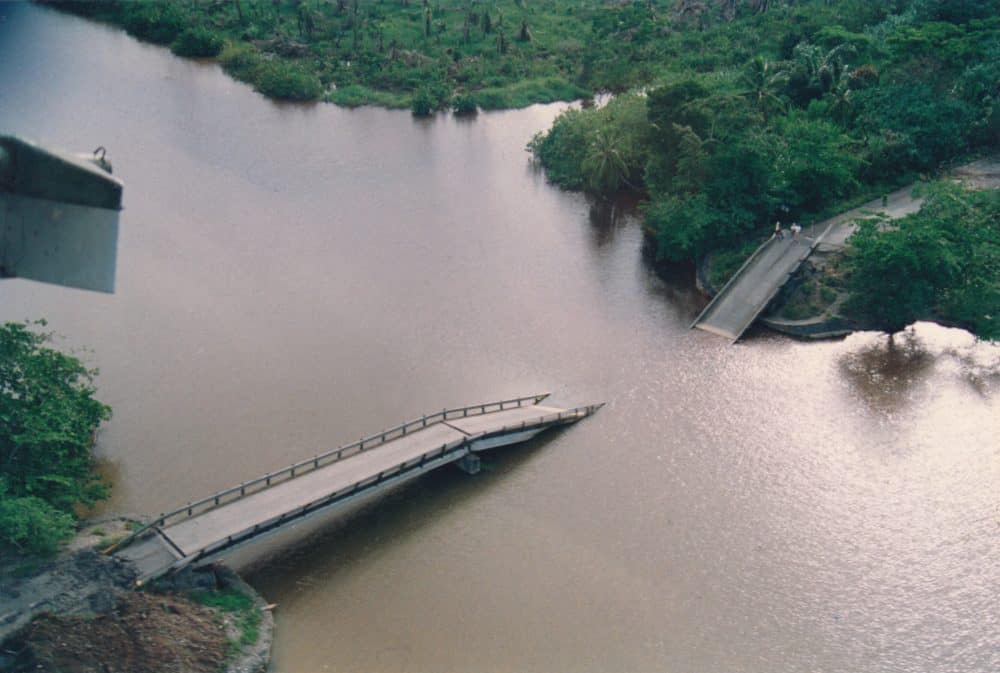
The destruction was extensive, affecting 80% of Costa Rican territory and 20% of Panama’s. The most significant losses occurred to vital infrastructure, including roads, railways, bridges, ports, and aqueducts. In Costa Rica alone, 309 kilometers of roads had to be rebuilt, and total damages reached 21,991.9 million colones.
Roads and bridges between Limón and Sixaola were destroyed, cutting off large stretches of the Caribbean coast. Some of the worst-hit communities could only be reached by helicopter, and in certain areas rescue teams had to enter from the Panamanian side to deliver aid. As if the devastation weren’t enough, three and a half months later a tropical wave triggered one of the worst floods in decades. The flooding was made worse by the changes the earthquake had caused to the terrain.
A coastline permanently transformed
The Limón earthquake triggered a geological shift along the Caribbean, reshaping the coastline from Moín in the north to Gandoca in the south. According to the University of Costa Rica (UCR), the maximum uplift measured 1.85 meters in the vicinity of Limón, while along the coast of Bocas del Toro in Panama, subsidence of up to 0.9 meters occurred. The uplift killed every organism on the coral reefs that were suddenly left above the waterline.
A rise in the water table was also observed following the quake, ranging from 0.5 to 2.0 meters in deltaic areas, particularly in Matina and northeast of Limón. Roughly 3,000 square kilometers were affected by soil liquefaction in the lowlands of the Caribbean coast, and an area of 2,000 square kilometers — much of the Talamanca mountain range — was devastated by landslides, according to the University’s report.
The impact resulted in the complete destruction of 50,000 square kilometers of primary forest. Other seismic zones were activated as well, producing further earthquakes exceeding magnitude 6 in other parts of the country within weeks.
A turning point for preparedness
The Limón earthquake became a turning point for how Costa Rica prepares for seismic events. In the years that followed, the country strengthened its building codes, expanded its seismic monitoring network, and rolled out public education programs and nationwide drills led by the National Emergency Commission (CNE). Those improvements are widely credited with keeping casualties low during later major quakes, including the 2012 Sámara earthquake.
Costa Ricans still remember the Limón earthquake as a tragedy that scarred the nation and left a lasting mark on the Caribbean province — but also as the disaster that taught the country how to live more safely on the Ring of Fire.





