

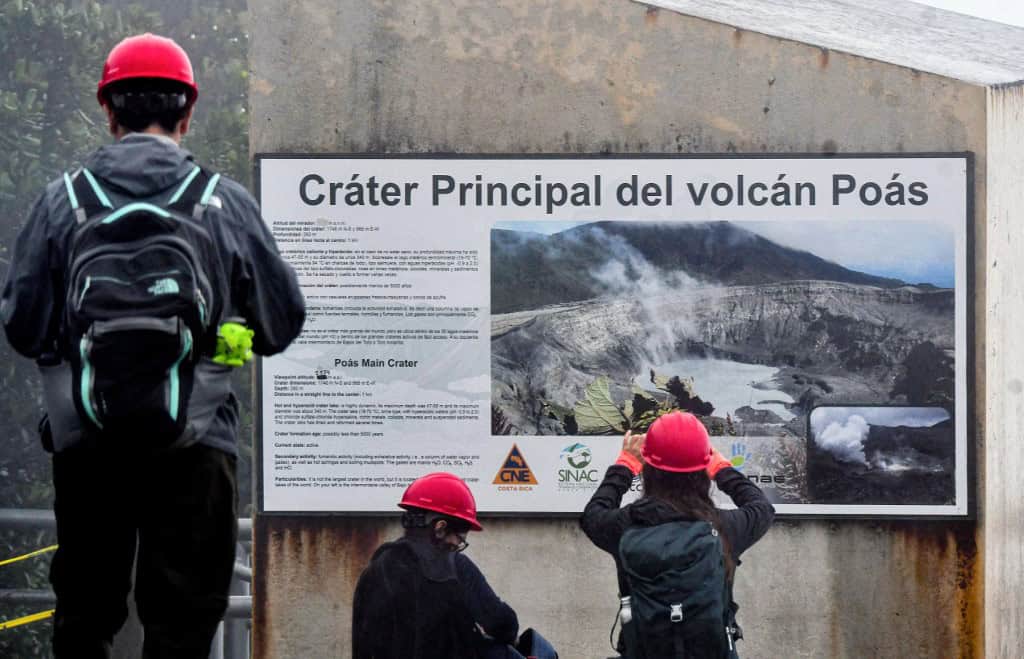
A recent operation at Volcán Poás National Park saw 30 people detained for entering restricted zones within the park, with at least one repeat offender referred to the Public Prosecutor’s office a reminder that Costa Rica is no longer treating illegal access to protected areas as a minor inconvenience.
The country’s National System of Conservation Areas, known as SINAC, has been ramping up operations at Poás and other volcanic parks for years, and the consequences for those caught are becoming increasingly serious. For travelers planning a visit to Costa Rica’s extraordinary natural landscapes, the incident underlines one of the most important pieces of advice any experienced visitor can offer: always book through a licensed operator and always confirm that park entrance fees are included in what you are paying for.
The appeal of going off the beaten path in Costa Rica is understandable. Operators advertising access to places like the Quemaderos del Poás, the dramatic sulfuric canyon nicknamed the “Canyon of Mordor” have long promoted these experiences on social media, charging tourists anywhere from $45 to $75 per person. What those listings rarely mention is that the routes pass through strictly prohibited zones, that guides leading these tours have no official authorization, and that the person booking in good faith could find themselves detained by park rangers and formally warned by authorities.
A first offense typically results in an administrative notice and expulsion from the park. A second offense, however, can be referred to the Public Ministry as an act of contempt of authority, carrying a potential prison sentence of between six months and three years under Costa Rican law. The person referred to prosecutors in the most recent Poás operation was not someone who went looking for trouble, they were someone who simply had not understood, or had not been told, that they had already crossed a line once before.
Licensed guides operating through registered tour companies carry official accreditation from SINAC or the relevant conservation area authority. They work within designated trails, carry proper insurance, and are accountable if something goes wrong. Critically, they include valid park entrance tickets as part of what you pay — not as an afterthought, but as proof that your visit is on record and legally sanctioned. Travelers who book through informal channels or social media contacts often have no idea whether the person leading them holds any certification at all.
The problem is compounded by the fact that protected area boundaries in Costa Rica are not always clearly signposted or fenced. Corcovado National Park on the Osa Peninsula is a well-known example: its perimeter passes through dense jungle where there are no gates, no walls, and in many places no visible markers of any kind. Rangers patrol, but the line between a legitimate trail and a restricted zone can be invisible to someone unfamiliar with the terrain. Visitors who believe they are on a permitted route can unknowingly step into a protected core zone and face the same legal exposure as someone who entered deliberately.
This ambiguity becomes particularly relevant for those exploring Costa Rica’s coastline and marine protected areas by boat. Several popular tour routes — whale watching in the Ballena Marine National Park, dolphin tours along the Pacific coast, snorkeling trips around Isla del Caño operate in or near waters that fall within protected zone boundaries.
Unlike a land park where a fence or a sign might at least suggest a boundary exists, there is nothing visible on the surface of the ocean to indicate where a marine park’s restricted zone begins. Whether a boat captain is operating within authorized limits, whether the tour includes the correct marine park entrance fees, and whether the operator holds the permits required to enter those waters are questions that travelers rarely think to ask but that SINAC and marine authorities are increasingly checking.
The safest approach, whether you are heading to a volcano, a cloud forest, a jungle lodge near Corcovado, or out to sea on a boat tour, is to book through an operator listed in the Costa Rica Tourism Institute’s official registry, ask to see the guide’s ICT or SINAC accreditation, and confirm that your entrance fees are itemized and included in the price. A good guide will welcome those questions. One who cannot answer them is a risk you do not need to take.





