

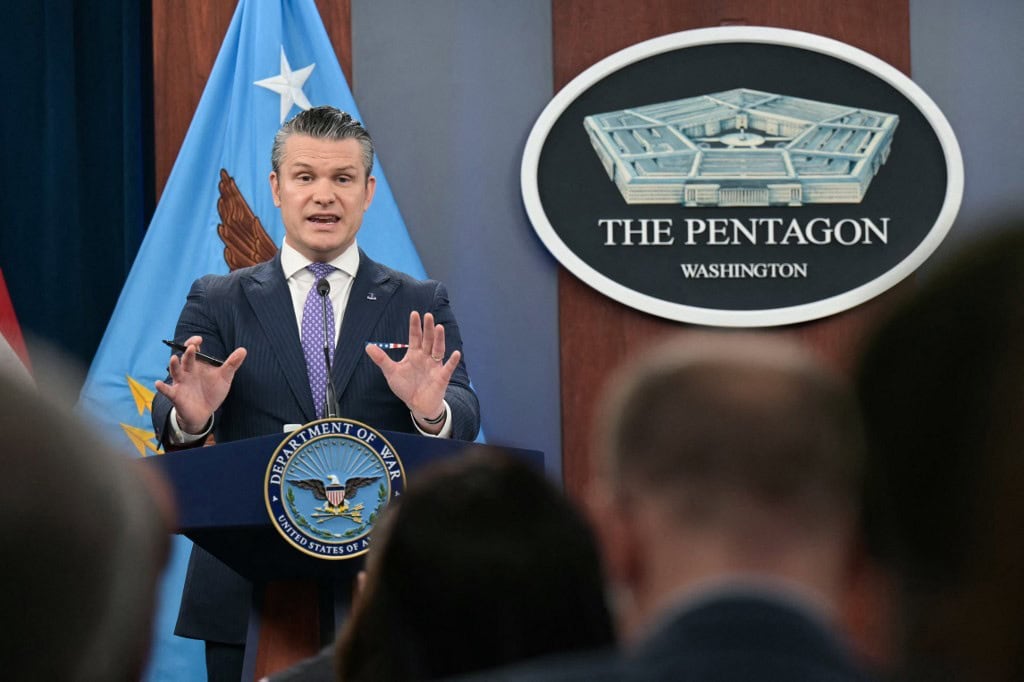
Costa Rica has been folded into a new U.S. strategic concept that Defense Secretary Pete Hegseth calls “Greater North America,” a label the Trump administration is using to describe what it sees as Washington’s immediate security perimeter. In a speech at the Americas Counter Cartel Conference in Doral, Florida, Hegseth said the map runs from Greenland to the Panama Canal and its surrounding countries and includes every sovereign nation and territory north of the equator, from Greenland to Ecuador and from Alaska to Guyana. That puts Costa Rica inside a new U.S. security frame that links geography, border control, migration and anti-cartel policy.
The speech marked a broader shift in tone as the administration cast the Western Hemisphere less as a diplomatic neighborhood and more as a shared security zone. Hegseth said countries in that space form an “immediate security perimeter” for the United States and argued that border security must become a top priority across the hemisphere. He also tied the strategy to control of key terrain, including the Panama Canal and nearby countries, a point that carries particular weight for Costa Rica because of its location between Central America and the canal corridor.
For Costa Rica, the practical meaning is not annexation or any formal loss of sovereignty. The concept is a U.S. defense and geopolitical doctrine, not a legal redesign of borders. But it does suggest that Washington increasingly sees Costa Rica as part of a frontline zone for migration enforcement, anti-narcotics operations and wider regional competition. Hegseth’s remarks framed cartel activity, drug trafficking and irregular migration as central threats inside that perimeter, while also reviving Monroe Doctrine language about preventing outside powers from gaining influence in the hemisphere.
The timing matters. Costa Rica has already moved closer to Washington on security and migration in recent months. Last week Costa Rica signed an initial agreement allowing it to receive some migrants deported from the United States who are nationals of third countries, part of a broader regional push tied to the new U.S.-backed Shield of the Americas initiative against cartels. That came on top of years of bilateral cooperation on drug trafficking, transnational crime and migration management.
That means Costa Rica’s inclusion in “Greater North America” is less a sudden break than a sharper definition of a relationship that was already expanding. The difference is that Washington is now placing that relationship inside a more openly militarized and ideological framework, one that blends security cooperation with harder rhetoric on borders, crime and foreign influence. For Costa Rica, a country without an army that has long leaned on diplomacy and civilian institutions, that framing could become politically sensitive even as cooperation with the United States deepens.
The concept could also cause debate here in Costa Rica over how closely San José should align itself with Washington’s regional agenda. Supporters of closer ties are likely to argue that the country cannot ignore narcotrafficking, maritime smuggling and migration pressures moving through Central America. Critics, though, may see the new doctrine as a sign that Costa Rica is being drawn into a U.S. security project that reaches well beyond police cooperation and into a larger contest over influence in the hemisphere.
For now, what is clear is that Costa Rica has been explicitly named inside a newly defined U.S. strategic neighborhood. In Washington’s telling, that neighborhood is no longer limited to the traditional North American trio of the United States, Canada and Mexico. It now stretches south to include Costa Rica and the rest of the countries north of the equator, placing our country inside a security map that is likely to shape future discussions on migration, organized crime, canal security and regional alliances.
One note on terminology: the official U.S. government pages and speech transcript now use “Department of War” branding for Hegseth’s office, even though this is the department historically known as the Pentagon and Department of Defense.





