

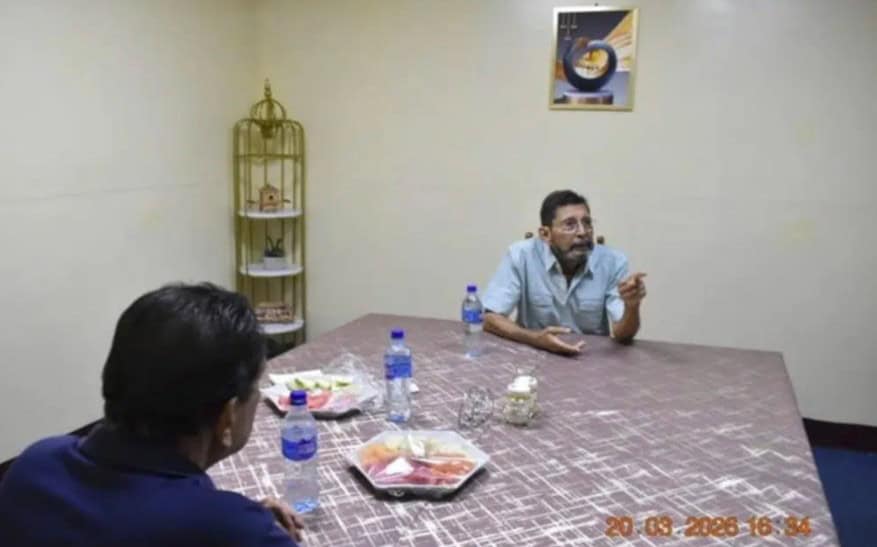
The Inter-American Commission on Human Rights has ordered Nicaragua to protect the life, personal integrity and health of Bayardo Arce Castaño, a historical Sandinista commander held in prison. The CIDH granted precautionary measures to Arce and his immediate family after determining they face a situation of gravity and urgency with risks of irreparable harm.
Arce, 77, served as economic adviser to President Daniel Ortega until his arrest by police on the night of July 30, 2025. He remains in isolation at the Jorge Navarro National Penitentiary System, known as La Modelo, in Managua.
The CIDH cited reports from Arce’s representatives that he receives no medical care for chronic conditions, including diabetes, liver issues and prostate problems. He has lost significant weight, shows signs of physical deterioration and lives under conditions the commission described as incompatible with international standards for older detainees.
His family also faces surveillance, intimidation and acts of persecution by state agents, according to the resolution. Nicaragua provided no information to the CIDH despite a formal request sent last month.
The measures require Nicaragua to take immediate steps. These include guaranteeing Arce’s right to life and health, ensuring detention conditions meet international norms for his age, conducting a full medical evaluation and providing necessary treatment and medication. Authorities must allow regular family contact and protect relatives from harassment. Nicaragua must also report back on actions taken to investigate the facts.
Arce was a key figure in the 1979 Sandinista revolution that overthrew dictator Anastasio Somoza. He fought alongside Ortega during the armed struggle and later held senior positions in the 1980s Sandinista government. After years in opposition, Ortega returned to power in 2007. Arce advised him on economic matters until his detention.
Nicaraguan authorities announced Arce’s conviction in January for money laundering and defrauding the state. The Procuraduría General de Justicia described an alleged scheme involving shell companies and illicit funds but released no details on the length of the sentence or the conduct of the trial.
For months after his arrest, Arce’s whereabouts remained unknown to his relatives. His six children publicly demanded proof of life in early 2026, reporting he had been held incommunicado since December 2025. On March 22, 2026, the government released photographs of Arce during a visit from his brother Gerardo Arce Castaño on March 20. The images showed him noticeably thinner.
The CIDH noted Arce’s vulnerability as an older person in prolonged isolation with limited family access and no confirmed medical follow-up. The commission stressed that the lack of state response heightens the risk to his rights. Nicaragua has not commented publicly on the precautionary measures as of yet.
The case forms part of broader international scrutiny of detention conditions and due process in Nicaragua. Arce’s situation stands out because of his long history inside the Sandinista movement that has governed the country for decades.





