

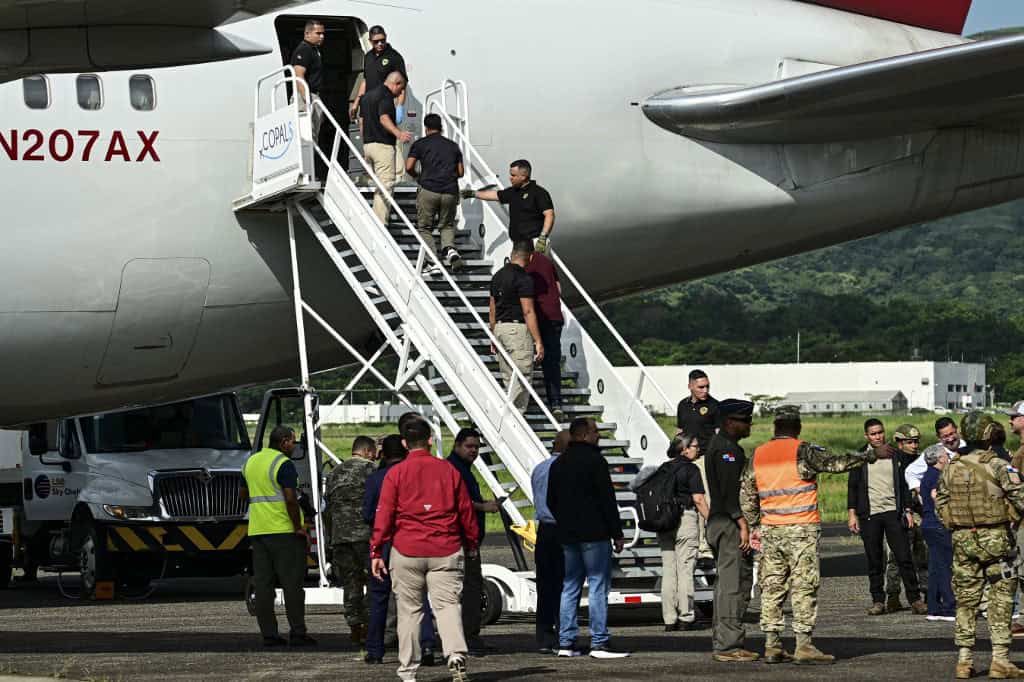
A Costa Rican oversight body is warning that the country risks repeating human rights violations if it moves ahead with a new agreement to accept migrants deported from the United States. The alert comes after President Rodrigo Chaves’ government signed a nonbinding migration deal with Washington that would allow up to 25 third-country deportees per week to be sent to Costa Rica.
The warning was issued by Costa Rica’s National Mechanism for the Prevention of Torture, an entity attached to the Ombudsman’s Office. It said any cooperation with the United States must strictly follow international human rights standards and avoid treating migrants as criminals. The body pointed to what happened in 2025, when Costa Rica received about 200 deported migrants from the United States under what authorities called an assisted voluntary return process.
According to the mechanism, Costa Rica cannot afford a repeat of the conditions tied to that earlier operation. It said the country previously saw what amounted in practice to hidden deprivation of liberty, with migrants unable to leave freely despite official language describing the process as voluntary. It also flagged the retention of identity documents, lack of clear information in languages migrants could understand, weak access to legal assistance, and harm to children and other vulnerable groups caused by uncertainty and isolation.
The body went further, warning that accepting deportees without individualized review and legal safeguards could expose Costa Rica to accusations of arbitrary administrative detention and make the country part of a broader chain of international rights violations. It also raised concerns that failures in due process could undermine the principle of non-refoulement, which bars sending people to places where they could face persecution or serious harm.
That warning carries added weight because Costa Rica’s Constitutional Chamber already found that rights were violated in the 2025 case. The mechanism said the court, in ruling 2025-19485, determined that the conditions surrounding the entry and stay of those deported migrants breached fundamental rights. International reporting on that episode also found that many of the deportees were held for weeks near the Panama border, had passports withheld, and were later released only after mounting legal challenges and criticism.
The current agreement has already drawn broader scrutiny. Costa Rica has said the arrangement lets it accept or reject proposed transfers and that deportees would receive a special migratory status while their cases are handled under Costa Rican law. The government has also said it will not return people to countries where they could face persecution. Still, rights advocates and outside observers have warned that third-country deportation deals can leave migrants stranded in legal limbo in countries where they have no ties, no support network, and no clear path forward.
The Chaves administration has argued that this new round will be handled under better conditions, with support from the United States and the International Organization for Migration. But the oversight body’s message is direct: Costa Rica’s role cannot be reduced to logistics. If the country accepts deported migrants again, it will have to show that detention is not disguised as shelter, that legal protections are real, and that the rights failures documented in the last case are not repeated.
There is already a legal challenge forming around the new arrangement. Costa Rica’s Constitutional Chamber is reviewing a constitutional complaint tied to the agreement, adding another layer of pressure as the country weighs how far it is willing to go in helping carry out the latest phase of U.S. deportation policy.





