

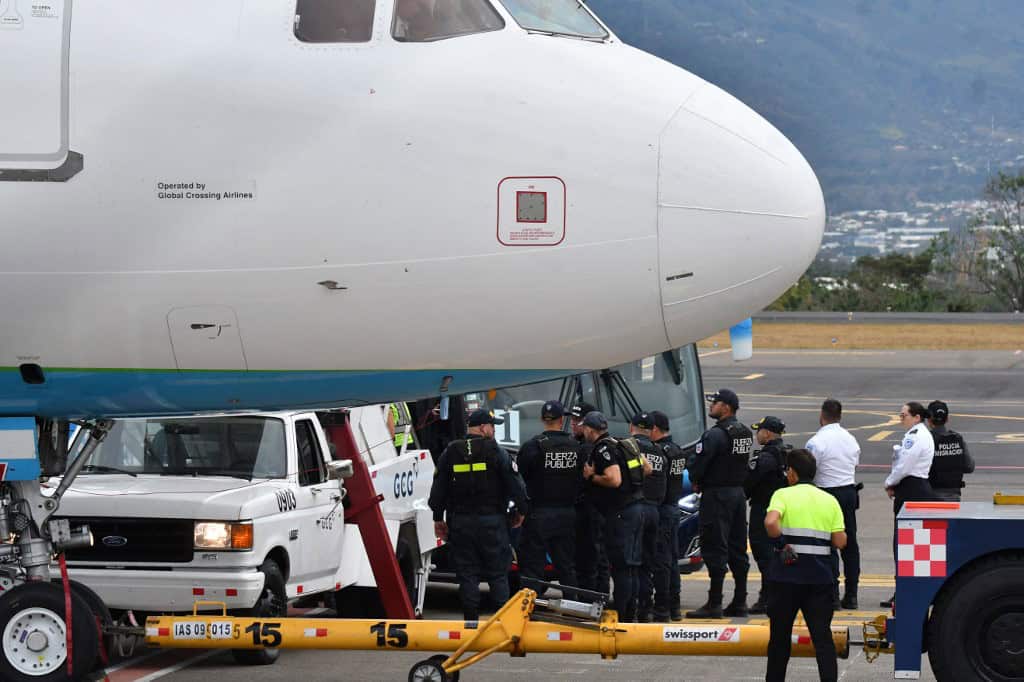
Costa Rica’s new migration agreement with the United States is starting to look less like a one-off diplomatic gesture and more like a regular pipeline. After the deal was first disclosed earlier this week, officials have now confirmed that Costa Rica could receive up to 25 deportees per week from the U.S. who are not Costa Rican nationals. That detail gives the agreement a clearer scale and suggests Costa Rica is being folded more deeply into Washington’s regional deportation strategy.
The weekly figure builds directly on what was already raising concern in Costa Rica. As previously reported, the agreement allows the United States to transfer non-U.S. nationals to Costa Rican territory, where they would receive temporary legal status while their cases are handled under local immigration law. Costa Rican officials have said the arrangement is non-binding and that the government can accept or reject each case individually.
The government has presented that discretion as proof that Costa Rica is not surrendering control over its migration policy. But the number now attached to the agreement changes the conversation. Up to 25 arrivals a week would turn Costa Rica into a recurring destination for third-country deportees, not simply an emergency partner in an isolated transfer.
That matters because Costa Rica has already gone through a version of this. In 2025, our country received 200 migrants deported from the United States and housed them at the CATEM migrant center in Paso Canoas. That episode drew criticism from Costa Rica’s National Torture Prevention Mechanism and from lawmakers who described poor conditions, legal uncertainty, and severe restrictions on the migrants’ freedom of movement.
The legal fallout from that earlier operation still hangs over the new deal. Costa Rica’s Constitutional Chamber ruled in favor of a habeas corpus petition tied to some of the migrants held at CATEM and ordered their release. The court later warned immigration authorities over delays in defining their legal status. That history is likely to shadow every stage of this new agreement, especially if weekly arrivals begin without a clearer public explanation of how the system will work.
The financing structure also underscores how closely tied the arrangement is to Washington. According to officials, the United States will fund the program, while the International Organization for Migration is expected to provide housing and food. What remains unclear is how long deportees may stay in Costa Rica, where they would be housed, and what options they would have if return to their home countries is delayed or legally challenged.
The agreement was formalized during the visit of Kristi Noem, who is Washington’s envoy for the Shield of the Americas initiative. That broader framework has been described as a regional coalition aligned with U.S. migration enforcement goals. In Costa Rica, critics argue the country is being drawn into a role that sits uneasily with its democratic image and long-standing emphasis on human rights and neutrality.
What began as a troubling headline earlier this week now appears to be something more concrete: Costa Rica is preparing to receive a steady flow of deportees sent by the United States from other countries. The question is no longer just why Costa Rica agreed to it. It is whether the government can carry it out without repeating the legal confusion, secrecy, and rights concerns that marked the last round of U.S.-linked migrant transfers.





