
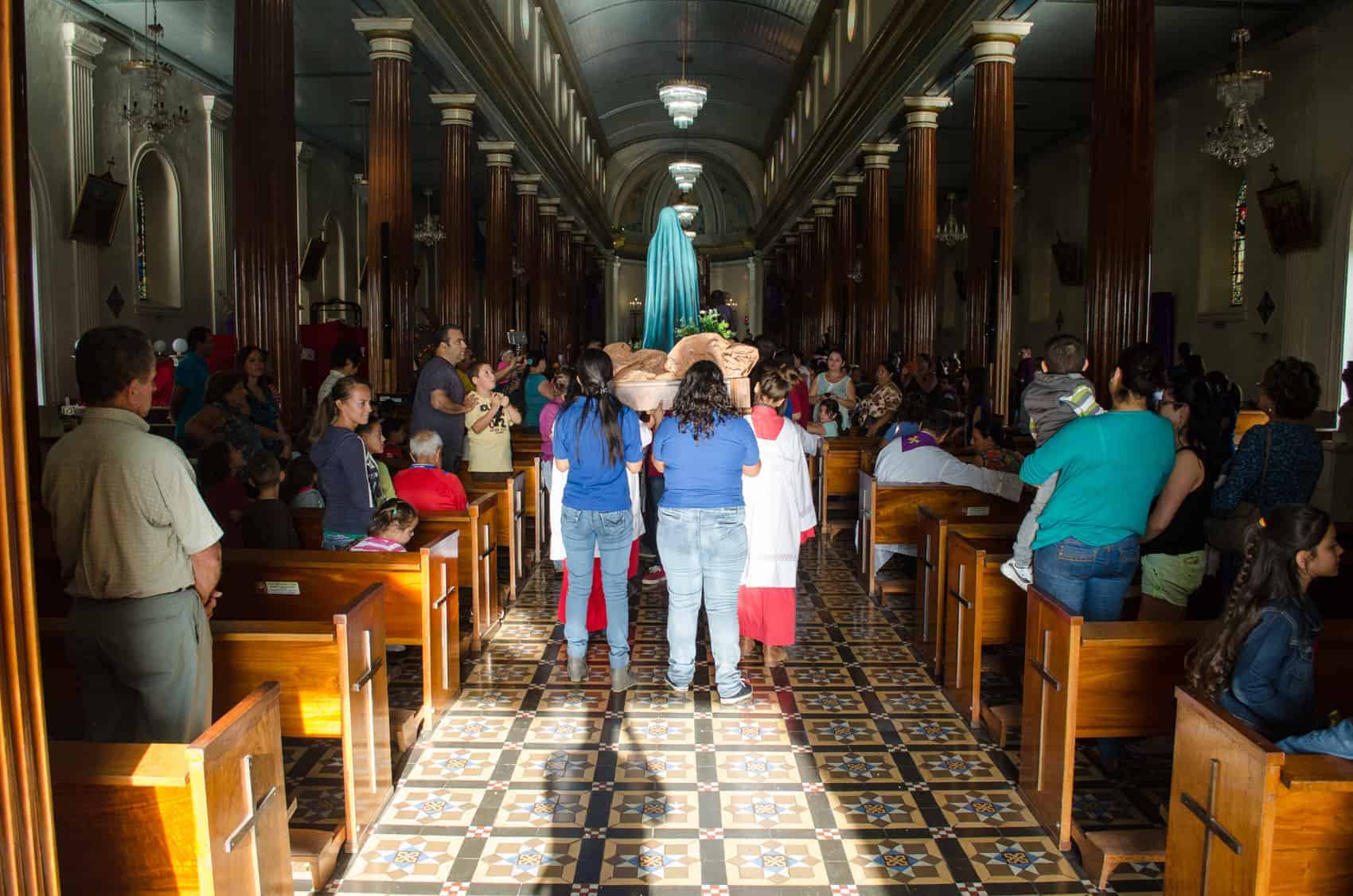
Semana Santa, or Holy Week, remains one of the most important religious observances here in Costa Rica, especially in a country where Catholic traditions have shaped public life and family customs for generations. For many Costa Ricans, the week is still marked by processions, prayer, and church services. But alongside official religious practice, an older layer of custom survives too: a set of warnings, rituals, and superstitions that have long been passed from one generation to the next.
Some of those customs grew out of a stricter idea of what should and should not be done during the most solemn days of the week. In many homes, people once stopped routine work from Holy Wednesday through Good Friday. Meals were prepared ahead of time, firewood was stocked in advance, and families focused on prayer, religious services, and the commemoration of Christ’s Passion, especially on Good Friday. Much of that has softened with time, but the sense that these are days set apart still lingers across the country.
The Catholic Church itself draws a clearer line than popular tradition does. In Costa Rica, as elsewhere in the Catholic world, Good Friday is the key day of fasting and abstinence during Holy Week. Many Costa Ricans still avoid meat for several days, but church teaching is more specific: Good Friday is the central day when abstinence from meat is required, while many other restrictions observed in homes are better understood as custom rather than doctrine. That distinction has become more visible in recent years as clergy and local media have tried to explain what is faith practice and what is folklore.
That folklore is where Semana Santa in Costa Rica takes on its most memorable shape. One of the best-known warnings says you should never go swimming on Good Friday because you could turn into a fish. Another says that climbing a tree that day could leave you with a tail. These sayings were especially common in rural areas, where Holy Week was treated with a seriousness that extended beyond church walls and into everyday behavior. Even for people who no longer believe them, the stories remain part of the season’s identity.
Another enduring belief centers on the palm used on Palm Sunday. Many people keep the blessed palm in their homes, often folded into the shape of a cross, as a sign of protection. In some households, there is also an old belief that burning the palm during a storm can calm thunder and lightning. The Church, however, has been clear that the palm is a sign of faith, not a magic object or amulet. That tension between devotion and superstition runs through much of Holy Week in Costa Rica.
Then there is the legend of the higuerón, the giant fig tree. According to a long-told story, the tree blossoms at midnight on Good Friday, and whoever manages to get the flower without falling into the devil’s trap will gain riches for life. It is one of those tales that sounds half warning, half promise, and it survives because it captures the mood of the week so well: a mix of fear, reverence, temptation, and mystery. The story has circulated in Costa Rican retellings of Semana Santa for years and remains one of the best-known folk legends tied to the holiday.
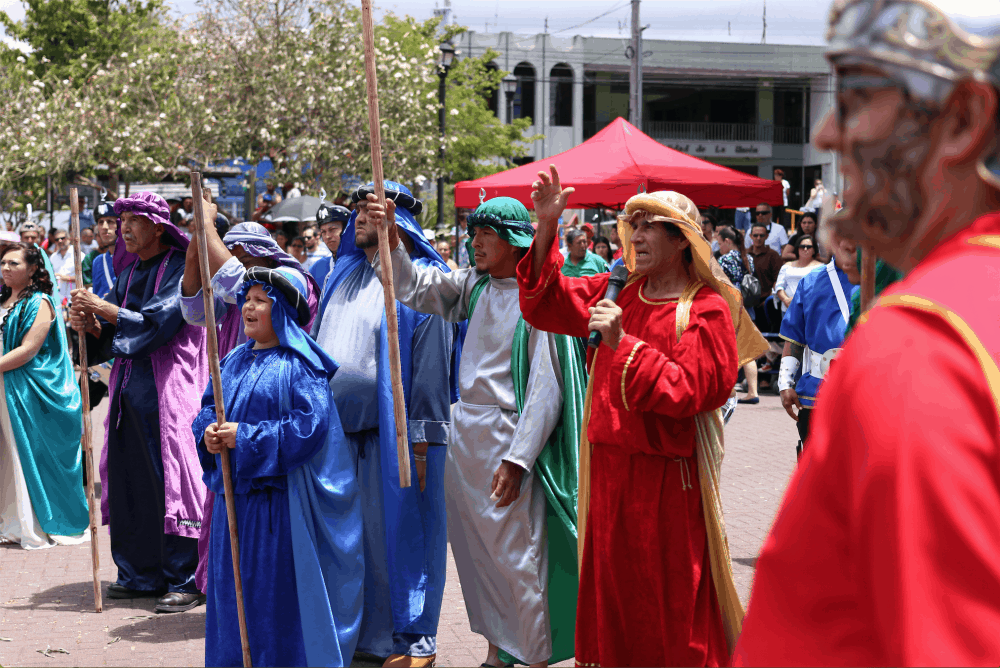
Other customs are more communal. In some towns, the burning of Judas still survives as part of Holy Week, though it has faded in some communities over time. The tradition centers on burning an effigy representing Judas Iscariot, the disciple who betrayed Jesus. Costa Rica’s cultural registry still lists the practice, and researchers at the Universidad Estatal a Distancia have noted that it has declined in some places as communities change and older traditions lose ground. In earlier versions of the custom, pranksters sometimes moved tools, shoes, carts, and other items left outside homes and piled them in a public place, turning the night into a mix of ritual and mischief.
Holy Week in Costa Rica is also marked by traditions that are devotional rather than superstitious. One of the most distinctive is the huerto de Semana Santa, a temporary display built in many parishes using fruits, vegetables, plants, handmade foods, and sometimes animals donated by the community. The huerto is tied to the image of the Garden of Gethsemane, but in Costa Rica it also became a strong expression of parish life, solidarity, and local food culture. University of Costa Rica researchers note that it has been common in the country since at least the early 20th century and that the money raised often supports parish expenses and charitable works.
In Guanacaste, Holy Week has also long been linked to the lagarteada, the old custom of capturing a crocodile on Good Friday and releasing it the next day. That practice is now prohibited. Reports from recent years show authorities continuing to monitor for attempts to revive it, while cultural coverage now treats it more as a historical tradition than a living one. It remains part of the broader story of how Semana Santa customs in Costa Rica have changed under modern legal, environmental, and social pressure.
And then there is the memory many Costa Ricans still carry from Holy Week 1983. The earthquake known as the Terremoto del Sábado Santo struck on the night of April 2, 1983, near Golfito. The Red Sismológica Nacional records it at magnitude 7.4 Mw, with strong shaking felt in the south and the Central Valley. Because it happened during one of the most charged nights on the religious calendar, many people interpreted it through the lens of faith, fear, and divine warning. More than four decades later, the quake still sits in the country’s Holy Week memory as something more than a seismic event.
That may be the best way to understand Semana Santa in Costa Rica even now. It is part liturgy, part family ritual, part folklore. For some, it is still a deeply sacred week centered on church and silence. For others, it is a season remembered through old sayings about fish, tails, palms, Judas, and the higuerón. The details may shift from town to town and from one generation to the next, but the mix of faith and superstition remains one of the things that makes Holy Week in Costa Rica feel unlike anywhere else.