

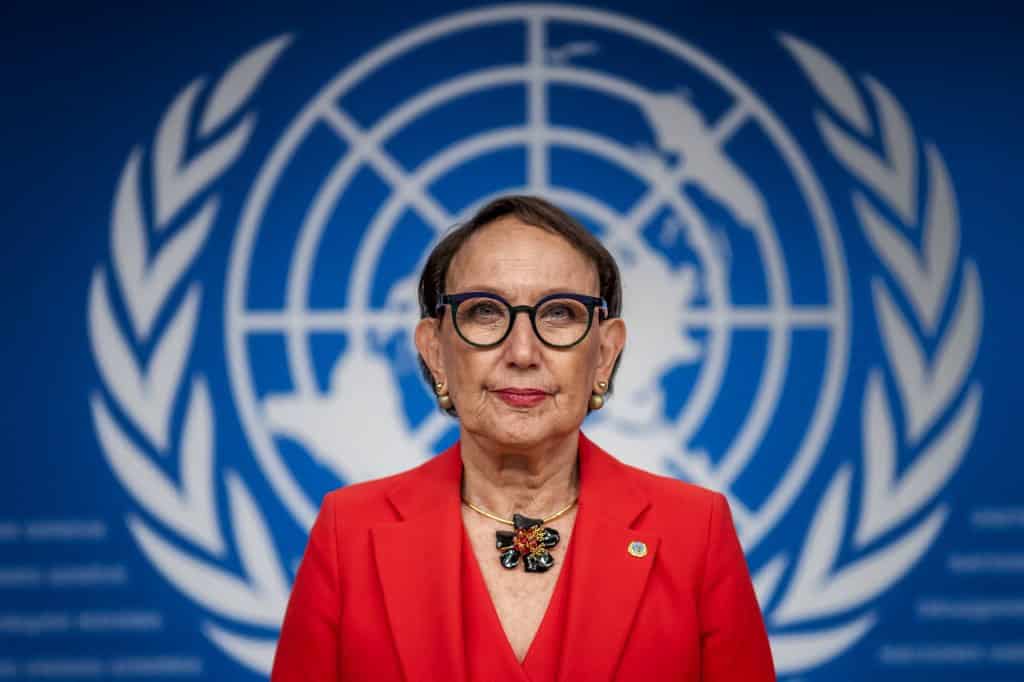
Argentine diplomat Virginia Gamba has been removed from the race to become the next secretary-general of the United Nations after the Maldives withdrew her nomination, trimming the field just weeks before the first public candidate dialogues are scheduled to begin. Gamba, a former U.N. special representative for children and armed conflict, had been formally nominated on March 12.
For Costa Rica, the move could offer a modest political opening. Rebeca Grynspan, Costa Rica’s nominee and a former vice president who now leads UN Trade and Development, entered the race on March 3. With Gamba out, there is one less Latin American candidate competing for attention, support and the broader push among many member states to finally choose the first woman to lead the United Nations.
Still, Gamba’s departure does not suddenly clear the path for Grynspan. Argentina’s official candidate, Rafael Grossi, remains in the contest, and Michelle Bachelet is also still running despite Chile withdrawing its backing earlier this week. Bachelet continues to have support from Brazil and Mexico, while Grossi is widely seen as a serious contender with a strong technical and diplomatic profile.
That means the practical effect for Costa Rica is limited but real. Grynspan may now find it slightly easier to present herself as one of the main female Latin American options in the race, especially at a moment when the U.N. General Assembly has openly encouraged member states to consider women candidates after eight decades without a female secretary-general. But any advantage from Gamba’s exit is likely to be marginal unless it translates into backing from influential governments beyond Costa Rica.
The larger math of the race has not changed. The next U.N. chief will be chosen through Security Council straw polls and backroom negotiations later this year, and any eventual winner must avoid a veto from the United States, Russia, China, Britain or France before being approved by the General Assembly. Diplomats and analysts also continue to debate whether 2026 should belong to Latin America, which last held the post in 1991, or to Africa, which argues it has an equally strong claim.
That broader contest may matter more to Grynspan than Gamba’s exit alone. Latin America still has multiple names in play, and the region has not yet unified behind a single candidate. At the same time, Grynspan’s résumé gives Costa Rica a credible standard-bearer: she has led UNCTAD since 2021 and has long experience in multilateral diplomacy, development policy and regional politics.
The next near-term test comes quickly. Countries have been asked to submit nominations by April 1 for participation in the first round of interactive dialogues, which are scheduled for the week of April 20. Those sessions will give candidates a public platform, but the decisive phase will still come later, inside the Security Council, where public momentum often matters less than private acceptability to the major powers.
For now, Gamba’s removal gives Costa Rica a cleaner field than it had a day ago, but not an easy one. Grynspan may benefit from reduced competition on the margins. The harder task remains the same: turning a respected candidacy into one that the world’s most powerful governments are willing to live with.





