

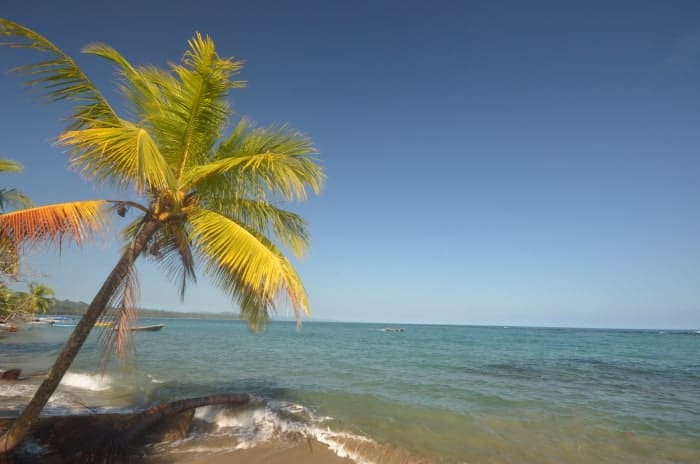
Waves pounded Manzanillo’s shoreline last week, claiming more ground from the beach. In a matter of days, the sea pushed forward several meters, exposing tree roots and putting the main road linking this village to Puerto Viejo at risk. Local residents say the water now reaches the foundations of homes and paths, a sharp sign of how climate shifts reshape their daily lives.
This heavy surf, driven by a cold front that hit the country in early February, fits a larger pattern. Coastal erosion has picked up speed in recent years, and Manzanillo bears much of the burden. Research from the National University (UNA) shows the beach here has shed 40 meters of sand over the past 16 years. What used to be a broad strip of sand edged by trees now stands as open water in the hardest-hit spots.
“The beach ran 15 to 20 meters wide. These days, trees are gone and so is the sand,” says Cesmar Rivera Gamboa, a Manzanillo resident and member of the Integral Development Association. He points to the horizon, where waves crash over ground that once held plants and room for family gatherings. Erosion rates here hit 2 to 2.5 meters a year, per Talamanca Municipality data, and each storm makes it worse.
UNA experts, who track the Caribbean coast from Moín to Gandoca, link this retreat to mixed causes. Sea-level rise from global warming lifts waters across the region. Forecasts point to a 36 to 51 centimeter increase by 2030 in areas like Cahuita and Manzanillo. Local issues add to it: Worn coral reefs lose their edge as barriers, so waves strike the shore harder and strip away more sand.
Gustavo Barrantes Castillo, a professor in the School of Geographical Sciences at UNA and head of its Environmental Geomorphology Program, has charted these shifts in several reports. “What happens here ties into worldwide shifts and local ground forces that build on each other,” he says. His group partners with the National System of Conservation Areas (SINAC) to gauge effects in protected zones, where erosion goes on despite less human touch.
For Manzanillo’s 1,200 people, the stakes go beyond figures. Set in the Gandoca-Manzanillo National Wildlife Refuge, the town relies on tourism and fishing. Shrinking beaches drive off visitors and leave key sites open, from the community center to nature trails. Each weather hit draws short-term notice, but the steady pullback has built over years.
Talamanca Municipality issued a warning on February 3, shutting access points for a time and urging moves from high-risk areas. Neighbors set up crews to shore up dunes with sandbags, a stopgap that buys days but not years. Local groups call for stronger steps, like mangrove planting and curbs on seaside builds.
In the South Caribbean, Manzanillo shares the strain. Beaches in Puerto Viejo and Cocles see similar setbacks, with the latest surf speeding sand loss. Studies warn that without joint efforts – from coral fixes to relocation plans – whole towns could become unlivable in coming decades.
Residents hold that fixes need input from all sides: officials, researchers, and locals alike. “We’ve watched the change up close. Time to step in before it goes too far,” Rivera Gamboa says. As the sea keeps moving, Manzanillo holds ground, but its path ahead rests on prompt, shared choices.





