

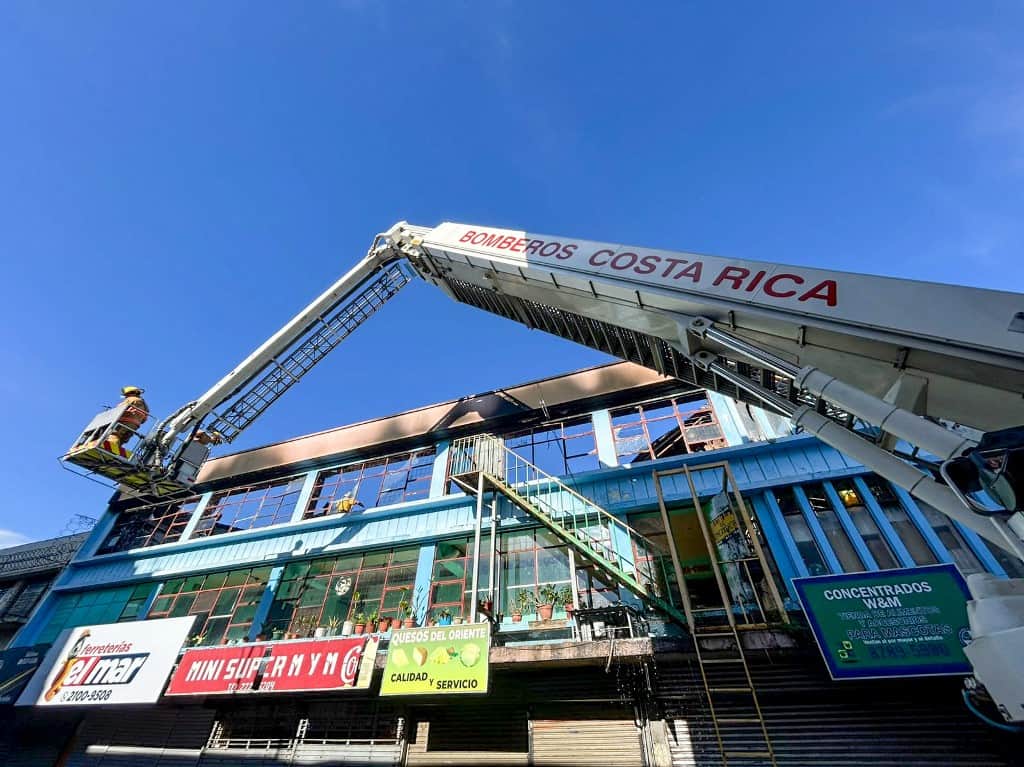
Authorities arrested a 42-year-old man this week in connection with the deadly fire at Hotel Oriente that claimed five lives in early October. The Organismo de Investigación Judicial (OIJ) confirmed the detention of the suspect, identified as Hernández Pérez, who faces charges of quintuple homicide and arson.
OIJ agents from the Homicide Unit carried out the arrest after an investigation revealed the fire was set on purpose. Acting OIJ director Michael Soto stated that evidence pointed to criminal intent. “Agents established that the blaze resulted from deliberate actions,” Soto said in comments to reporters. A court ordered preventive detention for Hernández Pérez as the case proceeds.
The fire erupted around 2:30 a.m. on October 2 in a three-story building in the Merced district of downtown San José, near the Mercado Borbón on Calle 8 between Avenidas 1 and 3. The ground floor contained shops, while the upper levels served as budget accommodations, mainly for informal workers and vendors.
Firefighters reported that 20 to 25 people occupied the third floor when flames broke out. The fire ravaged about 500 square meters before crews contained it. Five individuals perished: two men, two women, and one person identified through forensic means due to severe burns. Among the dead were an elderly couple found in an embrace, according to fire service accounts.
Responders highlighted serious safety issues in the building. Only two exit paths existed—a main entrance and an emergency stairwell in disrepair that failed to comply with codes. A third-floor door was tied shut with wire, further hindering escape. Officials noted that the call to 9-1-1 came too late, allowing the fire to spread rapidly. Thirteen units from various stations responded to what became the year’s most lethal fire in the capital.
Forensic analysis and witness statements led OIJ to conclude the incident was arson. The case holds significant weight given the death toll and its location in a busy urban area. Details on a motive or links between the suspect, victims, and property remain undisclosed as proceedings continue under seal.
This tragedy has drawn attention to ongoing concerns about fire prevention in San José’s informal housing sector. Many similar buildings in the city center house low-income residents in conditions that often lack proper safety measures. In this case, poor maintenance and resident vulnerabilities amplified the risks, prompting calls for stricter inspections by fire and municipal officials.
As the judicial process unfolds, authorities aim to address these gaps to prevent future losses in comparable settings.





