
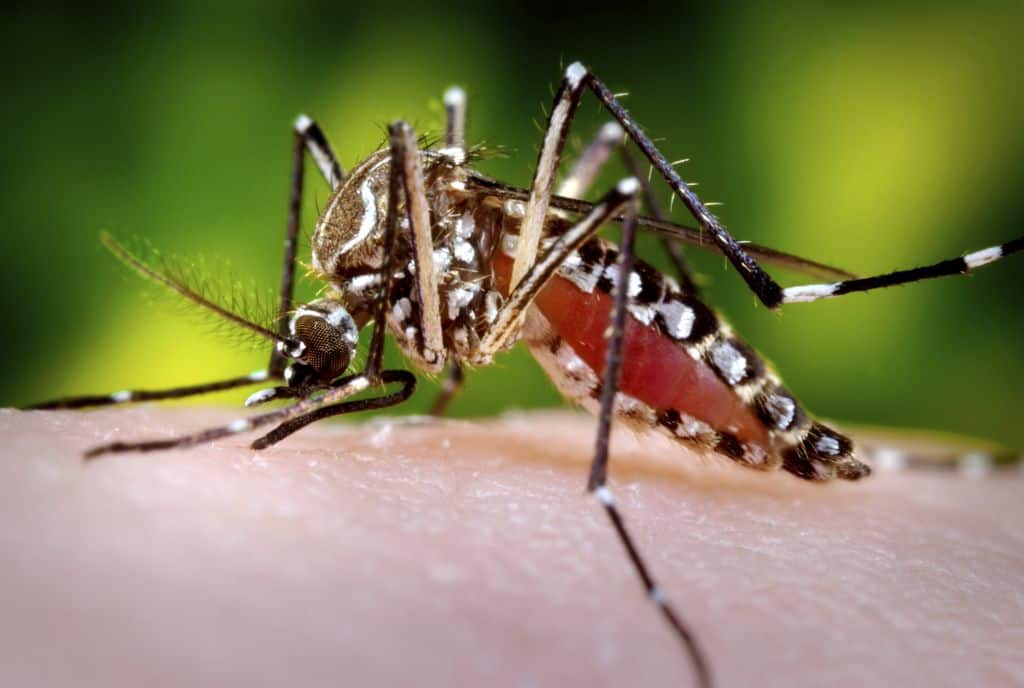
Costa Rica battles against dengue, Zika, and chikungunya. According to Ministry of Health data, the country is close to hitting 10,000 cases this year.
In one week alone, health authorities reported 835 new cases, bringing the total to 9,945 people affected by these diseases. Dengue cases are leading, with the Ministry of Health reporting 9,912 cases of this disease, followed by 17 cases of Zika and 16 of chikungunya.
“A very important difference between dengue and Zika and chikungunya is that the latter two only occur once, after which the person develops immunity,” explained Marcela Hernandez from Epidemiological Surveillance unit at the Children’s Hospital.
According to the report issued by the Ministry of Health, the North Central region has the highest number of suspected dengue cases, with 2,343, while the Brunca region has the highest rate, with 398.77 per 100,000 inhabitants. Compared to the same date in 2023, Costa Rica has reported triple the number of cases. Last year, there were around 200 cases per week, while now there are more than 800.
By province, Alajuela leads with 2,933 cases, followed by Puntarenas with 1,976, San Jose with 1,362, Limon with 843, Guanacaste with 807, Cartago with 753, and Heredia with 436. Currently, all four dengue serotypes are circulating, but types 3 and 4 are causing the highest number of infections. The Ministry of Health urges the population to help and work together with authorities to reduce the number of cases.
“The help from the population is crucial to reduce the number of cases. We need you to eliminate all breeding sites at home,” said Mary Munive, Minister of Health. Health specialists also advise implementing certain actions to avoid mosquito transmission.
“It is important to regularly clean and empty water storage containers, clean canoes, eliminate black plastic in home patios that accumulate water, put unused tires under a roof or take them to collection sites, and use repellent,” they stated.