
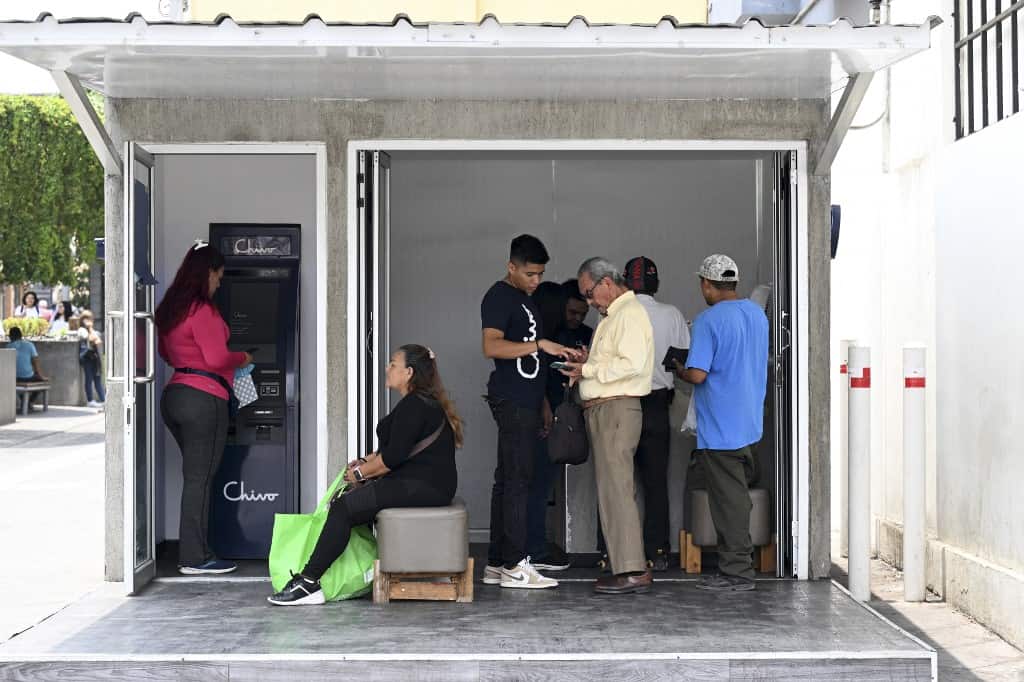
The money sent by Central American immigrants in the United States to their families has risen to record levels and represents a quarter of the combined GDP of El Salvador, Guatemala, Honduras and Nicaragua.
The family of Marta Alvarado, a 54-year-old Salvadoran who works as a secretary in a health clinic, subsists thanks to the remittances sent by her three brothers from the north.
“What my brothers send month by month serves not only me, but also my mother and father, who are already elderly. It serves to sustain them, buy their food, clothing, and medicine and to improve the house where we live,” she says.
The four countries together received almost 42 billion dollars in family remittances in 2023, according to calculations based on official data from central banks and the intergovernmental Central American Monetary Council, a record figure. “The truth is that receiving remittances has been a blessing for us,” adds Alvarado, mother of three children.
These shipments even exceed the amounts received in foreign investment, tourism, or exports. They are a key factor in boosting trade and consumption in nations with high poverty rates, according to experts. International organizations and some political leaders promote their use for productive purposes.
We would have sunk
Remittances to the four countries increased from 19.006 billion dollars in 2017 to 41.823 billion in 2023. A rise that is explained by the increased emigration to the United States and other countries, analysts point out.
The exact number of Central Americans living abroad, especially in the United States, is unknown, as thousands do so irregularly. According to estimates by international organizations and NGOs, the figure is close to 10 million, a quarter of their population.
“People, not finding opportunities within the country, are forced to leave,” said Henry Rodríguez, an economist at the National University of Honduras. Remittances now represent almost 27% of GDP in Honduras, 26% in Nicaragua, 24% in El Salvador and almost 20% in Guatemala.
They are “and will continue to be for a long time the lifeline of the Salvadoran economy. Without remittances we would have sunk long ago,” explains Carlos Acevedo, former president of the Central Bank of El Salvador.
“If dollars don’t come in, the financial system doesn’t work, nothing works in the country. And remittances are one of the main sources of dollar inflows,” he stressed.
On the other hand, in Central American countries with little emigration, remittances constitute a small portion of their GDP: around 1% in Panama and Costa Rica, and almost 5% in Belize.
Support for the family
“Most of these remittances are intended for family support, specifically for basic expenses and improving the quality of life of the family,” explains Nicaraguan expert in Strategy and Development Noel Estrada.
The 17-year-old Nicaraguan student Ligia Hurtado is an example of this phenomenon. She receives money sent by two aunts from Spain, which she uses to “guarantee university studies: monthly payments of fees, housing, food and transportation.”
For her part, the 61-year-old Salvadoran retiree Emérita Coto says that her brother sends her 400 dollars every month from New York, money that she uses “to pay for a plot of land” that she acquired “on credit.”
Open a store
Multilateral organizations – including the World Bank, IDB, and ECLAC – promote the productive use of these resources, instead of just allocating them for consumption. For example, they encourage investment in small businesses to support the development of nations with small economies and high poverty rates.
The new Guatemalan president, Bernardo Arévalo, proposes the same. “Remittances can contribute more efficiently to breaking the cycle of poverty that motivates migration […], facilitating their use for development purposes,” he said.
Gustavo Juárez, leader of an association of Guatemalans deported from the United States, agrees. “It would be good if a remittance was invested in a business or a small enterprise so that they are self-sustaining,” he said. In San Salvador, Marta Alvarado’s mother, Ester, 71, plans to open a store with part of the money sent by her children.
“It is in the plans, but I think soon she will have that business that can serve her to have other income,” says Alvarado.