
Not to kill your buzz, but it doesn’t look like recent recreational marijuana legalization in some U.S. states will have an immediate impact on drug policy in Latin America.
On Jan. 2, the United States Embassy in San José posted a story to its blog warning that the legalization of marijuana in the states of Colorado and Washington on Jan. 1 did not signal a change in regional U.S. drug policy.
The post emphasized that the interruption of the production and trafficking of illicit drugs in the region remained a “key” element to the U.S. strategy, along with building international alliances, including the United Nations.
The piece continues by saying that the U.S. government does not believe criminal organizations will disappear with the legalization of currently illicit drugs.
The U.S. and Costa Rica participate in joint anti-drug patrols in Tico waters. Financial assistance from the U.S. government has helped Costa Rica bolster its border control and more aggressively patrol the high seas, where many of the largest drug seizures take place, according to Costa Rica’s Public Security Ministry.
The ministry seized 4.5 tons of marijuana in 2013, much of it originating in Jamaica.
Leaders in Central America disagree about the merits of legalization as a tool to combat drug-related crime.
Costa Rican President Laura Chinchilla has said that while she supports dialogue on the issue, she does not support the full legalization of marijuana, a position maintained by her party’s presidential candidate, Johnny Araya of the National Liberation Party, according to a Channel 7 video chat interview last December.
Guatemalan President Otto Pérez Molina famously came out in favor of legalization, citing that the current U.S.-led drug policy had failed to curb violence in Central America. Pérez Molina heralded Uruguay’s recent decision to become the first country in the world to fully legalize cannabis production, sale and consumption.
Colorado voters approved a measure to legalize the growing, distribution and sale of marijuana in November 2012. The Centennial State had already approved marijuana for medical uses.
Washington State’s marijuana measure, also passed in 2012, will take effect in coming months.
New York Governor Andrew Cuomo announced Wednesday he will authorize the medical use of marijuana, making his the 21st U.S. state to do so and one of the biggest.
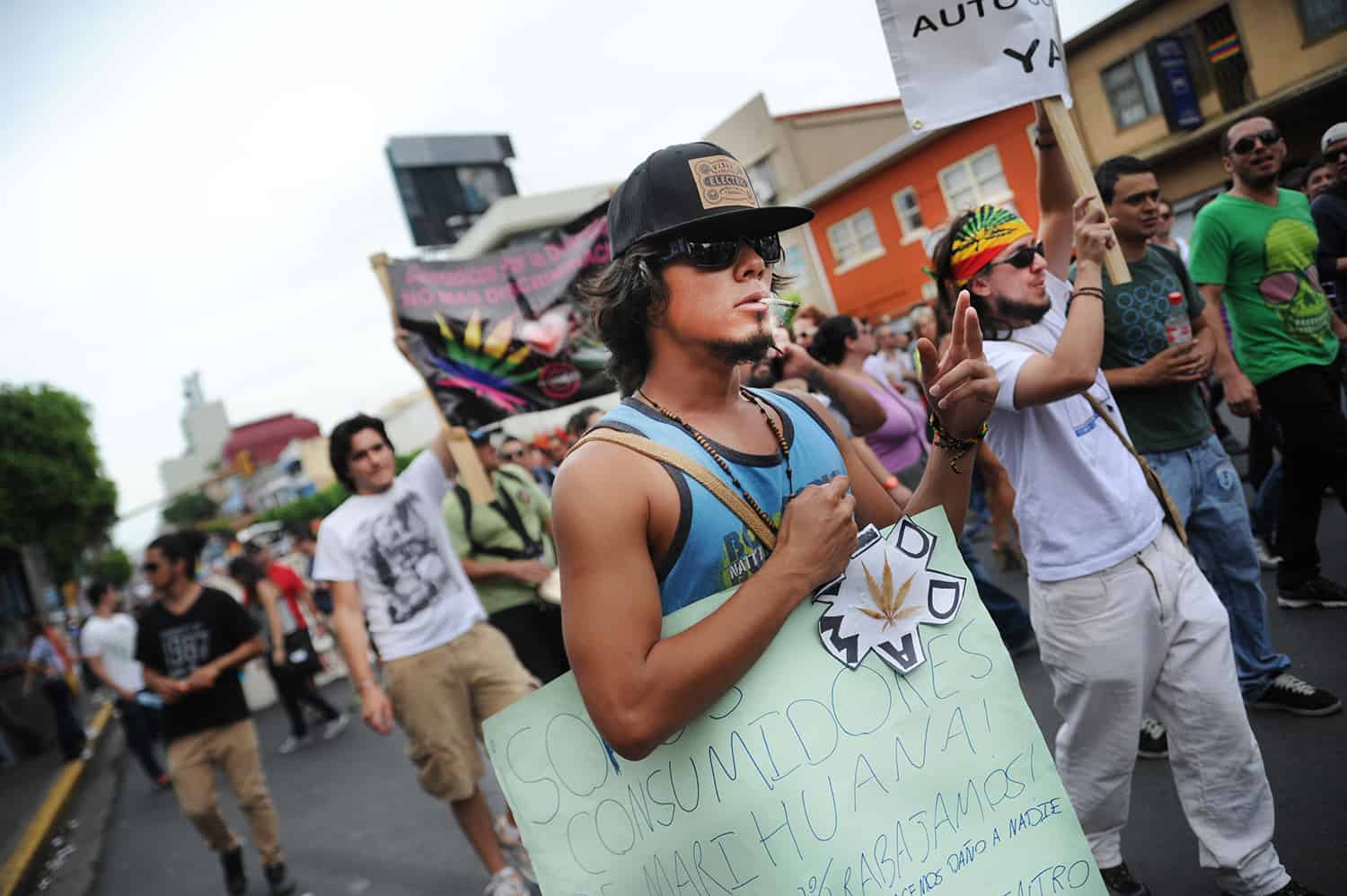
Pot consumption in Costa Rica blazed 260 percent since 2006, according to the United Nations Office on Drugs and Crime, but only 15.5 percent of Costa Ricans say they favor the legalization of marijuana. Half of Ticos say they see no benefit from it, according to a 2013 survey by the University of Costa Rica.
AFP contributed to this report.