
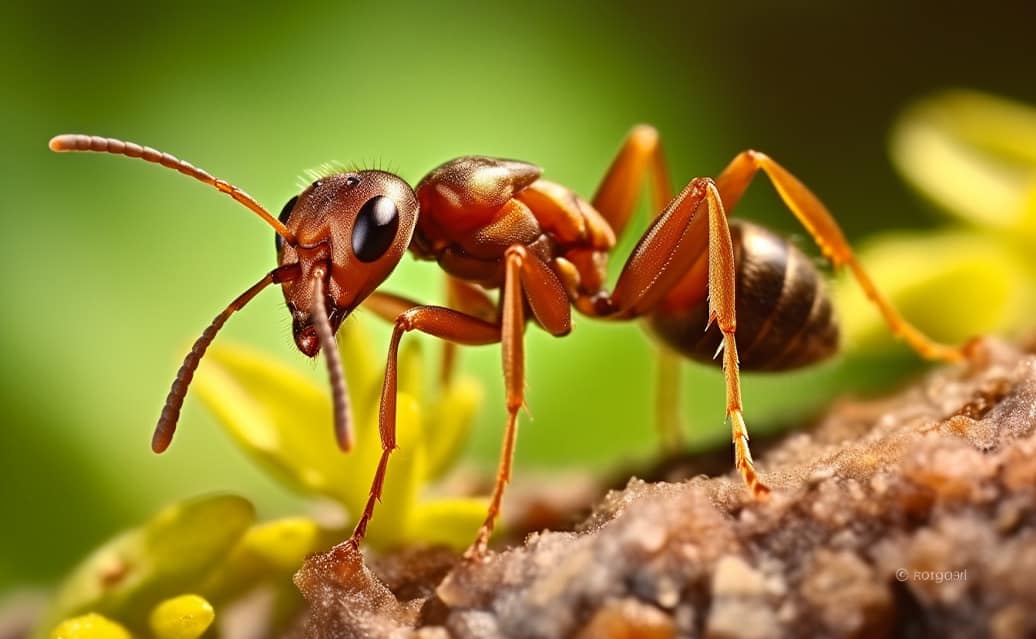
The ant acacia is a small, thorny tree found in different parts of Costa Rica. It is famous, not for its impressive thorns or its ability to thrive in harsh environmental conditions, but because of its relationship with different species of ants.
As we’ve covered before, each ant acacia tree in Costa Rica provides food and housing for one of four species of ants which pay for their room and board by aggressively defending the tree from predators and competitors. It’s a fascinating relationship that an ecologist could dedicate years to studying the intricacies of the interaction. As it turns out, there are even more wildlife interactions layered upon the ant acacia’s ecological dance with the acacia ants. Let’s take a look at a few.
Ant Acacia + Even More Ants
Picture a group project from your schooldays. There are a few people dedicated to working together so that the project comes to a successful conclusion, but then there’s always a few others who attempt to ride the coattails of the group and reap the same reward without actually contributing anything. This is the role of the parasitic acacia ants.
While the hardworking mutualistic ants are earning their keep by defending the acacia tree, the parasitic ants take advantage of the tree’s hospitality without actually defending it. I suppose there are hangers-on in every society.
Ant Acacia + Birds
While it’s smart for many species, Homo spaniens included, to try to avoid interacting with ant acacia trees, some species of birds seek them out. They see a thorny tree covered in stinging ants and think “That’s a great place to raise a family.” It may seem counterintuitive, but ant acacias can be an ideal place to build a nest. A few species of birds, like the rufous-naped wren and streak-backed oriole, often build their nests atop these well-fortified trees. The garrison of ants and the large, stabby thorns provide excellent protection from predators that would like nothing more than a bird egg snack.
These birds start their nest construction by quickly placing their dry nesting material atop the tree. The ants do what they do and begin investigating/attacking the nest material. As this process continues, the repeated ant attacks result in a nest that’s covered in the ants’ own chemical smell. Due to this, the attacks eventually cease, and the birds are free to raise their young with the constant protection of a spikey tree and a mess of stinging ants.
Ant Acacia + Veggie Spider
I only recently found out about this interaction, and it blew my mind. As many nature-lovers know, spiders are carnivorous. Many species eat insects, some eat fish and other aquatic organisms, and there are huge spiders that can eat creatures that most folks would consider way too large for a spider to eat. Well, within the tens of thousands of species of arachnids, there’s at least one vegetarian. The ant acacia jumping spider.
While these spiders were described in the late 1800’s, their diet was only discovered in the last few years. Two separate groups of researchers stumbled upon this fascinating information at approximately the same time. The vast majority of this spider’s diet consists of the Beltian bodies that the ant acacia produces to feed the acacia ants. The spider spends its days avoiding the aggressive ants and chowing down on their specialized supper.
The ant acacia tree and the acacia ants alone are a captivating example of different species interacting while fighting to survive. The addition of these extra layers of species interactions points to the interconnectedness of all of the organisms in the natural environment. Who knew what seemed to be a tree with some ants on it would turn out to be so complex and interesting?
About the Author
Vincent Losasso, founder of Guanacaste Wildlife Monitoring, is a biologist who works with camera traps throughout Costa Rica. Learn more about his projects on facebook or instagram. You can also email him at: vincent@guanacastewildlifemonitoring.com