

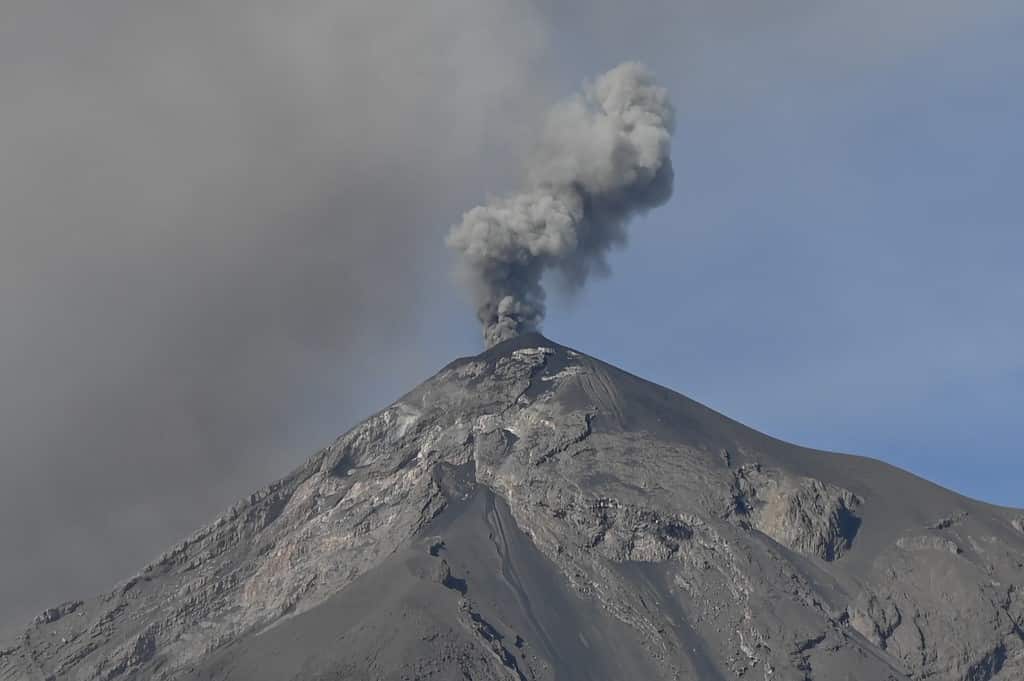
On Thursday, Central America’s most active volcano, Fuego, erupted near the capital of Guatemala, spewing a massive cloud of ash. The Conred disaster center of Guatemala reported that Fuego was releasing pyroclastic flows, a mixture of gas, ash, and high-temperature rock that quickly descends down the sides of the volcano.
As a result, nearby villages and farms were experiencing abundant ash falls, up to 50 kilometers away from the volcano. The ash column ejected by Fuego extended over 6,000 meters above sea level. Conred has warned that further eruptions could follow and that mudslides could form with the forecasted rainfall.
Although the authorities have not yet announced an evacuation, Conred has advised people living in affected areas to follow instructions from authorities and stay informed. They have also urged tourists and locals to avoid the restricted area of 7 kilometers around the volcano.
This is not the first time that Fuego has erupted; it erupts every four to five years on average. In 2018, an eruption sent rivers of lava pouring down its sides, killing 215 people and leaving a similar number missing. In December of last year, an eruption of lava and ash temporarily closed the country’s largest airport.
Guatemala has two other active volcanoes, Santiaguito in the west of the country and Pacaya in the south. The latter is one of the country’s most active volcanoes, with eruptions occurring frequently since the Spanish conquest.
Volcanoes, while often considered a natural wonder, can also be deadly. Pyroclastic flows and ash falls can cause respiratory problems and even death. Volcanic mudslides, known as lahars, can also be catastrophic, with the potential to wipe out entire villages.
Despite the dangers, volcanoes remain a significant tourist attraction in Guatemala. Antigua, the country’s picturesque former capital and biggest tourist attraction, is only 16 kilometers away from Fuego. The authorities must balance the need to promote tourism with the need to keep people safe.
While volcanoes are awe-inspiring natural wonders, they can also be deadly. The eruption of Fuego in Guatemala is a reminder of the dangers posed by active volcanoes. It is essential that authorities take necessary precautions to protect the lives and livelihoods of those living near these potentially dangerous natural wonders.





