

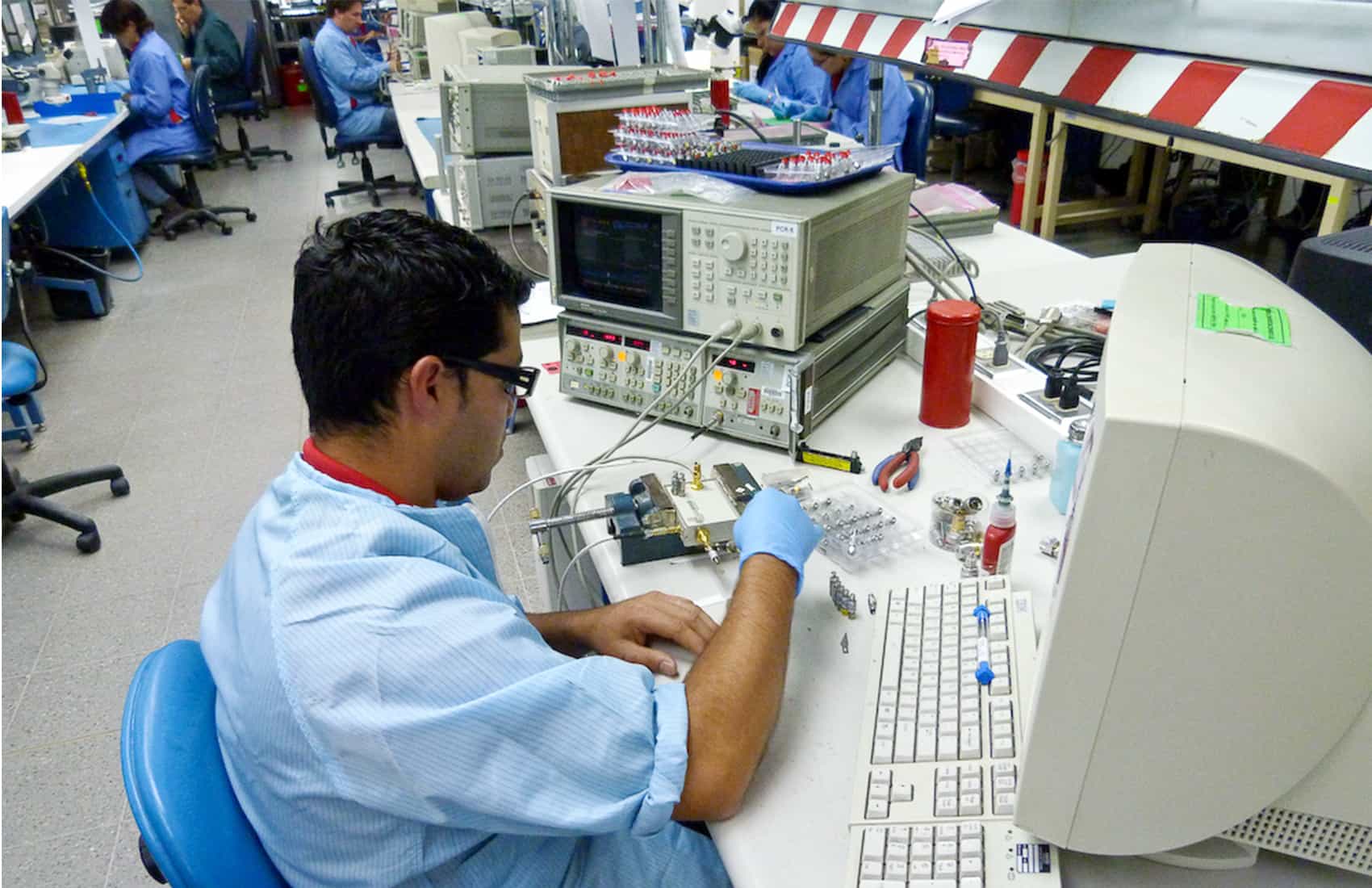
Foreign direct investment in Costa Rica grew 23.4% in the first half of 2026, driven largely by companies operating in free trade zones, but investment in tourism moved sharply in the opposite direction. Tourism investment fell 27%, from $215 million in the first six months of 2025 to $157.9 million this year.
The figures come from an analysis by the Foreign Trade Promoter (Procomer) based on preliminary data from the Central Bank of Costa Rica (BCCR). Total inflows reached $2,739.6 million when an extraordinary transaction recorded in the first quarter is excluded. That transaction was the sale of part of the business of Florida Ice & Farm Co. (FIFCO), which accounted for about 70% of all foreign direct investment recorded in the first quarter. Including it, the Central Bank’s preliminary data put first-half direct investment at $5,940.5 million.
Free trade zones were the main engine of growth. Companies under the regime brought in $1,736.3 million, an increase of 35%, or $452.6 million, compared with the first half of 2025. Free zone investment outside the Greater Metropolitan Area reached $150 million, up 37%. Companies under the definitive regime, which covers businesses operating outside the free zone system, received $569.7 million excluding the FIFCO sale, a 46.9% increase.
By sector, manufacturing received $1,951.5 million, up 9.8%. Services jumped from $9.4 million in the first half of 2025 to $212.5 million this year. Excluding the FIFCO acquisition, new capital rose 15% and reinvestment by companies already grew 5%. The United States was by far the largest source of investment, accounting for 68.9% of the total, followed by Switzerland at 5.7% and Spain at 5.1%.
Foreign Trade Minister Indiana Trejos called the results highly encouraging given international uncertainty and the domestic challenges that weigh on investment decisions. She highlighted the strength of free zone investment, as well as growth in new capital and reinvestment. Procomer General Manager Laura López said double-digit growth outside the Greater Metropolitan Area would push the agency to keep steering investment toward the country’s regions.
The drop in tourism investment stands out against that backdrop. The Central Bank estimates tourism accounted for 8.2% of national GDP in 2024 when direct and indirect effects are included, according to the Organisation for Economic Co-operation and Development (OECD).
The decline comes as Costa Rica continues to collect international recognition as a destination. British readers of National Geographic Traveller recently named Costa Rica their top destination for adventure and responsible travel.
It also comes as Costa Rica reassesses how much tourism its destinations can handle. As part of an update to its National Tourism Plan for 2027-2032, it is developing a method to measure the maximum acceptable number of tourists nationally and in each of its 33 tourism development centers, the OECD said in its 2026 tourism report.





