

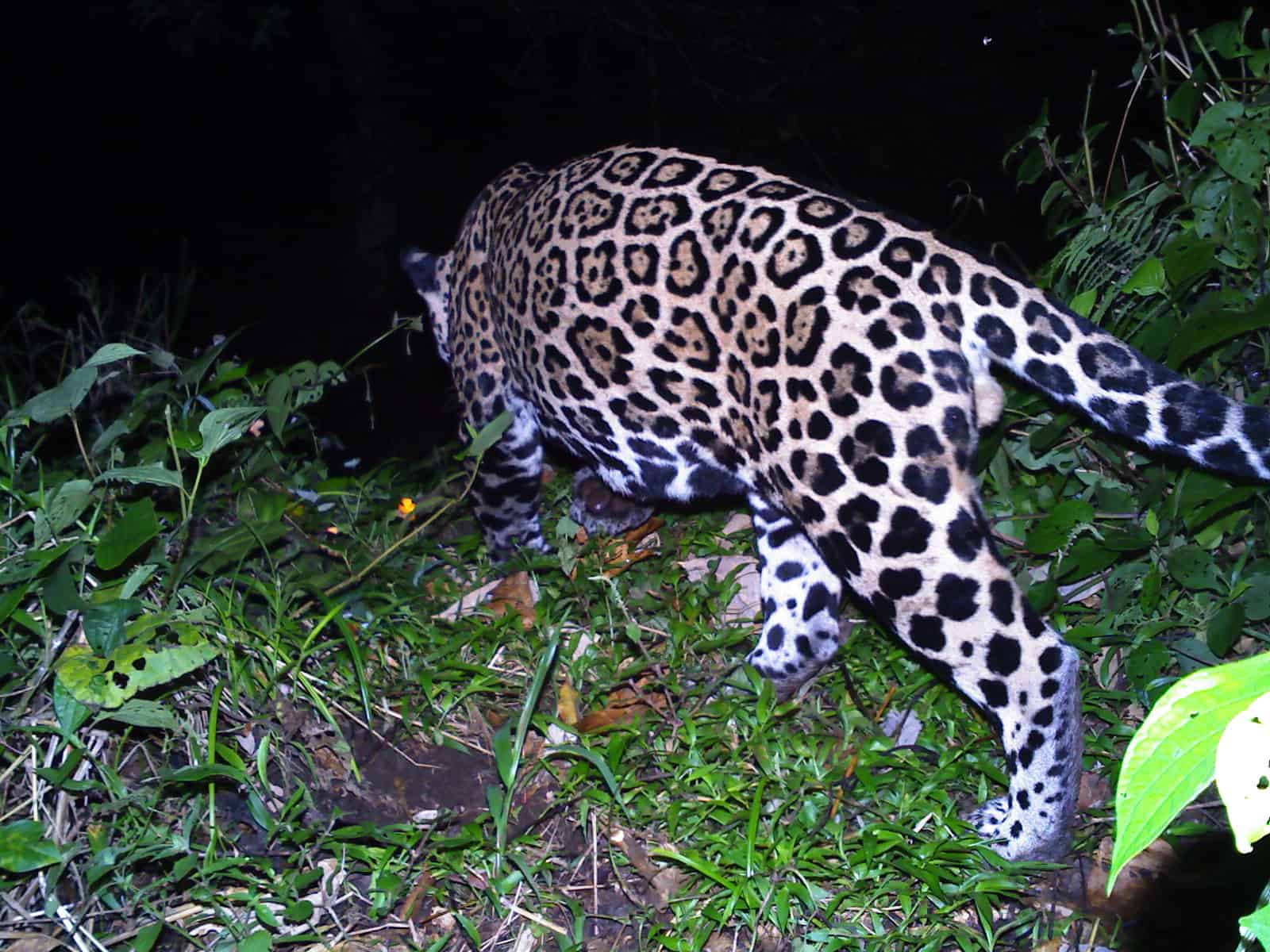
Every year, dozens of jaguars and other wild cats are killed in accidents when crossing highways in Costa Rica. The jaguar (Panthera onca) is a national symbol for Costa Rica. However, wildlife experts warn their protection still lacks attention and public commitment. Most of the time, wild cats migrate because they are seeking food, running from sudden climate variations, or searching for a mate. Without necessary safeguards, they are susceptible to crossing roads and highways that transport an ever-growing population.
“We still have a lot of weaknesses,” said Daniel Araya, who coordinates the Wildlife Friendly Ways project of the Jaguar Corridor Initiative in Costa Rica. “All has been done on a goodwill basis. There is currently no legislation that obliges the government to implement the set of guidelines that we propose.”
The Jaguar Corridor Initiative is a mission of Panthera, an organization dedicated to the conservation of wild cats species worldwide. In Costa Rica, they advise the Costa Rican Ministry of Public Works and Transport to mitigate the impact of highways on wildlife.
Araya spoke to The Tico Times during the First Latin American Congress on Sustainability, Ecology and Evolution (SEE) held Sept. 26-29 in Parque Viva, Alajuela. A special plenary discussed the need to consider wildlife conservation when building highways and other infrastructure projects.
“There is not a legal framework that backs the need to build animal paths,” Araya said. “We’re now working in trying to create a manual for the Ministry of Public Works and Environment that could turn these recommendations into mandatory norms.”
The Reventazón River and Jaguars
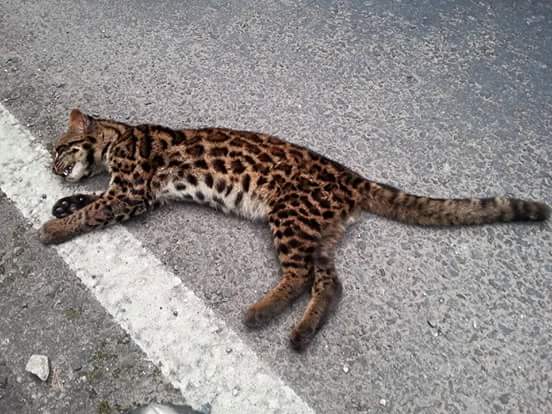
In the year 2000, Araya and her team found that the paving of roads connecting communities could be a barrier for the free movement of jaguars. An emblematic case was the Reventazón hydroelectric project in La Florida de Siquirres, Limón.
It was the largest electric power plant in Central America – with an installed capacity of 305.5 megawatts – and the second-largest infrastructure endeavor in Central America behind the expansion of the Panama Canal.
“Although the paving of the roads was a way of offsetting the communities around the construction of the hydroelectric plant, it represented a major impact on the local fauna,” Araya said. “The unpaved and gravel roads allowed different cat species to move around, but once they were covered by asphalt, we witnessed several accidents due to the high speed and the increase of the number of cars.”
From that case study, Araya and her team created a body of measures aiming at minimizing the impact on jaguars of all infrastructure projects.
“We recommended aerial paths for arboreal species and different arrangements of fauna paths,” she said. “At that time, neither the government nor their budgets were ready to implement such measures, but they served later in 2014 for creating a national guide.”
Since then, important highways have partially adopted the recommendation measures. These include the expansion of Ruta 32 towards Limon or Ruta 1 heading to Guanacaste.
For Araya, this remains an urgent issue due to climate change.
“Allowing a safe pathway for jaguars and species, in general, is very important now that we have seen climate effects,” she said. “We are adapting to the changes of the rainfall patterns and the variation of temperature.”
There has been local legislation requesting municipalities to create paths to the fauna in sensitive places. Nonetheless, the implementation has been seldom applied.
“This has been the Achilles’ heel since local actors are unaware and lack specific knowledge,” Araya said. “We are preparing a plan for capacity building on this issue to raise awareness on how to implement the guidelines in the rural zones neighboring protected areas.”
Where To Find large populations of Jaguars in Costa Rica
– Corcovado, on the Osa Peninsula.
– Tortuguero, La Amistad National Park and Cordillera de Talamanca in the Caribbean.
– Santa Rosa National Park and the volcanic Guanacaste Cordillera.





