

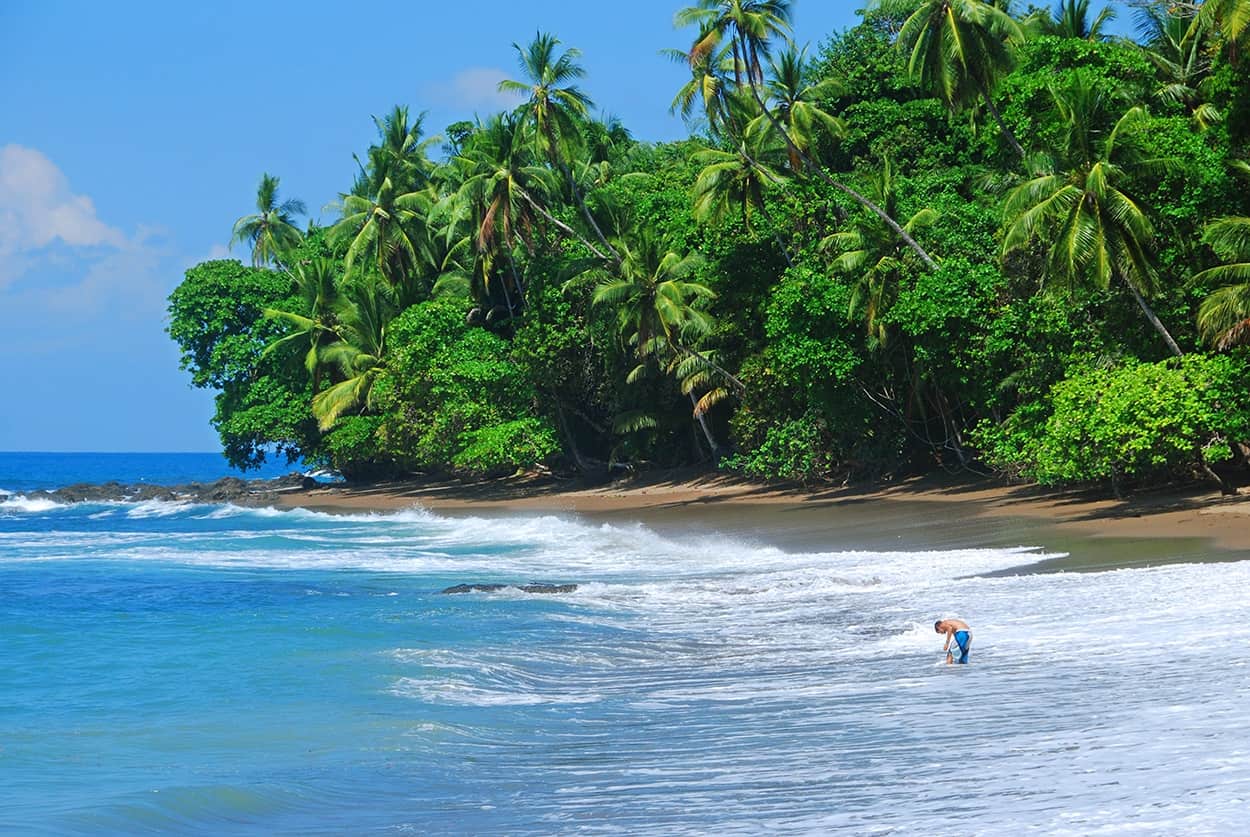
Local officials and business leaders in Costa Rica’s South Pacific are betting on tourism to change the image and economic trajectory of communities long associated with drug trafficking, illegal mining and other illicit activity. More than 200,000 tourists visit the region each year, drawn by its natural beauty even as police investigations continue to identify the area as a corridor for cocaine shipments moving north before leaving the country.
Golfito mayor Freiner Lara says his locality has chosen to invest in security and infrastructure specifically to support that tourism growth. Security cameras are being installed in downtown Golfito, with monitoring handled by the Ministry of Public Security. Lara said the effort has involved close coordination with that ministry and with the United States Embassy, and that a monitoring center should be operational by October.
He pointed to a continued Coast Guard presence and joint patrols as evidence the approach is working, while acknowledging Golfito remains vulnerable given its coastline and proximity to Panama. A local business owner, went further, crediting tourism development with transforming the image of towns including Sierpe, Drake, Puerto Jiménez and Uvita.
He described crime and trafficking problems in those communities as far smaller today than in the past, attributing the shift to sustained cooperation among local institutions. That optimistic framing runs against a body of reporting and research suggesting the relationship between tourism and drug trafficking in Costa Rica is far more tangled than a simple trade off.
The United States State Department has named Costa Rica the top transshipment point for cocaine moving from South America toward the United States and Europe in recent years, and security analysts have pointed to the country’s remote forested terrain, the same terrain that draws tourists, as exactly what traffickers exploit to avoid detection.
In other tourism dependent Pacific towns, prosecutors have directly linked local drug micro trafficking to harm against the visitor economy itself, citing thefts from tourists and open drug dealing in areas meant to attract them. A national study on drug use once found that in provinces with heavy tourist traffic, a meaningful share of residents reported knowing many people who use illegal drugs, complicating any claim that tourism simply displaces trafficking rather than sometimes accompanying it.
The renewed push around Sierpe also arrives alongside a much older and still unresolved promise, an international airport for the Zona Sur, planned for that same district. Costa Rican presidents have pledged the project since the early 2000s, and President Rodrigo Chaves revived it during a tour of the region, targeting a runway near Sierpe on state owned land.
Two years later, government progress tracking shows the project at zero percent, with only an archaeological study completed, and Chaves himself has suggested 2027 as a more realistic horizon. Critics have raised serious concerns about the site’s proximity to the internationally protected Térraba Sierpe wetland and its flood exposure, questions that have followed the project for over a decade without resolution.





