

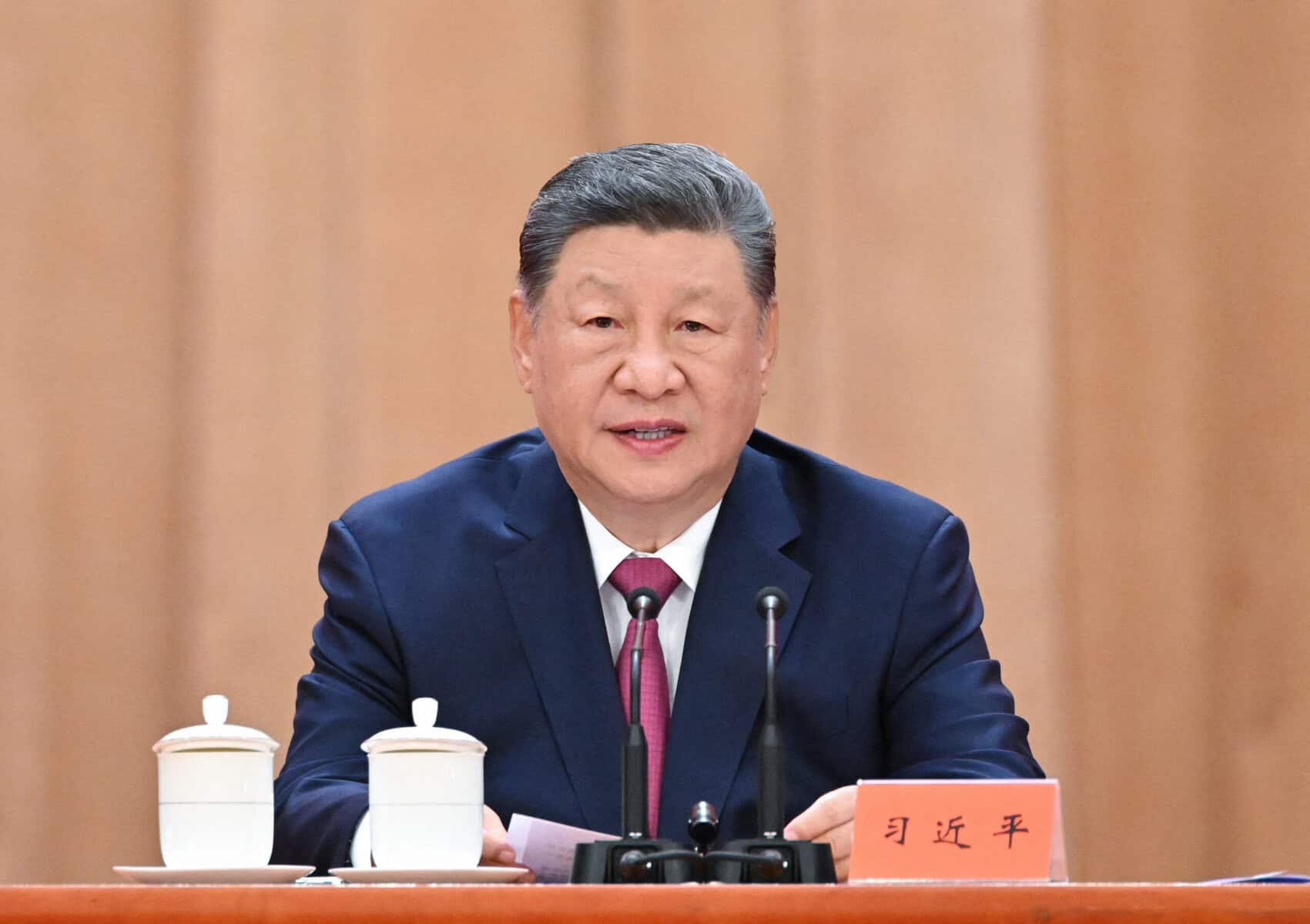
Chinese President Xi Jinping defended Latin America’s “independence and self-reliance” during talks with Ecuadorian President Daniel Noboa, arguing that countries in the region should be free to build international partnerships based on their own interests. Xi made the comments yesterday at Beijing’s Great Hall of the People, where he received Noboa during the Ecuadorian leader’s first state visit to China.
“China supports Latin American countries in upholding independence and self-reliance and conducting external cooperation based on their own national interests,” Xi said, according to China’s official Xinhua news agency. He added that Latin America and the Caribbean should remain a “zone of peace” and said outside powers should not interfere with the region’s development or its choice of diplomatic and economic partners.
“Their right to independently choose partners should not be interfered with,” Xi said. The Chinese leader did not name the United States. However, his remarks came as Beijing and Washington compete for influence across Latin America, particularly in trade, telecommunications, energy, ports and other major infrastructure projects.
That competition has intensified since U.S. President Donald Trump returned to the White House. His administration has pushed regional governments to limit Chinese participation in sensitive industries while increasing cooperation with Washington on migration, organized crime and security.
Noboa is considered one of Trump’s closest allies in South America, but China remains essential to Ecuador’s economy. His visit, which runs from August 16 through August 23, has focused heavily on trade, investment, mining, renewable energy and financing. Xi called on China and Ecuador to strengthen political trust and move forward with projects involving energy, minerals, infrastructure and finance.
Noboa said the two countries were entering “a new stage” in their relationship. “You can be sure that you can always count on Ecuador for cooperation, not only culturally and economically, but that you will have a friend on the other side of the Pacific,” the Ecuadorian president told Xi.
The meeting produced about $42.7 million in non-repayable Chinese cooperation funds for Ecuador. About $28 million will support the purchase of 125 police cars, improvements to surgery and dialysis services and an economic recovery program in northern Ecuador.
An additional $14.7 million will go toward education, production and disaster-prevention projects. The two governments also agreed to expand cooperation in the digital economy, renewable energy and climate monitoring, including an artificial intelligence-supported weather system intended to improve preparations for El Niño.
China also restored export authorization for eight Ecuadorian shrimp-processing plants shortly before Noboa’s visit. The facilities had lost access to the Chinese market following suspensions imposed in late 2025 and early 2026. Xi said trade between the two countries increased by 20% during the first half of 2026. China has become the leading destination for Ecuador’s non-oil exports, helped by a free trade agreement that took effect in 2024.
The broader message from China also applies to countries such as ours, which established diplomatic relations with China in 2007 and has had a free trade agreement with the country since 2011. Costa Rica maintains close economic and security ties with the United States while also importing billions of dollars in Chinese products.
Its efforts to balance those relationships have become more complicated as Washington presses Central American governments to scrutinize Chinese participation in telecommunications and other critical infrastructure. Xi’s comments presented China as a partner that respects national choice. Whether governments across the region view Beijing’s financing and investment in those terms remains part of the larger contest between the world’s two biggest economies.





