

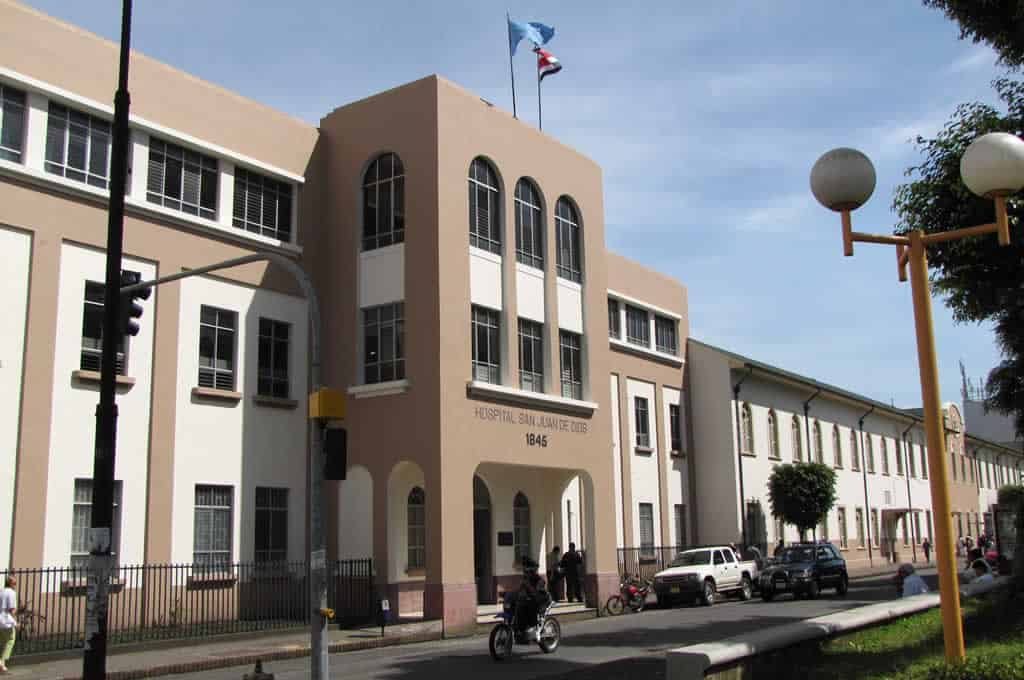
The board of directors of the Caja Costarricense de Seguro Social (CCSS), the institution that runs Costa Rica’s public health and pension systems, has gone more than two months without holding a formal session, leaving a growing backlog of decisions on hospitals, medicine, waiting lists and pensions waiting to be addressed.
The stalemate stems from a fight over who is allowed to sit on the nine-member board. Under the Caja’s founding law, its directors are drawn in equal parts from three sectors: three represent the State and are named by the government, three represent employers through the Unión Costarricense de Cámaras y Asociaciones del Sector Empresarial Privado (Uccaep), and three represent workers, through the union, cooperative and solidarista movements. The board needs at least five sworn-in members to take up urgent matters, and a full slate with no vacant seats to hold ordinary sessions. At present it has too few confirmed members to meet in the normal way.
At the center of the dispute is the government’s refusal to swear in Rocío Alfaro, a former Frente Amplio legislator whom the labor sector elected as its representative. The Consejo de Gobierno, made up of the president and cabinet, rejected her designation, and union leaders have said they will not withdraw her name.
Alfaro has argued that the government is deliberately obstructing the board’s legal integration so that it cannot function. “The legal composition of the board is being obstructed so that it cannot take decisions,” she said, warning that the impasse itself could push the institution toward a crisis through decisions left unmade.
Union representatives have gone further, accusing the government of engineering the paralysis in order to force through a change in how the Caja is run, from its tripartite model toward a more business-oriented one that would reduce the sectors’ representation. Marta Rodríguez, the board’s union representative, has said the body is the only one empowered to approve the institution’s major decisions and that with an incomplete board those decisions are either frozen or taken under questionable footing.
The Unión Médica Nacional, a medical union, has held the Consejo de Gobierno responsible for the standstill and warned that it directly affects patients by holding up infrastructure, medicine purchases and other administrative matters. The government’s position is that it is entitled to verify that elected directors meet the legal requirements of suitability, competence and good standing before they are sworn in. That review is the mechanism it has invoked in declining to seat Alfaro.
The dispute has already reached the courts. The Constitutional Chamber, known as the Sala IV, has asked the government to explain its rejection of Alfaro’s appointment, a response expected to carry public weight given what is at stake.
In the meantime, the costs are mounting as union directors say the matters left unresolved include hospital projects in Cartago, Limón and Golfito, the growing waiting lists for care, the purchase of medications, pension decisions, the State’s debt to the Caja and the institution’s long-running ERP-SAP information system overhaul.
The government has recently sworn in two directors, Martín Robles for the cooperative movement and Vianey Lorena Hernández for the solidarista movement. Even so, together with executive president Mónica Taylor and State representative Edgar Villalobos, that brings the board only to four confirmed members, one short of the minimum needed to convene even for urgent business.
For the millions of residents and foreign residents who depend on the Caja for care, the standoff is less about board seats than about the decisions that are not being made while it drags on.





