

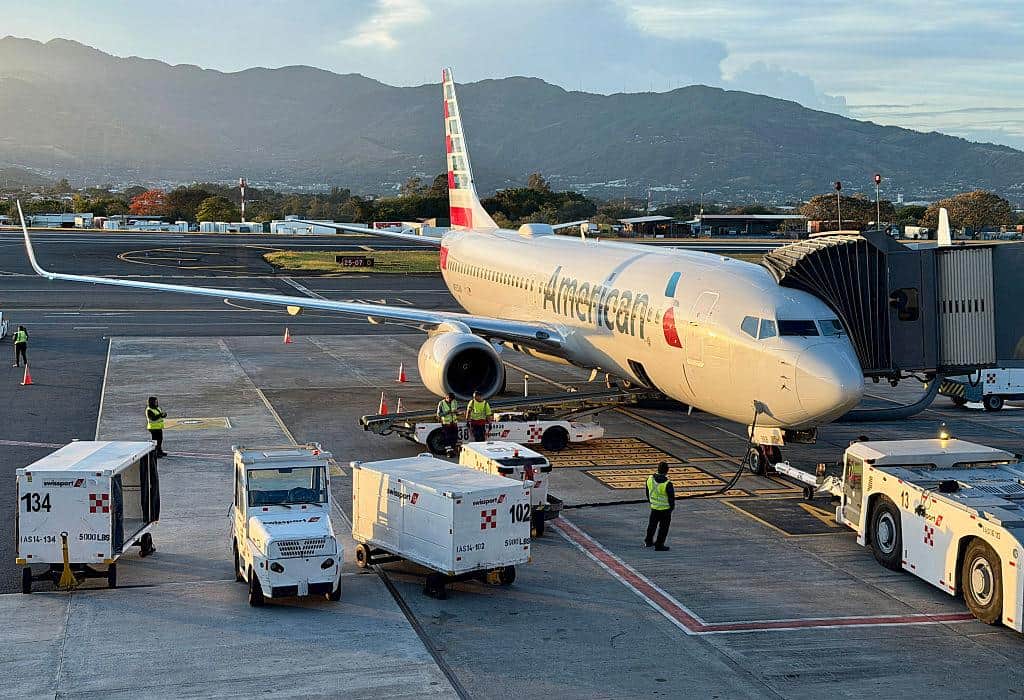
Reports of people pointing laser beams at aircraft near Juan Santamaría International Airport in San Jose have reached their highest level since officials began tracking the incidents in 2016. The airport registered 74 laser interference reports during the latest annual reporting period, a 72% increase from the previous period’s 43 cases.
The increase cannot be explained only by the growth in air traffic. The rate rose from 0.93 to 1.37 reports for every 1,000 aircraft operations during 2025, indicating that the practice itself has become more frequent. Airport officials warned that laser beams can temporarily impair a pilot’s vision during takeoff and landing, when crews depend heavily on visual references and must make decisions within seconds.
In one reported incident, a captain transferred control of the aircraft to the first officer after the laser affected the captain’s vision. Other crews reported temporary visual problems while approaching the airport from distances of approximately 5.5 to 11 kilometers (3 to 6 nautical miles).
None of the incidents caused an accident or prevented an aircraft from landing safely. However, officials said the reports show that laser interference is having a real effect inside aircraft cockpits. Exposure to a laser beam can cause glare, temporary blindness, lingering images and distraction. Even when the effects last only briefly, they can increase the crew’s workload during the most demanding stages of a flight.
Most of the incidents occurred between 6 p.m. and 11 p.m., with the highest concentration between 7 p.m. and 9 p.m. Laser beams are more visible at night and can reach aircraft several kilometers from the runway. December, January and February recorded the most reports. Those months coincide with Costa Rica’s peak tourism season, holiday travel and some of the busiest periods of operation at the country’s main international airport.
Juan Santamaría handles the majority of Costa Rica’s international passenger traffic. Aircraft approaching the airport pass over several heavily populated areas, making it difficult for authorities to immediately find the person responsible for a laser incident.
Airport officials have urged residents to understand that pointing a laser at an aircraft is not a harmless joke. A beam that appears small from the ground can spread across a cockpit window, filling a pilot’s field of vision with bright light. Costa Rica’s Penal Code establishes prison sentences of two to six years for knowingly carrying out an act that endangers an aircraft or the safety of air transportation.
The incidents are reviewed by the airport’s operational safety committees, while prevention campaigns have been coordinated with Costa Rica’s civil aviation authorities. Anyone who sees a laser being pointed toward an aircraft or airport area should contact the 9-1-1 emergency system and provide the location from which the beam appears to be coming. Authorities said precise location details can help police respond before another aircraft is targeted.
Airport officials are particularly concerned because most cases occur while aircraft are making their final approach to the runway. At that stage, pilots are flying at lower altitudes, monitoring instruments and maintaining visual contact with the runway and surrounding traffic. The record number of reports has renewed calls for greater public awareness and stronger prevention efforts in communities along the airport’s main flight paths.





