

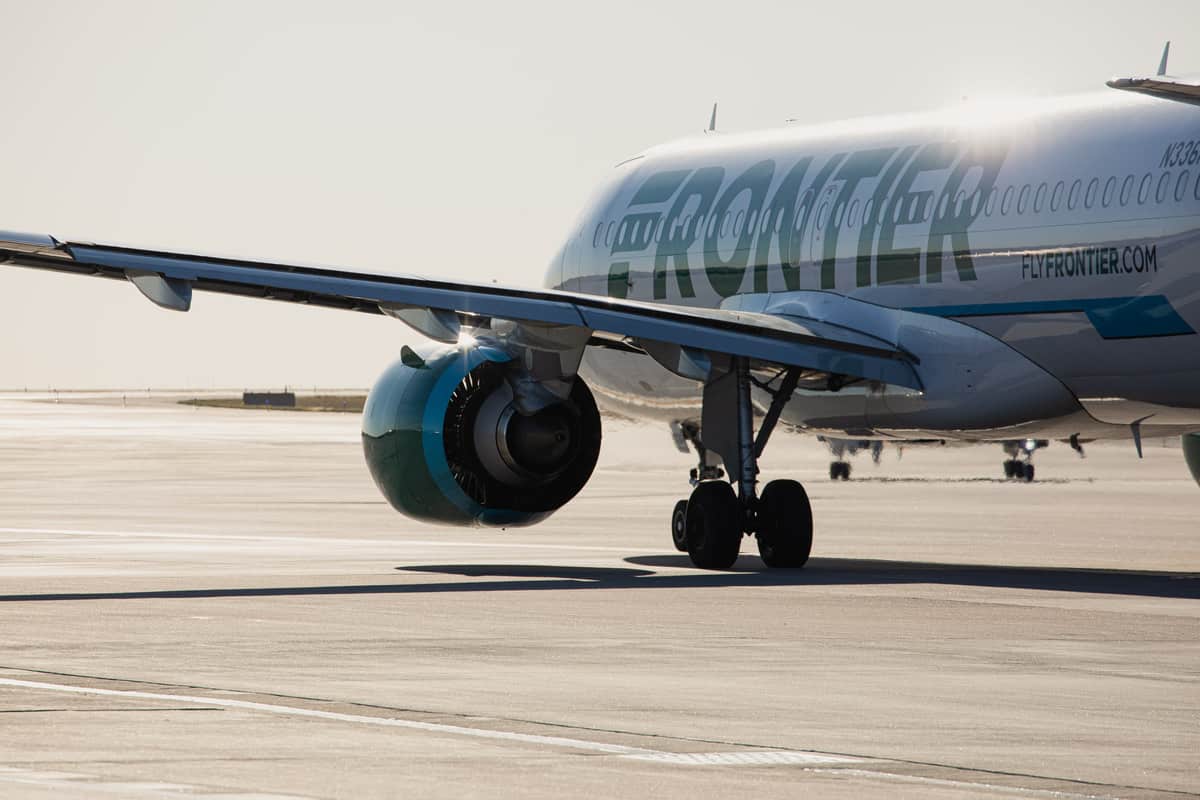
Frontier Airlines is preparing to pull back from San José, Costa Rica, removing its service at Juan Santamaría Airport from the schedule as part of a wider network adjustment by the low-cost U.S. carrier. The change affects Frontier’s Orlando–San José route, the airline’s remaining listed connection at Costa Rica’s main international airport.
According to airline schedule filings tracked by AeroRoutes, Frontier’s Orlando–San José route is listed as suspended from August 17 through October 9, 2026. The same filing identifies San José, Costa Rica, as one of several markets Frontier is exiting, along with Corpus Christi, Knoxville, St. Maarten, Sarasota and Spokane. AeroRoutes noted that some exited markets and discontinued routes could return in future schedule updates.
The move does not necessarily mean Frontier will never return. Airline schedule filings can change, and AeroRoutes noted that some discontinued routes or exited markets may reappear in future schedule updates. Still, for travelers in Costa Rica, the current filing points to a clear reduction in low-cost U.S. service through San José.
Frontier’s exit would be a reversal from the airline’s recent push back into Costa Rica. In 2021, the carrier returned to Juan Santamaría International Airport with nonstop flights from Miami and Orlando, at the time presenting both Florida markets as important for inbound tourism and Costa Ricans traveling to the United States.
This announcement adversely affects travelers looking for cheap nonstop or low-fare connections between Central Florida and Costa Rica’s Central Valley. Orlando remains one of the most competitive U.S. routes into San José, with other airlines still serving the market. But losing Frontier removes one of the ultra-low-cost options that often helps push fares down, especially for travelers who are flexible with luggage, seat selection and travel dates.
The route cut also comes during a period of constant reshuffling across the airline industry. Frontier has been trimming underperforming routes while focusing aircraft and crews on markets where it sees stronger returns. For Costa Rica, that means it may keep strong overall air connectivity while still losing certain price-sensitive routes that depend heavily on seasonal demand and high load factors.
The San Jose Airport remains well connected to the United States, with service to major markets including Miami, Fort Lauderdale, Orlando, Houston, Dallas, Atlanta, New York, Newark, Los Angeles and others, depending on season and airline schedules. The larger question is whether San José can continue attracting and retaining the type of budget carriers that help keep travel affordable for families, tourists and Costa Ricans living abroad.
The Frontier change is not a crisis, yet, for Costa Rica tourism, but it is worth watching. Ultra-low-cost carriers can be unpredictable, entering markets quickly when demand looks strong and leaving just as quickly when aircraft can earn more elsewhere. For anyone flying, the safest approach is to check reservations directly with the airline, monitor any schedule changes, avoid assuming that a listed route will remain available later in the year and look into getting travel insurance to protect yourself.
For Costa Rica, the cut is another reminder that air access is not only about the number of airlines serving the country, but also about price, frequency and competition. San José may still have plenty of flights, but every lost low-cost route matters to travelers who build trips around affordability.
Travelers who already booked Frontier flights beyond the suspension date should check their reservations directly with the airline. Frontier says passengers whose flights are canceled by the airline are eligible for a refund to the original form of payment if they choose not to accept a proposed rebooking. According to the airline’s refund policy, refunds are issued either upon request or automatically after the scheduled departure date, and are processed within seven business days.





