

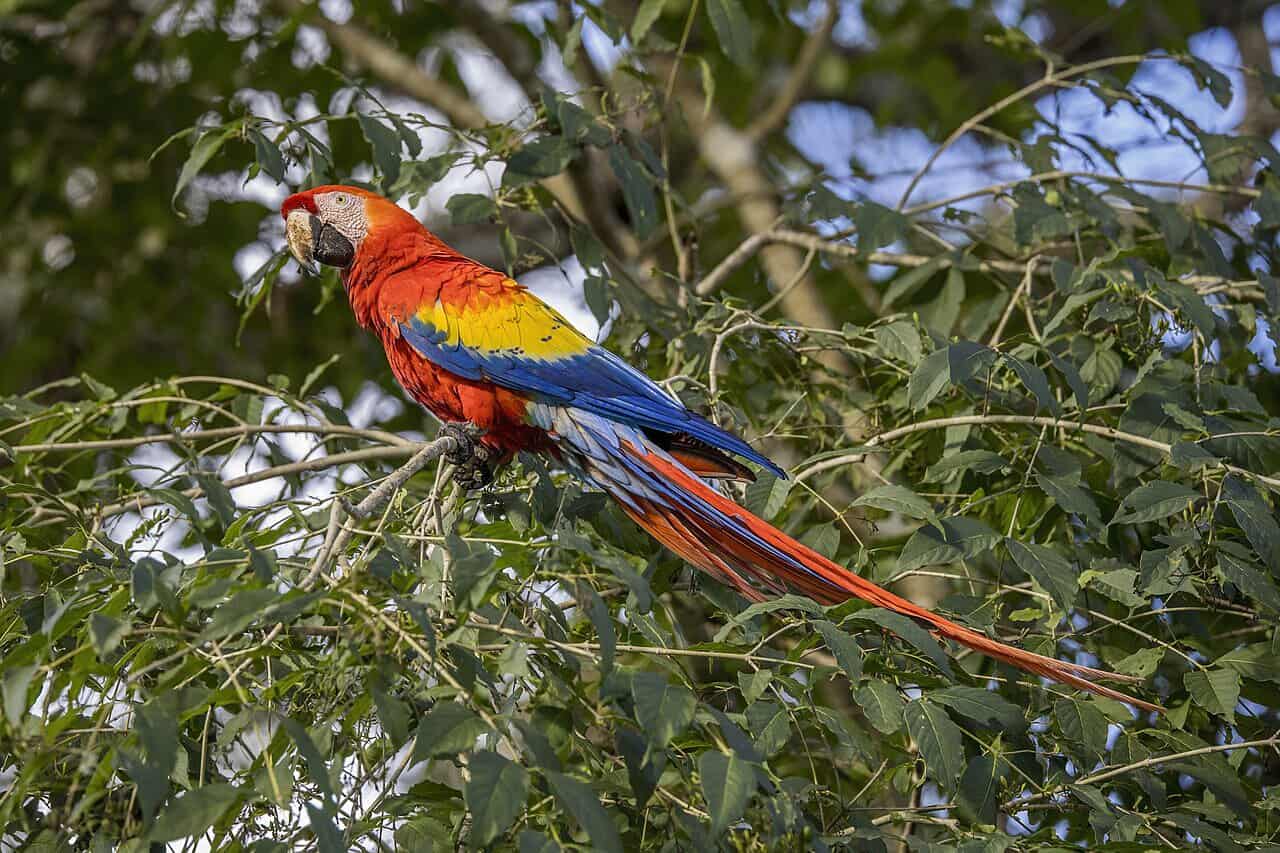
A new report from The Nation has put international attention on a remote corner of eastern Honduras, where Indigenous Miskito guardians are protecting the scarlet macaw while facing pressure from poachers, illegal ranching, forest fires and drug-trafficking routes.
The story by journalist Roberto Lovato, focuses on La Moskitia, the vast rainforest region in Honduras’ eastern department of Gracias a Dios. There, community leaders in Mavita have spent years trying to save the scarlet macaw, Honduras’ national bird, known locally as the guara roja and in Miskito as apu pauni.
At the center of the report are Santiago Lacuth and Anayda Pantin, who help lead the Rescue and Liberation Center of La Moskitia. The center cares for confiscated and injured macaws, monitors nests, feeds recovering birds and supports patrols that try to keep poachers away from nesting areas.
The Nation describes the work as both conservation and self-defense. Lacuth told the magazine that people protecting the birds have faced direct threats from poachers and criminal groups. “We do this for love,” he said.
The stakes are larger than one bird. Scarlet macaws disperse seeds and help regenerate the forests that sustain Miskito communities. In La Moskitia, protecting the bird also means protecting the forest, the land and Indigenous control over territory that has become valuable to illegal ranchers, loggers and drug traffickers.
The numbers show why the project matters. According to The Nation, the local scarlet macaw population around Mavita fell from about 500 birds to 100 between 2005 and 2010 after years of poaching and poverty-driven egg theft. The Apu Pauni Project, supported by One Earth Conservation and local partners, has since helped protect more than 1,000 nests and cut poaching sharply through Miskito-led patrols across roughly 500,000 acres.
Those gains match the wider conservation picture reported by groups working in the area. One Earth Conservation says the project has reduced scarlet macaw poaching from total nest loss to below 20 percent in the areas it patrols. WCS Honduras reported this year that the Apu Pauni center in Mavita has added solar power and strengthened its work in bird recovery, patrols, nest monitoring, wildfire prevention and research.
The threat, however, has not disappeared. The Nation’s report describes an overlapping world of wildlife traffickers, illegal land buyers, cattle expansion and narco-linked routes through the forest. U.S. authorities separately warn against travel to Gracias a Dios, calling the department isolated and vulnerable to drug-trafficking organizations, with weak infrastructure and limited police presence.
For Honduras, the scarlet macaw is more than a national symbol printed on currency and tourism materials. It has become a measure of whether community-led conservation can survive in places where the state is weak and criminal groups have money, weapons and influence.
The story also carries a regional lesson. Across Central America, scarlet macaws have been pushed back by habitat loss and the illegal pet trade. Costa Rica has seen its own long fight to protect the lapa roja in places such as the Central Pacific and Osa Peninsula. Honduras’ experience shows that bird conservation is not only about biology. It is also about land rights, poverty, security and whether the people who live with wildlife have the resources to protect it.
In Mavita, that work continues one nest, one rescued bird and one patrol at a time. The macaws still fly over the village. The question now is whether the people protecting them will get enough support before the next wave of poachers, fires or land grabs arrives.





