

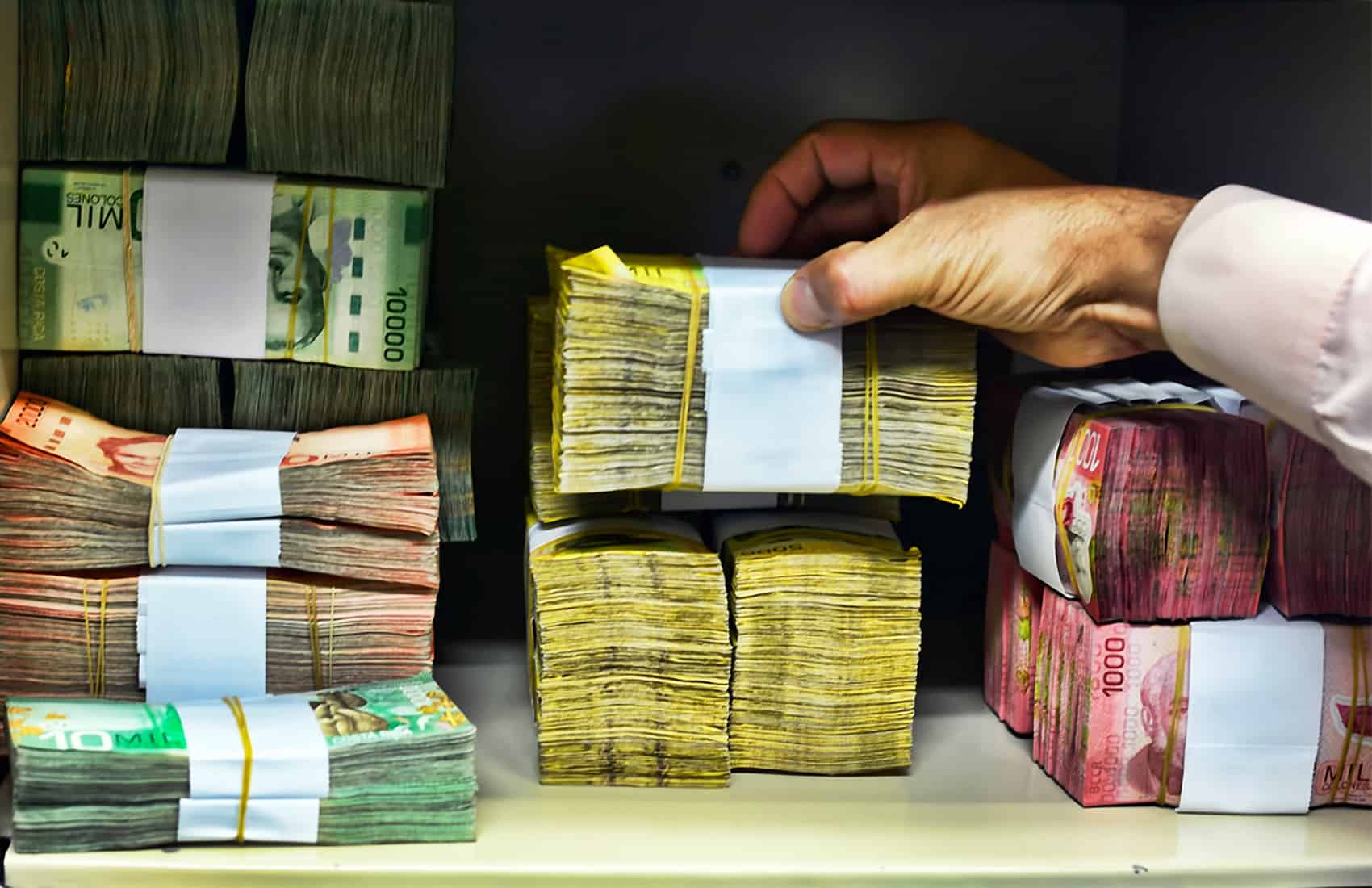
Costa Rica’s international reserves have climbed to one of the highest levels in our country’s history, nearing $21 billion and giving the Central Bank a large financial cushion at a time when the strong colón continues to shape the economy.
The Central Bank’s daily reserve table shows net international reserves at $20.9079 billion on April 29, 2026, up from $6.9651 billion on the same date in 2022. That means the reserve position has almost tripled during the past four years.
The jump marks a sharp change from the years before the current reserve buildup. Central Bank data show reserves at $14.48 billion on April 29, 2025, $13.46 billion in 2024, and $11.13 billion in 2023, before reaching the latest figure near $21 billion in 2026.
The reserves are foreign currency assets held by the Central Bank. They are used to support monetary and exchange-rate stability, meet external obligations, and give the country room to respond to shocks. They are not a pool of money the government can freely spend on salaries, infrastructure, or public programs.
The rise has been driven by a strong supply of dollars in the local market, including exports, tourism, investment flows, and external financing. In its April economic report, the Central Bank said it purchased $358 million in the foreign exchange market to meet the needs of the non-bank public sector, $23.4 million for its own operations, and $253.5 million linked to stabilization during episodes of exchange-rate volatility.
By March, before the latest April increase, the Central Bank reported net international reserves of $19.2285 billion. At that level, reserves stood at 166.8% of the minimum adequate level set by the Central Bank board, equal to 17.3% of GDP, 10.2 months of projected imports, and 1.9 times the broad monetary base.
The buildup gives Costa Rica a stronger buffer against external shocks, including higher oil prices, tighter global credit conditions, or sudden drops in capital inflows. The IMF said in March that Costa Rica’s current account deficit narrowed to 0.7% of GDP in 2025 and that strong foreign direct investment helped bolster reserves.
The same IMF review also noted that Costa Rica’s reserves are already adequate and said further accumulation is not necessary, adding that Central Bank intervention in the foreign exchange market should be limited to disorderly market conditions.
For those paying in dollars, the reserve story is tied directly to the exchange-rate debate. Heavy dollar inflows have helped keep the colón strong, reducing the purchasing power of tourists, retirees, and foreign residents with dollar income. At the same time, Central Bank purchases of dollars have helped absorb part of that supply and may have prevented an even deeper fall in the dollar.
The Central Bank notes that reserve levels can change for reasons beyond direct currency purchases, including changes in deposits held by commercial banks, the central government and the non-bank public sector, public external debt transactions, and other operations with the rest of the world.
The latest figure gives the incoming administration an economy with a stronger external position than Costa Rica had four years ago. It also leaves policymakers with a delicate balance: keeping enough reserves to protect stability without adding unnecessary pressure to a currency market already marked by an unusually strong colón.





