

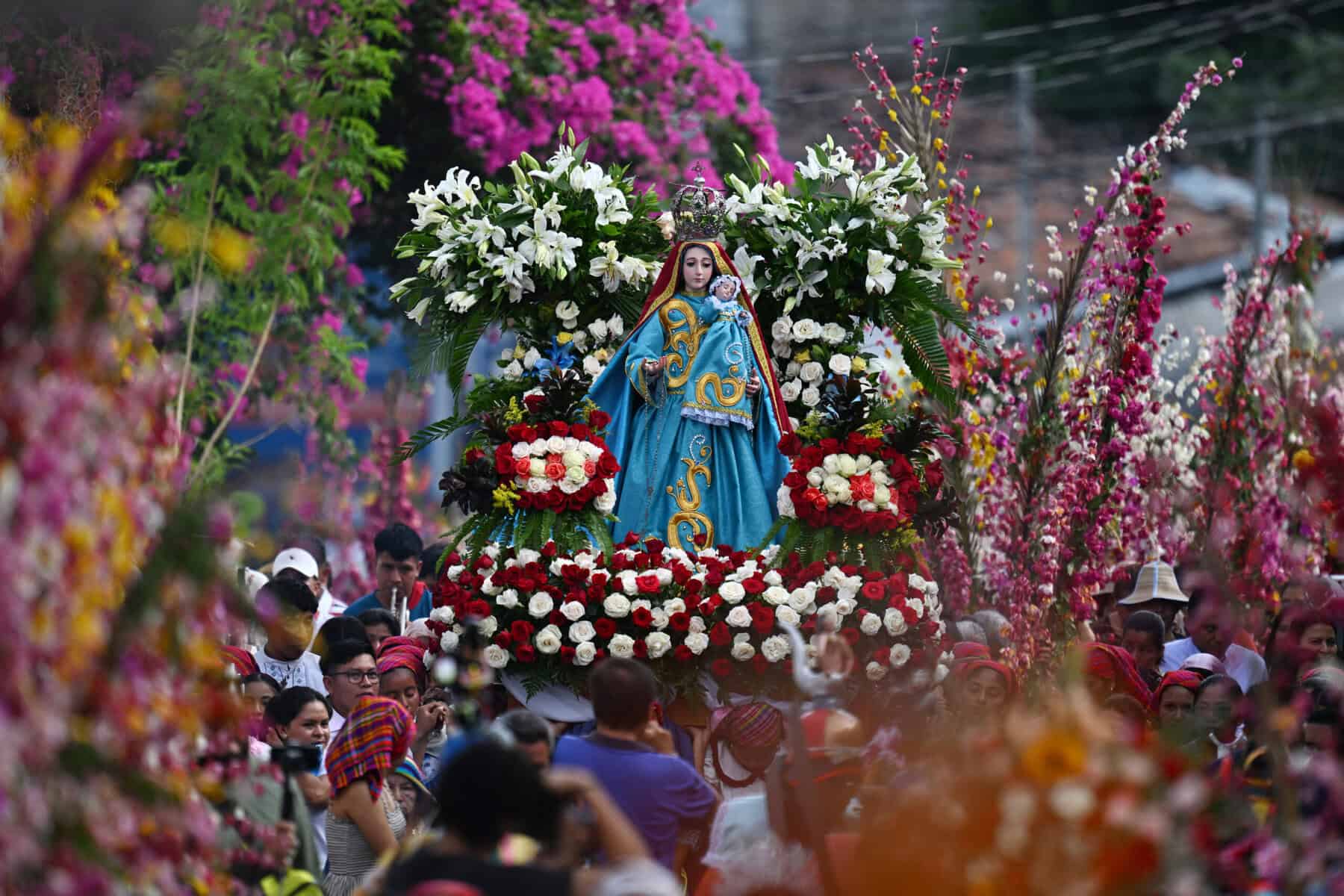
In the hills just south of San Salvador, the small colonial town of Panchimalco is preparing once again for one of the most visually stunning and spiritually meaningful celebrations in all of Central America. The Festival of Flowers and Palms, held annually on the first Sunday of May, draws visitors from across El Salvador and beyond to witness a tradition that has endured for centuries and only continues to grow in global significance.
The roots of this festival reach back long before the Spanish arrived in the Americas. Originally a pre-Columbian celebration marking the beginning of the rainy and harvest season, it was gradually woven together with Catholic devotion during the colonial era to become the layered, richly symbolic event it is today.
The people of Panchimalco, many of them descendants of the indigenous Pipil and Maya communities who settled here during the conquest, honor two patron saints, the Virgen del Rosario and the Virgen de la Concepción, through an elaborate procession that winds through the town’s steep cobblestone streets.
From the early morning hours, the community comes together to prepare coconut palm fronds, carefully stripping the branches and threading vivid fresh flowers through them to create towering, colorful displays. Elderly residents pass down this intricate craft to younger generations, and schoolchildren participate alongside their families, ensuring that the knowledge and the love for the tradition travel forward in time.
By afternoon, young women dressed in traditional handwoven costumes carry the flower-adorned altars through the streets, while a troupe of male dancers performs the Danza de Moros y Cristianos, a dramatic religious dance-drama rooted in the Spanish Reconquest.
The procession builds toward a final Mass, accompanied throughout by live music, prayers, the scent of incense, and the crackle of handmade fireworks. Beyond the procession itself, the weekend transforms Panchimalco into a full cultural celebration.
Traditional foods made with corn, rice, cocoa, and local herbs are prepared and shared, and the town’s streets come alive with folk dances, music, and the launching of handmade balloons into the sky. The festival’s spiritual core is undeniable, but even visitors without religious ties find themselves moved by the community energy and the sheer beauty of the colors on display.
The 2026 edition carries particular weight. In 2025, UNESCO formally inscribed the Festival of Flowers and Palms onto its Representative List of the Intangible Cultural Heritage of Humanity, the first time any Salvadoran cultural tradition has received this distinction. That recognition has placed Panchimalco on the global cultural map in a way it has never been before, and international curiosity is at an all-time high.
Adding to that momentum is El Salvador’s remarkable transformation as a tourism destination. The country welcomed a record 4.1 million international visitors in 2025, and early figures from 2026 suggest that number is on track to be surpassed. Much of that growth has been fueled by dramatic security improvements: the homicide rate has fallen to historic lows, the U.S. State Department has significantly upgraded its travel advisory for the country, and tourists who once avoided El Salvador entirely are now arriving from across the Americas and Europe. Dedicated tourist police now operate along key cultural routes, including the areas surrounding Panchimalco, giving both local organizers and visiting attendees added confidence.
For a festival that has always thrived on community and openness, this new era of accessibility and international interest could make the 2026 edition its most attended and celebrated yet. Panchimalco has long known that its traditions endure because its people choose to carry them forward, now, the rest of the world is finally showing up to witness it.





