
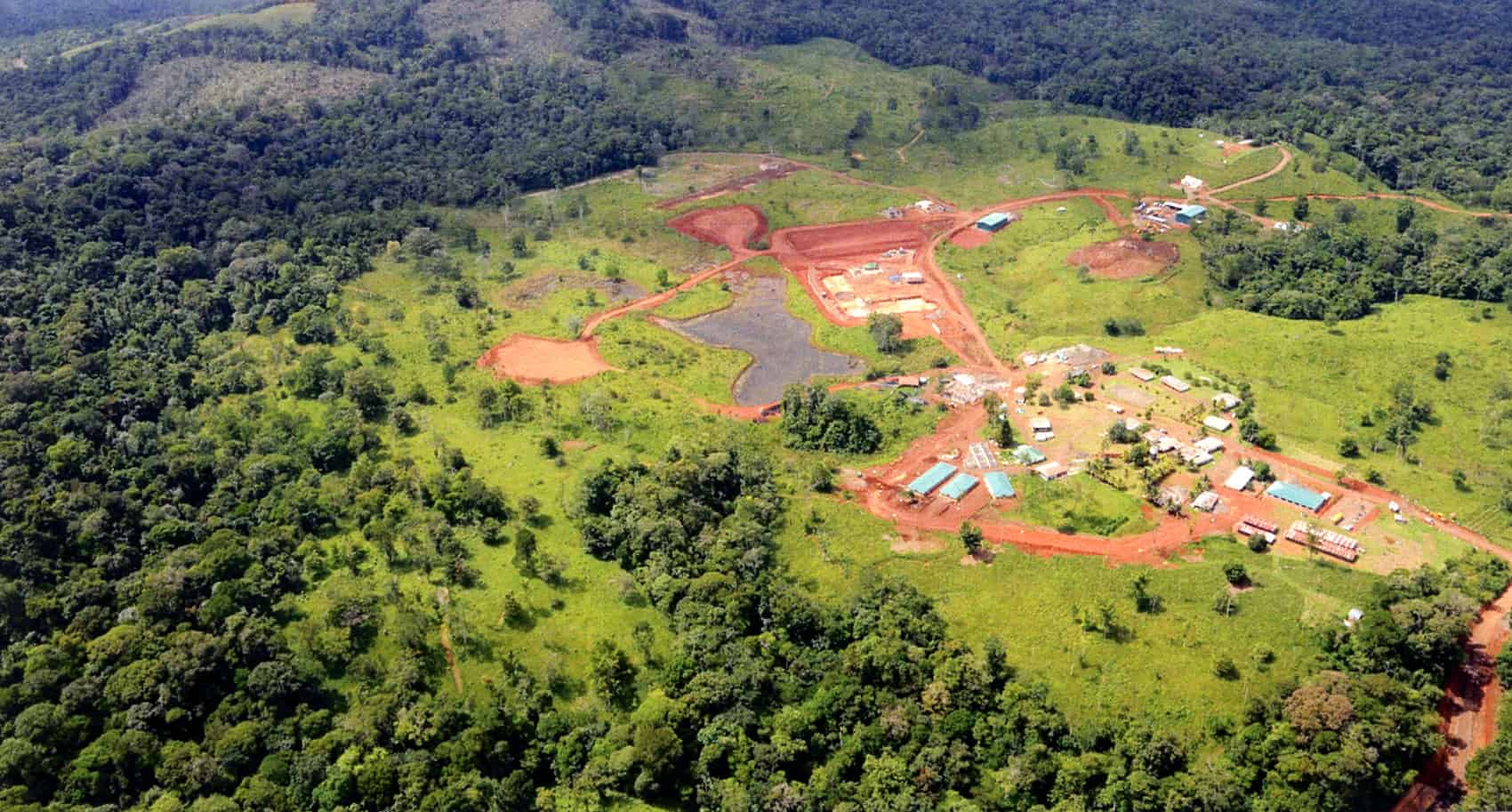
Deep in northern Costa Rica, near the Nicaraguan border, a slow-motion environmental catastrophe is unfolding with the speed and impunity of a gold rush. The Crucitas region in San Carlos, Alajuela province, once a candidate for regulated mining under a Canadian concession, has become what one journalist who hiked ten hours to reach the site described as a place where only the law of the jungle prevails.
What began as artisanal extraction by small-scale local miners has transformed into something far more sinister, and the incoming Costa Rican government elected in February will inherit one of the most complex crises the country has faced in decades. The origins of the crisis trace directly to a 2010 court ruling that annulled the operating concession granted to Infinito Gold, a Canadian company that had planned an open-pit operation on the Crucitas estate. The decision was driven by environmental concerns and permitting irregularities and was celebrated at the time as a victory for conservation.
But it inadvertently created a vacuum. With no regulated extraction and no meaningful state presence, thousands of informal miners known locally as coligalleros, the majority of them Nicaraguan nationals, moved in and began digging. By the time authorities took notice, the operations had already sunk roots into the landscape. Infinito Gold subsequently sought nearly $400 million in international arbitration damages from Costa Rica, a claim finally dismissed in July 2024, but by then the illegal economy had grown far beyond what any court ruling could contain.
What is happening now at Crucitas is no longer a story of desperate individuals panning rivers. Environmental prosecutor Luis Diego Hernández has been explicit: the operations carry all the hallmarks of organized crime. Criminal networks have installed sponsors, resource providers, and infrastructure coordinators, a structure Hernández warned mirrors drug trafficking organizations.
Security Minister Mario Zamora confirmed to the Legislative Assembly that the crisis has evolved from artisanal extraction to semi-industrial exploitation, with more than 130 processing pools identified across a footprint that has expanded from roughly 900 hectares to over 3,000 hectares in a short period.
Extracted earth and gold bullion are smuggled across the border into Nicaragua for processing and sale, with authorities estimating that between 2017 and 2024, an estimated $152 million in untaxed gold left the country through illicit channels. At current gold prices, the annual value of the illegal operation may exceed $250 million.
The cross-border dimension is becoming increasingly alarming. Nicaragua has granted mining concessions to Chinese firms covering over 4,000 hectares near the Costa Rican border. Those operations, which use advanced methods capable of recovering up to 95% of gold from sediment, are pushing displaced workers toward Costa Rica’s northern frontier.
The Security Minister has warned that between 10,000 and 15,000 Nicaraguans could eventually cross into Costa Rica seeking work in illegal extraction. A cross-border investigative report also exposed a 623% rise in cyanide imports to the region over the past decade, with chemicals transported without oversight and used indiscriminately in mining zones.
Water sources serving local communities and schools have been poisoned by mercury and cyanide runoff, a crisis so severe that authorities declared a state of emergency in March 2023 and the national water utility has been delivering potable water by tank trucks to affected residents. Two Nicaraguan brothers died when a makeshift tunnel collapsed on them, one of many fatalities in operations where the only rule is profit.
The College of Geologists of Costa Rica has added a further dimension to the debate by estimating that the Crucitas and adjacent Conchudita areas sit atop as much as $10 billion in gold reserves, with approximately 2 million ounces in Crucitas alone. That figure has intensified legislative pressure to find a definitive solution. Two competing visions have emerged in the National Assembly.
One, backed by the outgoing Chaves administration and various legislators, would legalize tightly regulated extraction in Crucitas using closed-cycle methods, banning open-pit mining and the use of cyanide and mercury, with royalties flowing to the state. The other, championed by the Frente Amplio party, proposes converting the area into an international environmental geopark focused on conservation, research, and eco-tourism, a model already applied in 13 UNESCO-recognized sites across Latin America.
The next government must move decisively on several fronts simultaneously. Aerial and satellite monitoring must be institutionalized to track the rapid spread of illegal operations across remote terrain that ground patrols cannot effectively cover alone. The legal framework for prosecuting the organizers, not just the coligalleros at the bottom of the network, must be strengthened, treating illegal mining as the organized crime it has become. A bilateral agreement with Nicaragua addressing the smuggling routes and the displacement of miners is essential and long overdue.
Remediation of contaminated waterways must begin immediately, with dedicated environmental emergency funding, as the public health consequences of inaction are already measurable. And regardless of which legislative path is ultimately chosen, regulated extraction or protected national park, the legal ambiguity that has allowed a $250 million annual criminal economy to flourish in a regulatory void must be resolved. Costa Rica’s global reputation for environmental stewardship was built on exactly the kind of decisive institutional action that Crucitas now urgently demands.