

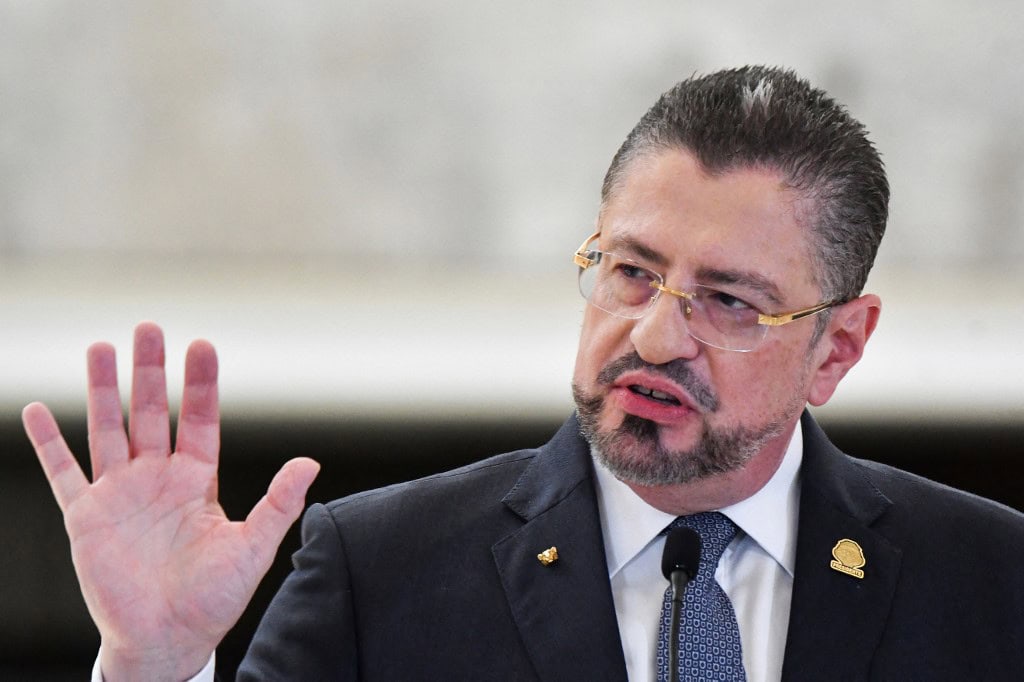
President Rodrigo Chaves gave Costa Rica’s break with Cuba a harder and more openly ideological edge on Wednesday, using the embassy closure announcement to call for communism to be driven from the hemisphere. The remark pushed the story beyond a bilateral diplomatic dispute and into a broader political fight, raising questions about how far Costa Rica’s foreign policy is shifting under his government.
The government’s decision to close its embassy in Havana and order Cuban diplomats to leave San José was already one of the most aggressive foreign policy moves of Chaves’s presidency. But it was the president’s language that gave the moment its sharper meaning. By declaring that the region had to be rid of communists and by saying Costa Rica does not recognize the legitimacy of Cuba’s government, Chaves turned a diplomatic downgrade into a direct ideological statement.
That matters because Costa Rica has long presented itself as a country of institutional caution and diplomatic restraint, even when it has disagreed strongly with other governments. Chaves’s words broke from that tradition. The message was not limited to Havana. It was aimed at a wider regional audience and framed Costa Rica’s move as part of a political struggle that reaches beyond the island.
His government has justified the rupture by pointing to the human rights situation in Cuba, including repression of activists and opponents, tighter restrictions on freedom of expression, and worsening conditions for ordinary citizens facing shortages of food, medicine, and basic services. Those arguments gave San José a formal basis for the decision. But Chaves’s phrasing added something more: it recast the move as a declaration of alignment in a larger ideological contest across the Americas.
That shift in tone could have consequences beyond the immediate dispute. Cuba quickly condemned the move and accused Costa Rica of falling in line with U.S. pressure. The response was predictable, but it also highlighted the larger frame taking shape around the decision. Costa Rica is no longer presenting this only as a diplomatic response to repression on the island. It is increasingly positioning itself alongside governments willing to speak in more openly ideological terms about Cuba and the left in Latin America.
The practical change in relations is narrower than the rhetoric might suggest. Ties have been downgraded to the consular level, not entirely severed, and Costa Rica’s consular matters involving Cuba are expected to be handled from Panama. Even so, the language used by the president may end up carrying more political weight than the mechanics of the downgrade itself.
For Costa Rica, that is a notable development. Our country has often sought to distinguish itself through moderation, legalism, and diplomacy, especially in a region where ideological confrontation tends to dominate headlines. Chaves chose a different register. His comments signaled that this was not only about the Cuban government’s conduct, but also about the kind of role Costa Rica wants to play in regional debates going forward.
The result is that Costa Rica’s dispute with Cuba is no longer just a story about an embassy closing in Havana. It has become a story about tone, posture, and political identity. Chaves did not simply announce a foreign policy step. He used it to declare that his government sees the issue in ideological terms and is prepared to say so publicly.





