

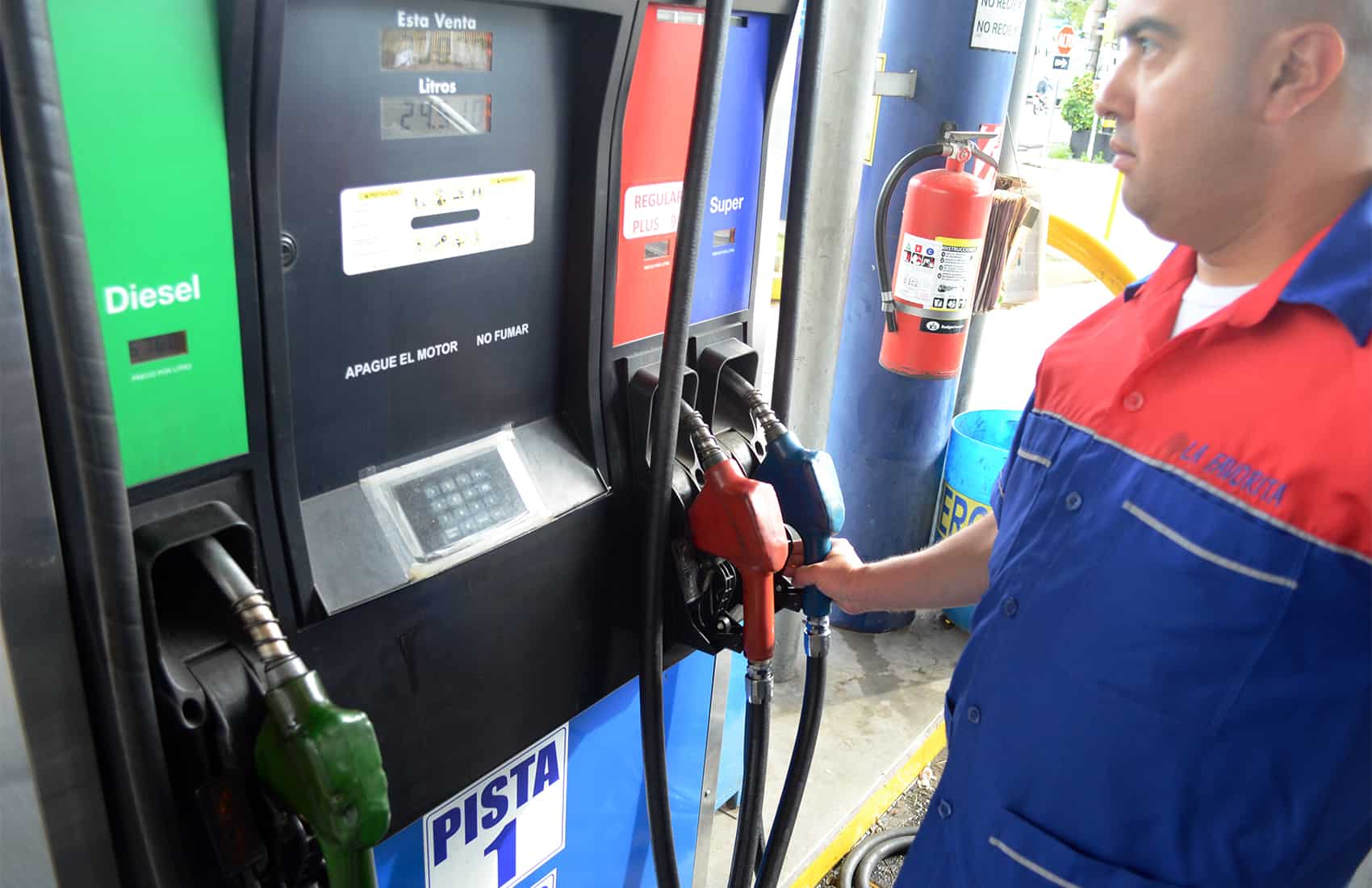
Costa Rica drivers will soon face a major increase at the pump after the Public Services Regulatory Authority, ARESEP, approved a new fuel price adjustment that will hit diesel and regular gasoline the hardest. Under the approved rates, diesel will rise by ₡152 per liter, moving from ₡564 to ₡716. Regular gasoline will increase by ₡123 per liter, from ₡625 to ₡748. Super gasoline will also rise, but by a smaller amount, increasing ₡103 per liter from ₡630 to ₡733.
The change creates an unusual situation in Costa Rica’s fuel market: super gasoline will become cheaper than regular gasoline. Once the new prices take effect, super will cost ₡733 per liter, while regular will cost ₡748 per liter, a difference of ₡15 per liter.
The increase is tied to higher international fuel costs and import prices reported by RECOPE for shipments made between March 13 and April 9. ARESEP said the adjustment reflects the cost of finished fuel products imported by Costa Rica, which depends heavily on international market prices.
ARESEP had already warned that Costa Rica could face an atypical fuel market in May, with regular gasoline priced above super. The regulator said the situation could shift consumer demand toward super gasoline and put pressure on inventories at service stations if more drivers choose the cheaper option.
The new rates also reflect updated import information from RECOPE. The final increase for super gasoline and diesel came in higher than the figures initially discussed in the public consultation process. A change to the single fuel tax slightly reduced the final price impact, lowering the adjustment by ₡2.25 per liter for gasoline and ₡1.25 per liter for diesel.
For those of us used to thinking in gallons, the new prices are roughly equivalent to ₡2,832 per gallon for regular gasoline, ₡2,775 per gallon for super gasoline, and ₡2,710 per gallon for diesel.
The increase is expected to affect household budgets, transportation costs, tourism operators, delivery services, and businesses that rely on diesel-powered vehicles. Diesel’s ₡152-per-liter jump is the largest of the approved increases and will likely be felt across freight, buses, agriculture, and commercial transport.
The new prices will not take effect immediately as ARESEP needs to send the resolution for publication in the official newspaper La Gaceta, and the rates will begin at midnight on the day its published, but rest assured the price increase is coming.





