

Cuba confirmed on Friday that it is holding talks with the United States, while beginning the release of political prisoners as part of an agreement with the Vatican, the historic mediator between the two countries. President Donald Trump has not concealed his desire for regime change in Cuba, located just 150 kilometers from the United States. According to Washington, the island represents an exceptional threat because of its close ties with Russia, China, and Iran.
Trump urged Cuba to reach an agreement or face the consequences. The island is going through an energy crisis that has nearly paralyzed its economy after Washington cut off oil shipments from Venezuela, its main supplier, and threatened sanctions against other countries that sell it fuel.
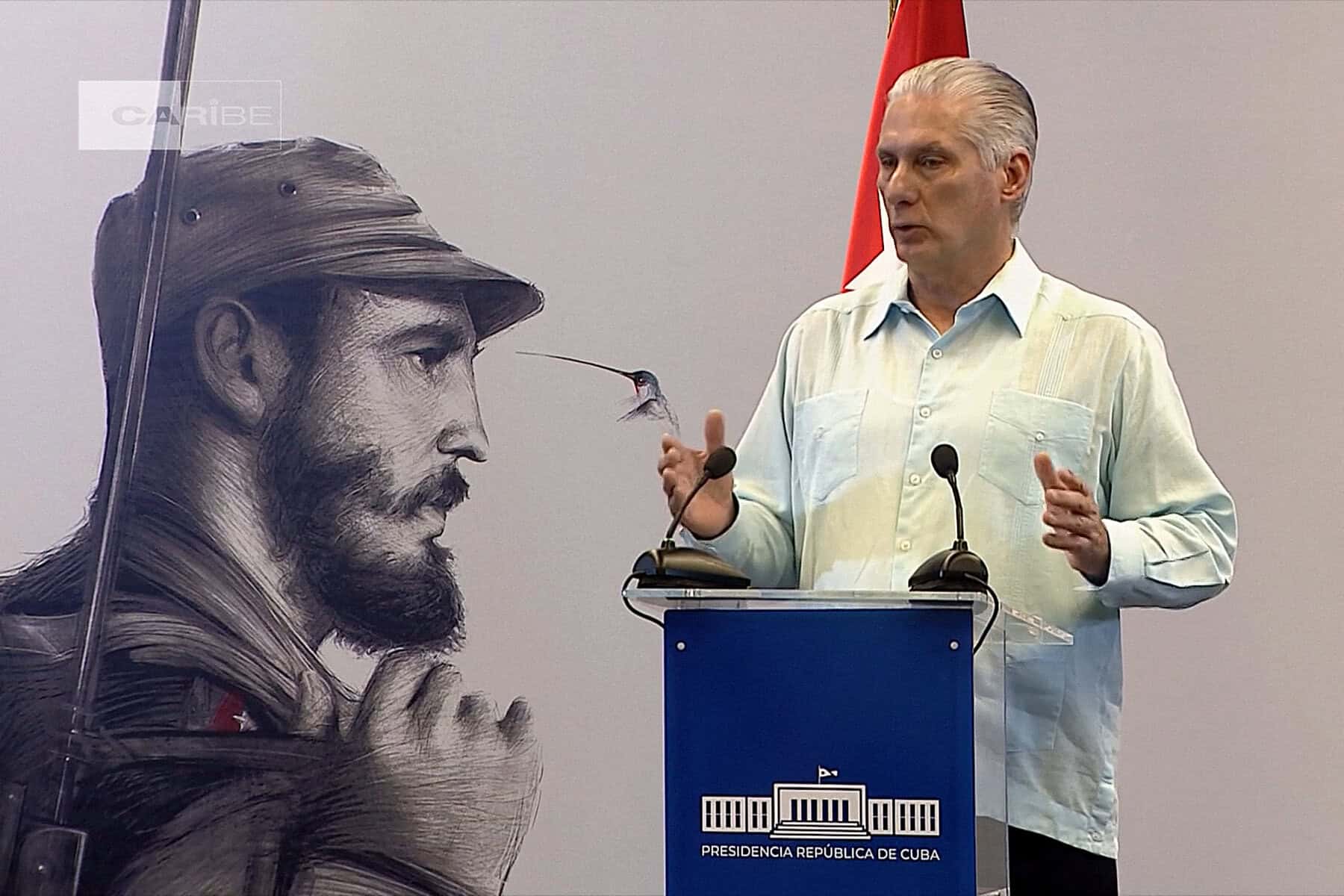
Cuban officials have recently held talks with representatives of the United States government, President Miguel Díaz-Canel said during a meeting with the top authorities of the ruling Communist Party and the government, in footage broadcast on Cuban television. Those talks are seeking solutions through dialogue to bilateral differences, Díaz-Canel said.
Among the officials seated in the front row was Raúl Guillermo Rodríguez Castro, grandson of former president Raúl Castro, who, despite holding no official position, has been identified by U.S. media as an interlocutor of Secretary of State Marco Rubio in the context of secret talks with Cuba.
As long as it benefits us, we can reach an agreement, but on our terms, Sergio Guerra, a 55-year-old agricultural products seller said. Díaz-Canel’s remarks confirm what Trump said in mid-January, when he indicated that his administration was holding talks with senior Cuban leaders.
Speaking on Friday, a White House official repeated Trump’s assertion that Cuba is a failed nation and that an agreement with its government would be very easy to achieve. Mexico, which over the past month has sent more than 3,000 tons of humanitarian aid to the island, mainly by ship, welcomed the talks.
Mexico will always promote peace and diplomatic dialogue and, in particular, in the face of this injustice that has been committed for many years against the people of Cuba through the blockade, President Claudia Sheinbaum said.
The suffering is over
According to Díaz-Canel, the exchanges with the United States were facilitated by international factors, which he did not specify. On Thursday, his government had announced the early release of 51 prisoners as a gesture of goodwill toward the Vatican. The first releases took place on Friday. Some witnessed the arrival at his home of Adael Leyva Díaz, 29, who had been serving a 13-year sentence.
Some also witnessed the return of Ronald García Sánchez, 33, sentenced to 14 years, and Leyva Díaz’s neighbor in the municipality of Arroyo Naranjo, south of Havana. Both had taken part in the historic anti-government protests that shook the island on July 11, 2021.
Leyva Díaz, who arrived in an electric tricycle, was welcomed in the street by his relatives. As soon as he stepped out of the vehicle, he hugged and lifted up his son. Now I have you here, the suffering is over, his mother Ivón Díaz told him as she embraced him.
The Miami-based NGO Cubalex said it had been able to verify the release of four other prisoners involved in the protests. For its part, the NGO Justicia 11J, which tracks detentions in Cuba related to the demonstrations, said that as of Friday there were at least 760 prisoners in the country for political reasons, including 358 who had participated in the protests.
The Catholic Church has acted for decades as a mediator and channel of dialogue between Cuba and the United States, and it played a key role in the thaw in diplomatic relations between the two countries in 2015, during Barack Obama’s second term.
On February 28, during a diplomatic tour of Europe, Cuban Foreign Minister Bruno Rodríguez was received in audience by Pope Leo XIV. A week earlier, the Vatican’s Secretary for Relations with States, Paul Richard Gallagher, had met with two U.S. diplomats: the chargé d’affaires in Havana, Mike Hammer, and the ambassador to the Vatican, Brian Burch.
At the end of February, Trump said he was considering a friendly takeover of Cuba. They have no money, they have nothing right now, but they are talking with us and maybe we will see a friendly takeover of Cuba, he said.





