

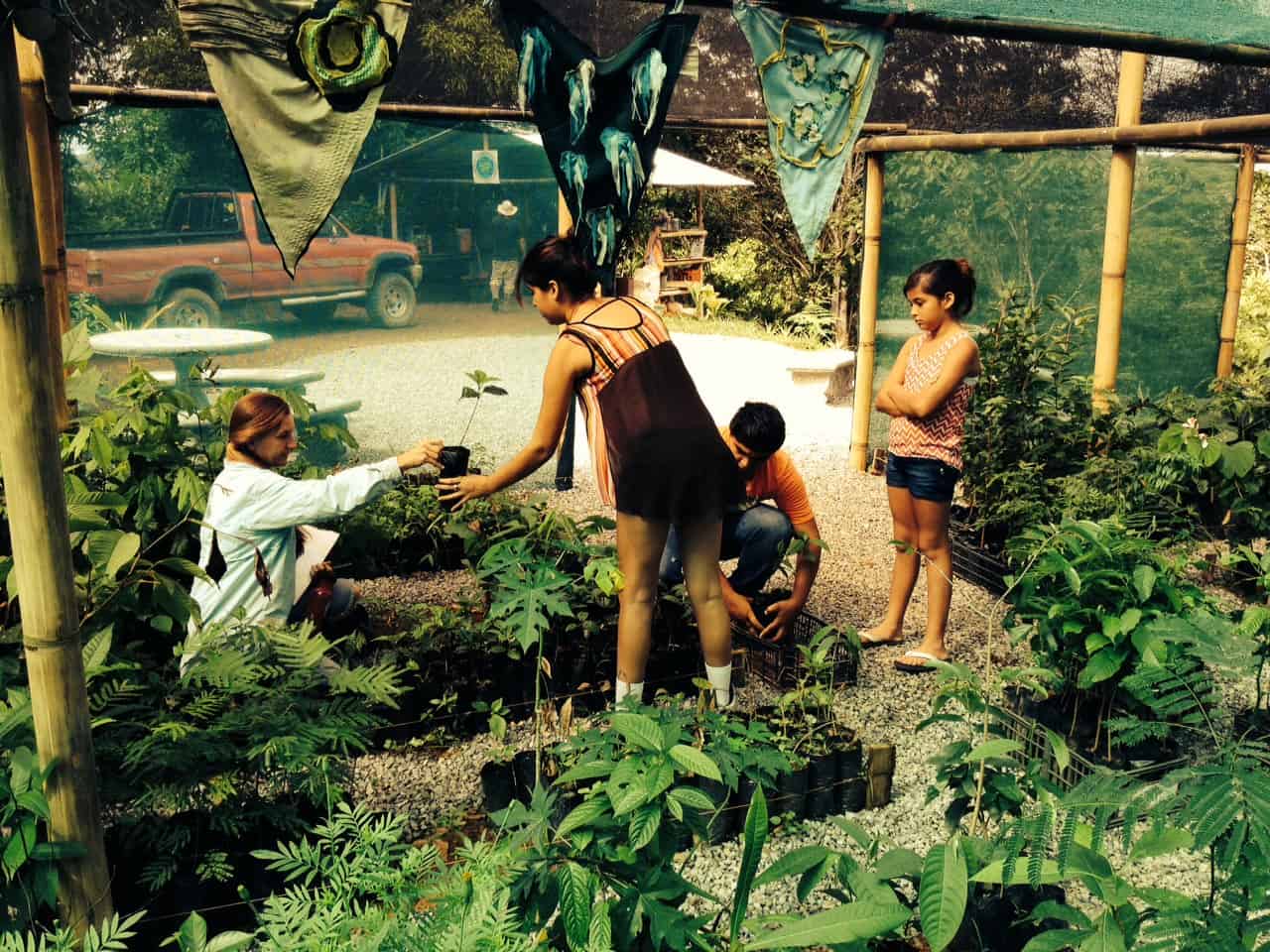
Growing up on a sustainable farm in Louisiana, Jennifer Leigh Smith seemed destined to work in environmental protection. Leaving behind a career of almost eight years as a lawyer for an environmental firm, Smith decided to start anew in Costa Rica where she founded Community Carbon Trees, a nonprofit organization devoted to working with communities to plant trees and purify the air to counteract the effects of global warming.
Smith chose to settle in Costa Rica for its lush tropical rainforest and unique environmental protection laws – at the time, Costa Rica was the only country that gave trees and rivers the right to be defended in court.
She began her new life working on private reforestation projects for philanthropic individuals. Eventually, local friends and coworkers began asking for trees to plant in their own farms, which drove Smith to build a community project to plant trees and educate the public.
Founded in 2010, Community Carbon Trees, headquartered in the Southern Zone town of Platanillo, owns twelve different farms managed by trained crew members and experienced locals. Working with sister group La Reina de Barú, which provides rich, carefully cultivated soil, Carbon Trees plants all of its trees exclusively on degraded farmland owned by local families, who receive guidance from the Carbon Trees professional crew. These families are provided with work that restores their farmland as they maintain each tree through a twenty-five year cycle. Carbon Trees has developed into an exemplary model and has been used as a reference for five different environmental groups such as Grow-Trees in India.
At Carbon Trees, everyone gets their hands dirty. At the heart of the project, Smith engages in tree planting, managing activities, and educating the public. Juan Mendiola repairs infrastructure to reach remote sites, managing equipment and the crew’s safety needs. Luis Arias Alfaro, Alvaro Cerdas, and Cristian Mena work to provide safe transportation, effective planting, seed collection and germination, soil preparation, nursery care and provide a direct connection to the local community.
“Everyone is happy, it’s beautiful,” said Smith. “I love to be exhausted from planting trees. I’m doing it because I love the Earth.”
Community Carbon Trees currently supports eighty different plant species, including rare and endangered varieties. Each plant has specific needs that must be considered including space, shade and water. When planting, both the tree species and the conditions of the farm site are carefully evaluated to guarantee the highest feasible survival rate. Less than three percent of trees die and when they do, they are replaced.
When not directly planting and caring for trees, Smith can be found attending meetings with La Reina de Barú group or with her own crew. “I’ve learned so much from my Tico counterparts,” she said, “and I’ve taught them too. It’s all about community.”
Carbon Trees injects all its revenue back into the project. “Our donations go to supplies, bags, high quality soil, transporting trees, building nurseries… it all goes out to Carbon Trees,” said Smith, explaining that no one in the organization takes a salary. The organization accepts donations through its website or through Global Giving, which finds donors for grassroots projects. A $25 dollars sponsors a tree for a twenty-five year cycle.
Carbon Trees also receives support from large organizations such as the United Nations Development Programme, which donated $20,000 to help build two new nurseries and support educational events for the public. This allowed Carbon Trees to plant over 20,000 trees and offer various free events to raise awareness about important environmental issues and potential solutions.
Carbon Trees also works with local schools, teaching children the importance of their natural environment and the role of trees as air purifiers and soil stabilizers. Activities such as Kids’ Nature Day allow children from the region to learn about gardening and tree planting as ways to strengthen their community.
With interactive lessons, Carbon Trees hopes to instill a love of nature and a solution-oriented mindset in future generations.
Rachelle Williams is a Community Carbon Trees collaborator.





