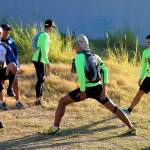
“It will be very hard,” said Philippe Bukovec, organizer of the Challenge Irazú races, just minutes before the 40-kilometer marathon started last Saturday morning. Bukovec chuckled morosely. “Very hard.”
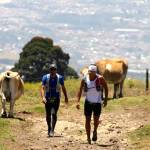
There was no way to exaggerate the grueling uphill challenge awaiting those 30-or-so athletes. From a parking lot in Tres Ríos, participants ran up a residential street and disappeared into the hills. For nearly 42 kilometers they trudged along difficult footpaths, cut through woods and meadows, and fought their way up some of the most punishing inclines in the Central Valley.
Their goal: San Juan de Chicuá, a tiny village on the slopes of Irazú Volcano.
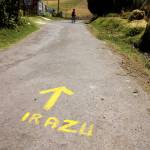
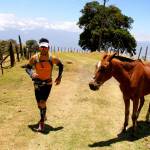
For several years, the race up Irazú has attracted diehard runners from around the world. This edition’s athletes hailed from such disparate nations as Poland and Venezuela. Because the marathon was an “adventure race,” runners faced more than steep terrain. Most of them spread out, becoming isolated from one another in a veritable wilderness. Aid stations were separated by at least 10 kilometers. Because of the simple marking system, runners risked getting lost or stranded in the countryside. The day started cool, but a blazing midday sun and increasing elevation wreaked havoc on their bodies.
“Normally I would be fine,” said one runner from Washington, D.C., who decided not to complete the full course. “But the altitude is too much.”
Runners reached elevations of about 3,000 meters.
Unlike more traditional marathons, which generally take place on level terrain in populous cities, the Challenge Irazú appeals to a particularly spartan crowd. Instead of thousands of runners, only a few dozen attempted the full 40 kilometers. Runners are encouraged to carry their own supplies, including cellphones, large quantities of water and some cash, in case of emergencies. The race even lacked a system to transport runners back to Tres Ríos once they had finished, and participants were encouraged to call cabs or even hitchhike.
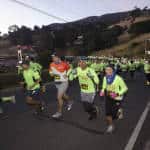
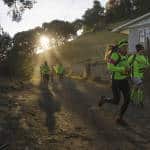
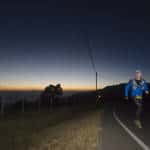
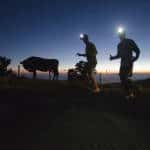
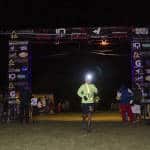
By late afternoon, organizers were preparing for the second round of races: a half-marathon and a 10K, both of which took place at night.
Why race at night?
“Because the view is beautiful,” said organizer Fidelia Soloherison. “When you see the valley at night – you will never see anything like it.”