

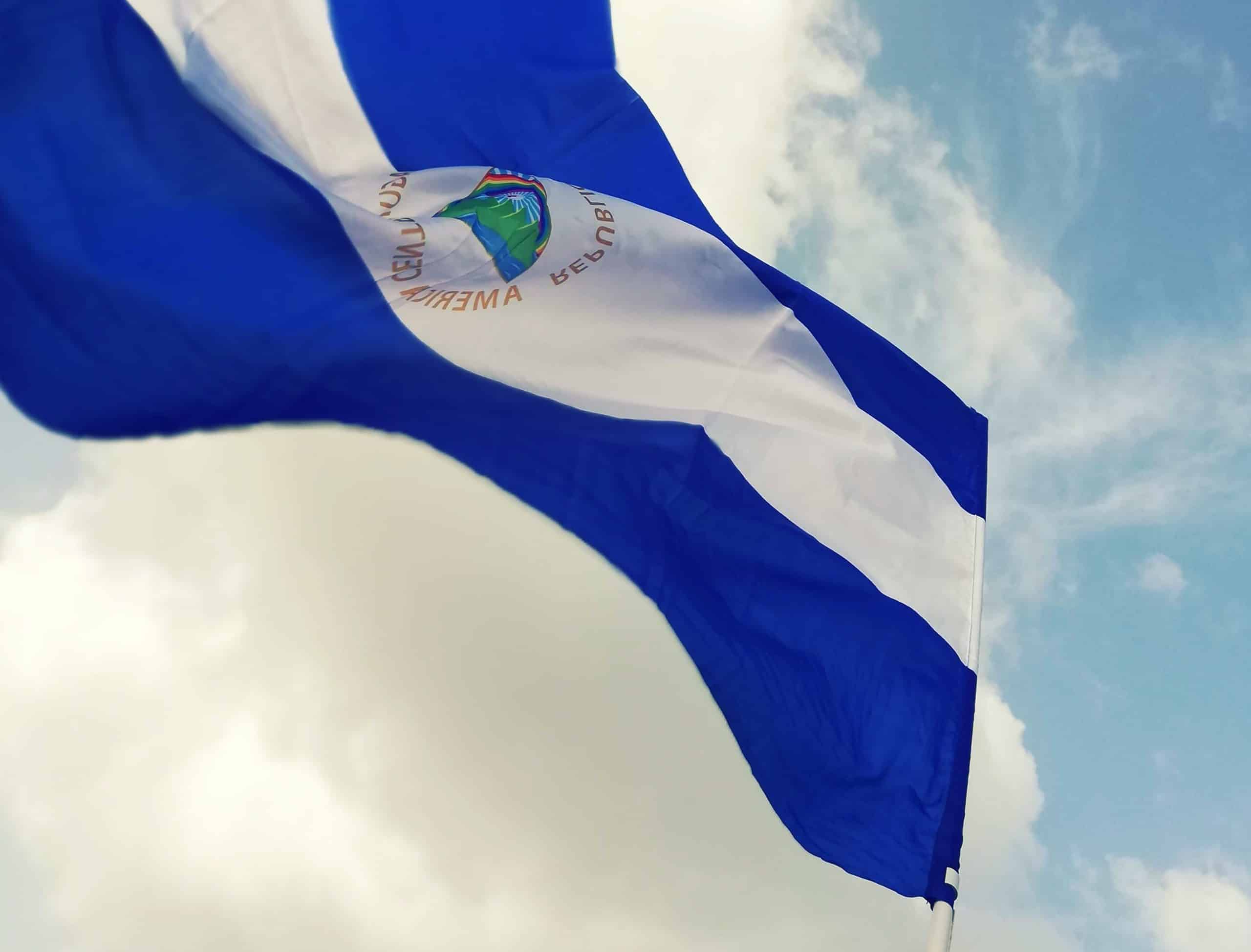
GRANADA – Responding to the worst institutional crisis in the history of Nicaragua’s 14-year democracy, President Enrique Bolaños this week rejected accusations that he committed electoral fraud in the 2001 presidential campaign and warned Nicaraguans of a menacing coup plot that is threatening to plunge the country into chaos and economic ruin.
In a nationally televised address Monday afternoon, Bolaños insisted on his innocence and transparency in all financial matters, and asked Nicaraguans to come to his defense for the sake of the nation. “You can rest assured that neither the CIA, the KGB, the Mossad, MacGyver nor Spiderman would be able to find any evidence of corruption in the bank accounts of Enrique Bolaños,” the President said, making one of several curious references to television and cartoon characters from the 1980s.
The current institutional crisis started last week, when the Comptroller General’s Office presented the National Assembly with a report accusing Bolaños of committing campaign-finance violations and called for his impeachment (TT, Oct. 15). The President, claiming the allegations are an act of political sabotage authored by opposition party bosses Arnoldo Alemán (Liberal Constitutional Party) and Daniel Ortega (Sandinista National Liberation Front), turned quickly to the international community for help.
The 34-member Organization of American States (OAS) responded on Monday by sending a fact-finding delegation to Nicaragua to investigate the matter and offer unified international support for the country’s democracy. Bolaños publicly acknowledged the rapid response of the OAS by saying, “not even Speedy Gonzalez could have responded so quickly.”
The special delegation, headed by interim OAS Secretary General Luigi Einaudi, met with the President, the Supreme Court, the Comptroller General’s Office and different political leaders, before returning to Washington, D.C. to present the team’s findings to the OAS General Assembly yesterday afternoon at press time.
Bolaños addressed the delegation Monday in a convention hall filled with flag-waving supporters, government leaders, and international dignitaries, including U.S. Ambassador Barbara Moore. In front of the cameras and the cheering crowd, Bolaños presented a rapid-fire PowerPoint of his personal bank account records and campaign checks, insisting he had nothing to hide.
Bolaños gave an explanation for the 19 questionable accounts mentioned in the Comptroller’s report, noting that several of the accounts were managed by the same Liberal congressmen who are now trying to impeach him, while other accounts are his personal bank accounts from when he was a private citizen before the campaign began on Aug. 18, 2001.
Under Nicaragua’s Electoral Code, Bolaños does not have to provide information from private accounts from before the official campaign. But, as the President explained, he wants to provide Nicaragua with his entire financial history — including his income-tax records — as a demonstration of his transparency.
Bolaños also responded to the “ghost donor” accusations by presenting the identities of several dozen of “the thousands” of Nicaraguans who contributed to his campaign. He explained that he used an offshore bank account in St. George to expedite the process of clearing campaign checks given by Nicaraguans living in the United States — a practice that is not prohibited by the Electoral Code.
The President concluded his presentation by challenging perennial Sandinista candidate Daniel Ortega to offer a similar explanation of bank accounts and campaign donations. He also painted an economic doomsday scenario — hyperinflation, a cutoff of foreign aid, a 45% tax hike, rising unemployment, depleted bank reserves, decreased production, and salary rollbacks — that could occur if the caudillos (Ortega and Alemán) succeed in what he called their “coup attempt.” He insisted the crisis is evidence that the “pacto” between Alemán and Ortega is still alive and well, and asked the Government Attorney’s Office to investigate the Comptroller General’s Office.
Concluding the OAS delegation’s visit to Nicaragua, Einaudi said Wednesday he is confident a democratic process is taking place in Nicaragua, and the situation is not as arbitrary as he feared it would be.
The immediate reaction to the President’s televised address revealed that his close political allies still support him, and most citizens claim they are convinced by the hurried slideshow of small-print bank statements. U.S. Ambassador Moore was quick to congratulate Bolaños on his “transparency,” and a phone poll conducted Monday night by M&R Consultants suggested 62% of Nicaraguans believe Bolaños proved his innocence.
“The United States Government stands firmly with the democratically elected government of President Enrique Bolaños,” said U.S. Department of State spokesman Richard Boucher. “We deplore recent politically motivated attempts, based on dubious legal precedent, to undermine the constitutional order in Nicaragua and his presidency.” Moore added that impeachment “could cause serious problems for our (financial) assistance. A good part of the Millennium Fund is based on governability and the impeachment of the President would put into question any assistance of this type. But aside from dollars, the progress that Nicaragua has made in democratic development would take a step backwards.”
Opposition political leaders, however, are blasting Bolaños’ presentation as a political charade that failed to address pertinent issues. “This was a smoke screen to hide a situation that is becoming more difficult for Bolaños every day,” congressman Wilfredo Navarro, vice-president of the Liberal Constitutional Party, told The Tico Times this week.
Navarro, top spokesman for the Liberals now that Alemán is serving a 20-year jail sentence for corruption, noted that Bolaños did not provide information about how much each identified donor gave to his campaign, nor did he offer any details about what happened to the seven million dollars in the questioned accounts. “He said how the money got into the accounts, but never said how it was spent,” the congressman said. Navarro, who was the legal representative for the Bolaños campaign (before the President defected from the party), denied he had anything to do with the donations, and insisted there are other accounts that haven’t been explained.
Ortega, meanwhile, called Bolaños’ challenge to him to present his banking records “pathetic,” and said this is not the time for such games. The Sandinista leader insists Bolaños has failed to explain what happened to the $700,000-a-year supplemental income that former President Alemán claims to have paid him while he served as Vice-President of the Republic (1996–2000). Ortega, in a line that appeared to be borrowed from the President, said the corruption scandal proves the existence of a “pacto” between Bolaños and Alemán.
Nicaraguan political analyst Alejandro Serrano told The Tico Times this week he considers the current crisis to be the worst so far in the country’s young democracy, but doesn’t expect it to end in Bolaños’ impeachment. According to Article 138 of the Constitution, Congress can only impeach the President if he is determined incapable of governing, Serrano said. The National Assembly could, however, vote to strip Bolaños of his immunity — as it did with Alemán — to clear the way for his impeachment in the Supreme Court for electoral offenses, the analyst explained.
During the beginning of Bolaños’ anticorruption campaign against Alemán, the President said publicly that he would renounce his immunity, but never did. Now, it appears Congress is prepared to do it for him, according to statements this week by Liberal and Sandinista congressional leaders.
Serrano predicts the most likely scenario is that Congress eventually will strip Bolaños of his immunity — most likely after the Nov. 7 municipal elections — but that the Sandinista- and Liberal-controlled Supreme Court will sit on the case until the President’s term expires in 2007. That way, the caudillos will be able to maintain enough of a political crisis to use as political leverage for backroom negotiations, but will stop short of plunging the country into utter political and economic chaos, which would not serve anyone’s interest, Serrano said.





