

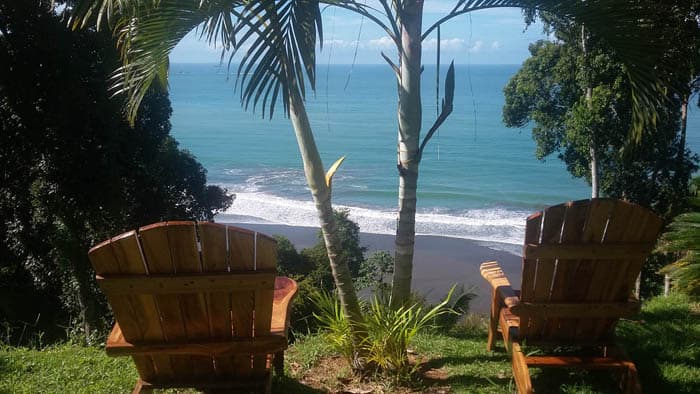
One of the first surprises for anyone shopping for property in Costa Rica is that there is no MLS — no single, countrywide listing service like the ones buyers know from the United States or Canada. There is no website where you can see everything for sale, compare prices, and pull up what a place down the street sold for last year. That reality changes how you search, and it makes a few precautions essential rather than optional.
The good news up front: foreigners can buy here on the same terms as Costa Ricans. You can own titled property outright, in your own name or through a Costa Rican company, with no local partner required. The one major exception is beachfront, which has its own rules and is covered below. Everything else comes down to knowing how to find a property in a market with no central database, and how to protect your money once you do.
Here is how to navigate both.
Finding a property when there is no MLS
Costa Rica has never had a government-run or fully centralized listing service, and the private attempts to build one have only ever covered a slice of the market. Several systems exist — an Omni MLS tied to a national realtor association, a platform called Propertyshelf that bills itself as the country’s MLS, and strong regional databases like the one covering the southern Pacific zone around Dominical and Uvita — but none comes close to showing everything for sale nationwide. Big international sites like Zillow show even less, and what they do show is often outdated or already sold.
What that means in practice is that listings are scattered across dozens of individual agency websites, a few aggregators like Encuentra24, and, very often, private channels. Many properties sell through an agent’s personal network before they ever appear online at all. There is also no shared price history, so there is no quick way to check what comparable homes have actually sold for — those “comps” get built by hand by agents who know a specific area.
The practical takeaway is to stop trying to “cover the market” by contacting a dozen agencies. The better approach is to find one good buyer’s agent who specializes in the region you are targeting and let them do the searching. Because agents here routinely share their exclusive listings with one another, a single well-connected agent can show you properties listed by many different offices, including ones not posted publicly. Loyalty is part of the deal: agents are far more willing to work hard for a buyer who commits to them than for one who is calling every office in town.
Choosing that agent carefully matters more here than in most countries, because of a fact many buyers do not realize: real estate agents in Costa Rica are not required to be licensed. There is no government licensing exam, and technically anyone can call themselves an agent. Since 2019, agents and others who handle transaction funds have been required to register with SUGEF — the financial regulator (Superintendencia General de Entidades Financieras) that oversees banks and money-handling businesses, largely to guard against money laundering.
Confirming an agent is SUGEF-registered is a reasonable first screen. Beyond that, look for membership in a recognized association such as the Costa Rican real estate chamber (CCCBR) or the realtor group CRGAR; membership is voluntary, but it signals an agent who has chosen to be held to professional standards. Steer clear of anyone who pressures you or, especially, discourages legal due diligence.
Buying safely — escrow, due diligence and closing
Once you find a property, the transaction follows a fairly predictable path, and each step exists to protect you.
You and your agent submit an offer. If the seller accepts, both sides sign a purchase agreement that spells out the price, the deposit, the timeline and the conditions. You then place a deposit — customarily around 10 percent, though that is negotiable — into escrow. This is where the first hard rule comes in: the escrow company must be registered with SUGEF, and you should never wire money to a seller’s personal account or to an attorney you cannot verify.
A SUGEF-registered escrow agent holds your funds under anti-money-laundering and financial-transparency rules and releases them to the seller only once the title has legally transferred. Escrow is not technically required by law, but skipping it is the single biggest way buyers lose money here.
With the deposit secured, the due diligence period begins, and this is the heart of a safe purchase. Your attorney verifies the title at the National Registry (Registro Nacional), the government database where every property title in the country is recorded. The search confirms the seller actually owns the property and checks for any liens, debts, mortgages or legal annotations attached to it.
Your attorney should also confirm the property’s registered survey, called the plano catastrado, matches its real boundaries; check the zoning, or “uso de suelo,” from the local municipality to confirm you can use the land as you intend; and verify there is a legal water source — in Costa Rica, no confirmed water supply can mean no building permit, no matter how ready a lot looks. If the property is held by a corporation, your attorney also checks that the company is in good standing, since the Registry will not issue certifications for a company behind on its taxes.
Closing is handled by an attorney who is also a notary — in Costa Rica, only a notary (an abogado-notario) can legally transfer title and register the new deed in your name or your company’s. The whole process, from signed agreement to registered title, usually takes about 30 to 60 days.
Budget roughly 4 percent of the purchase price for closing costs. That covers the property transfer tax (1.5 percent of the registered or sale value, whichever is higher), National Registry fees and documentary stamps (a little under 1 percent), notary and legal fees, and escrow charges. Buyer and seller can negotiate who pays what, and the costs are often split, but 4 percent is a safe figure to plan around. After purchase, annual property tax is low — about 0.25 percent of the registered value — and high-value homes may also owe Costa Rica’s separate luxury home tax.
Many foreign buyers take title through a Costa Rican corporation (an S.A. or S.R.L.) rather than in their own name, for easier estate planning and liability protection. It is a common and legitimate choice, but it carries small ongoing duties: an annual corporation tax, beneficial-owner reporting, and basic bookkeeping. Your attorney can set it up and explain whether it makes sense for your situation.
One last category deserves real caution: beachfront. The Maritime Zone covers the first 200 meters inland from the high-tide line. The first 50 meters are public land that no one can own. The next 150 meters are concession land — not titled property but a lease granted by the local municipality, with specific limits on foreign ownership. Concession property can be a sound buy in the right circumstances, but it is legally very different from titled land and demands extra scrutiny. Never assume a beachfront listing is fully titled; have your attorney confirm exactly what you would be buying before you commit a cent.
The absence of an MLS makes Costa Rica’s market feel opaque at first, but the path through it is clear: one trusted, SUGEF-registered agent who knows your target area, a SUGEF-registered escrow account, and an attorney who does thorough due diligence before any money changes hands. Get those three right and the lack of a central database becomes a quirk rather than a risk.





